Facebook Restricts Link Posting for Government and Nonprofit Pages
A new policy at Facebook has restricted government and nonprofit pages from posting links on the platform, part of an ongoing experiment to charge creators for sharing links.
A new policy has come into effect at Facebook, restricting government and nonprofit pages from posting links on the social media platform. The move is part of Meta's ongoing experiment to charge creators and professionals for sharing links on its site.
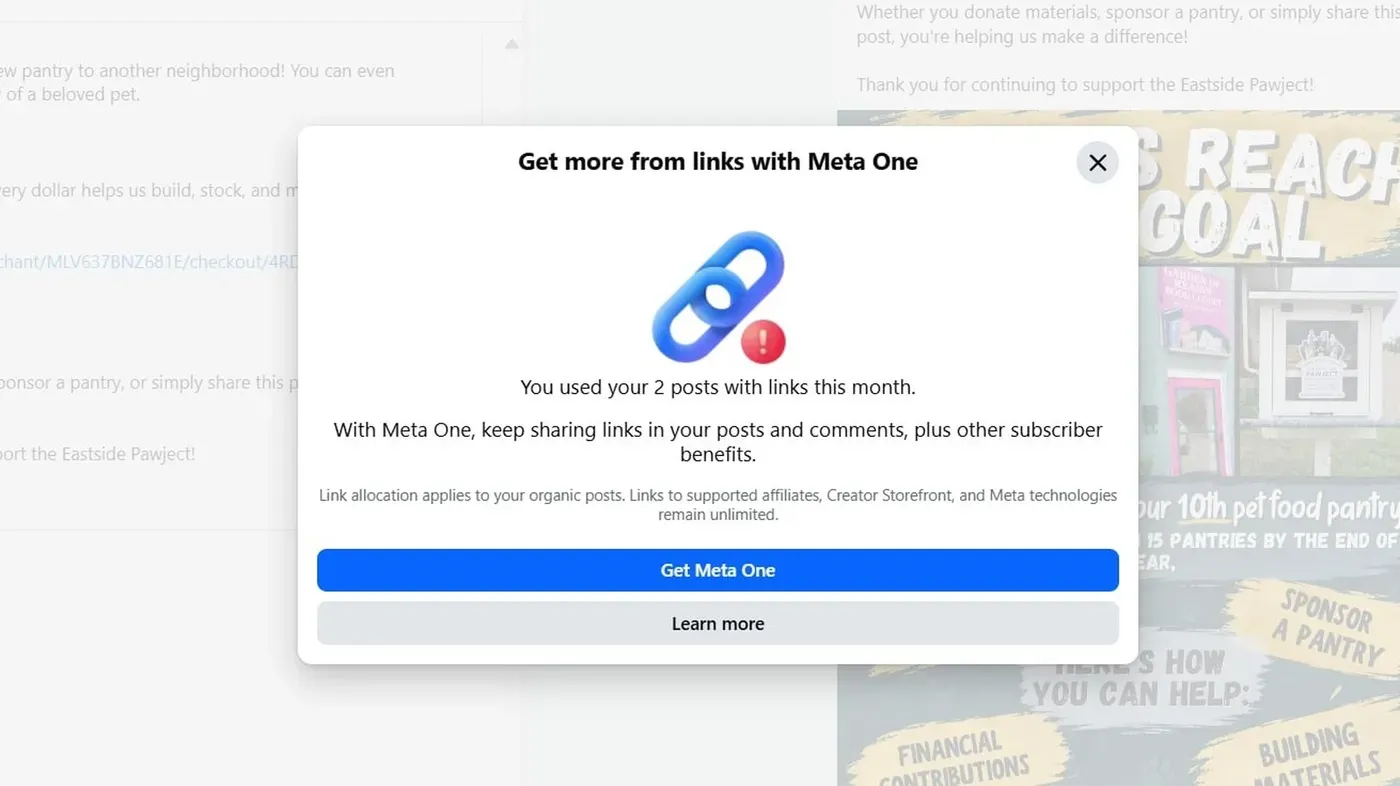
The test appears to be having an impact on entities that were initially exempt from the change. Greenville, Texas, a city with a population of around 35,000, has seen one of its Facebook pages receive a notification about link posting restrictions. The city's communications manager, Daniel Starks, oversees nearly a dozen Facebook pages and recently received a message informing him that his library page could no longer post more than two links per month.
The message from Meta stated that sharing additional links would require signing up for the company's One subscription service, which costs $50 or more per month. This move has caught nonprofit leaders off guard, as they had previously been assured that their pages were exempt from such restrictions.
Nonprofit organizations have expressed concerns about the new policy, citing confusion over how it affects them despite being identified as nonprofits and verified to use Meta's fundraising tools. The impact of this change on their online presence is still being assessed by these groups, who are rethinking their use of the platform in light of these developments.
City officials are facing a dilemma due to changes in Facebook's policies that affect government and nonprofit pages. According to Starks, who oversees the city's online presence, over 50% of their activities involve linking back to information on their website.
This shift has left them scrambling for alternative solutions. To mitigate the impact, the city instructed its staff to stop posting links within Facebook posts altogether. Instead, relevant URLs will now appear in the page's comments section.
The changes have been met with frustration and concern among officials. Starks questioned Meta's claim that government-run pages are exempt from these restrictions. The library's account, which identifies it as a government building, was previously verified by the company but is still affected by the policy change.
Nonprofit organizations are also feeling the pinch of these new policies. For example, Bethany English, co-president of a small Indianapolis-based nonprofit, encountered issues while trying to create a Facebook post about an upcoming event.
The financial burden of maintaining a Facebook presence has become a significant concern for many small nonprofits and government organizations.
In addition to the issue faced by Bethany English's organization, another nonprofit was offered an alternative solution when it tried to post links on its Facebook page. The alternative involved signing up for a Meta One subscription, which would allow the organization to share up to 20 links each month for $150 a month.
The financial implications of this decision are significant for small nonprofits that rely heavily on social media to reach their audience and disseminate information about upcoming events and fundraisers.
For such organizations, social media has become an essential tool for spreading awareness and mobilizing support. The ability to share links directly in posts is a crucial feature, but it now comes with a hefty price tag.
The challenge of finding alternative solutions to this problem is already being explored by some nonprofits, who are considering workarounds like creating dedicated Facebook events rather than organic posts.
Meta has been testing paid link sharing for nearly a year, and it now appears that this feature will be part of its new Meta One subscription plans. The company's decision to charge government and nonprofit pages to post links on Facebook has raised concerns among these organizations.
The cheapest Meta One plan costs $14.99/month but does not offer any additional link-sharing privileges on Facebook. However, subscribers can add a dedicated link page to their Instagram bio. Users who opt for the more expensive plans will have access to more links: eight per month with the $49.99/month plan and 20 per month with the $149.99/month tier.
Critics of Meta's new policy argue that it is unfair to charge nonprofits to share links on Facebook. "Fifty bucks for eight links a month is crazy," said Jeff Bannister, marketing manager for SparkPoint, a small North Carolina-based nonprofit that advocates for public health and stronger social connections in Transylvania County.
SparkPoint was recently hit with Facebook's restriction on link sharing, which has forced the organization to explore alternative solutions. Bannister is now considering ways to work with other local nonprofits to mutually share information and reduce their dependence on Facebook.
The challenge of finding alternative solutions to this problem is being explored by some nonprofits, who are looking at workarounds like creating dedicated Facebook events rather than organic posts. This would allow them to share links without incurring additional costs.
The new rules implemented by Meta have left many government and nonprofit pages bewildered about what exactly is allowed on Facebook. Some of these organizations have reported that they are still able to share links in comments on their posts, while others claim this feature has been taken away from them. This inconsistent application of the rules raises more questions than answers about Meta's intentions.
Meta's own explanations and help center information do not provide clear guidance on why sharing links is being restricted. The company has stated that its new features are intended to "unlock more specialized capabilities" and AI features, but this does not explain why a basic feature like sharing links is now tied to these subscriptions. This move appears to be a significant departure from the platform's original functionality.
David Diskin, president of California Freethought Day, shares his concerns about the new link-sharing limitation. With only two links allowed per month for nonprofit organizations, spreading awareness and promoting civic engagement becomes extremely challenging. This restriction is particularly problematic for events like the one hosted by Diskin's organization in Sacramento.
Diskin was notified of the link-sharing limit just days ahead of his event, with Meta offering him lower rates than others: $40/month for eight links, $119/month for 20 links, or $399 for unlimited access. This restrictive policy has left many nonprofit pages struggling to adapt and find ways to effectively use Facebook without incurring additional costs.
Meta has reinstated its previous policy of allowing government and nonprofit pages to post links on Facebook without incurring additional costs.
The reversal comes after a brief period where these organizations were charged for posting links on the platform. The change was made abruptly and without explanation, leaving many in the affected community frustrated with Meta's handling of the situation.
Facts based on reporting originally published by Engadget.
You may republish this story, in full or in part, if you credit News Central Site and link to it (licence CC BY 4.0). Photos are not included.