Riots Erupt Across France Over Weekend
Violence broke out across France over the weekend, with widespread rioting and looting reported in several cities.
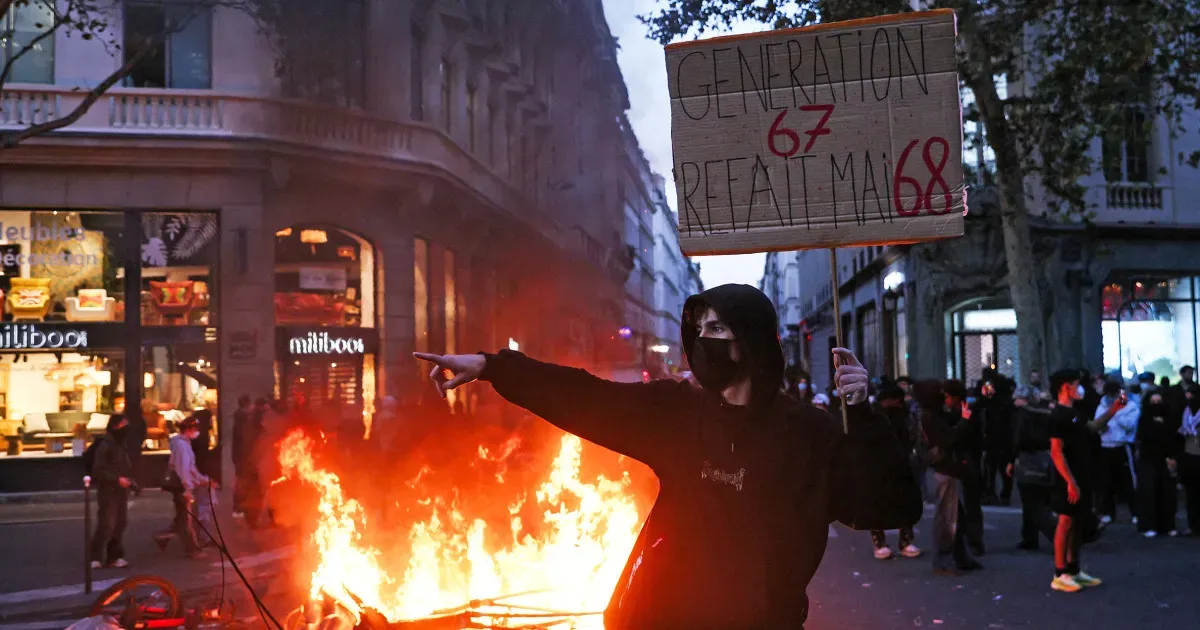
France is grappling with its worst violence in years after widespread rioting and looting broke out across the country over the weekend.
The town of Limoges was among the hardest hit, where a 19th-century town hall was left in ruins. The Haussmannian roof had been reduced to shattered glass and skeletal remains, while the towering spire at its heart eventually collapsed in flames. Crowds gathered below were seen cheering as the building burned.
The violence spilled over into other cities, including Paris, where the iconic Louvre Museum announced it was closed due to a blockade by protesters. The museum's closure is a blow to the city's tourism industry, which relies heavily on international visitors.
As authorities struggled to regain control, Prime Minister Sébastien Lecornu admitted that they had "lost control in major cities. He also revealed that some cities have been asked to impose partial curfews as part of efforts to restore order.
The unrest was sparked by an ongoing anti-government movement protesting rising living costs and poor school conditions. While the protests had started out largely peaceful, they descended into violence over the weekend, with rioters targeting stores, cars, and government buildings.
As the full extent of the damage became clear on Sunday, it emerged that nearly 1,000 police officers and firefighters were injured during the protests, according to official figures.
The interior ministry confirmed that over half a million people took part in the demonstrations across France, resulting in an unprecedented number of arrests, with almost 2,400 individuals detained.
President Macron attributed the violence to troublemakers from far-left fringe groups, but his statement sparked widespread criticism and accusations from other politicians.
In a televised address on Sunday, Macron expressed shock at the scenes unfolding in France, saying that he and others had wondered how French people could engage in such destructive behavior.
As the unrest continued in Paris on Sunday, police were faced off against demonstrators at Place de la République, a key area of confrontation throughout the weekend's events.
The destruction was not limited to Paris, however, and cities across France bore the brunt of the violence. In central towns like Limoges, known for its porcelain production, the town hall was engulfed in flames, leaving many feeling that the very fabric of their community had been attacked.
Limoges Mayor Guillaume Guérin expressed his outrage on social media platform X, stating To attack her is to attack the republic." His sentiments were echoed by others who saw the violence as an assault on the state itself.
French officials have consistently avoided blaming immigrants for the unrest, instead acknowledging legitimate concerns voiced by protesters. This stance reflects a broader effort to address the underlying issues driving the demonstrations.
The initial protests, sparked by high school students demanding better classroom conditions, highlighted the country's crumbling infrastructure and inadequate teaching capacity. These demands were met with force from the police, who deployed riot officers and launched tear gas against the demonstrators.
As the situation escalated, labor unions and farmers joined the protests, voicing concerns about the soaring cost of living and the rising price of gasoline. This economic strain has been exacerbated by the war in Iran, which has contributed to a sharp increase in fuel costs.
Facts based on reporting originally published by NBC News World.
You may republish this story, in full or in part, if you credit News Central Site and link to it (licence CC BY 4.0). Photos are not included.