Puerto Rico Celebrates Thanksgiving with Local Flavors
A vibrant celebration combining local flavors with traditional American dishes has been observed in Puerto Rico since the early 20th century.
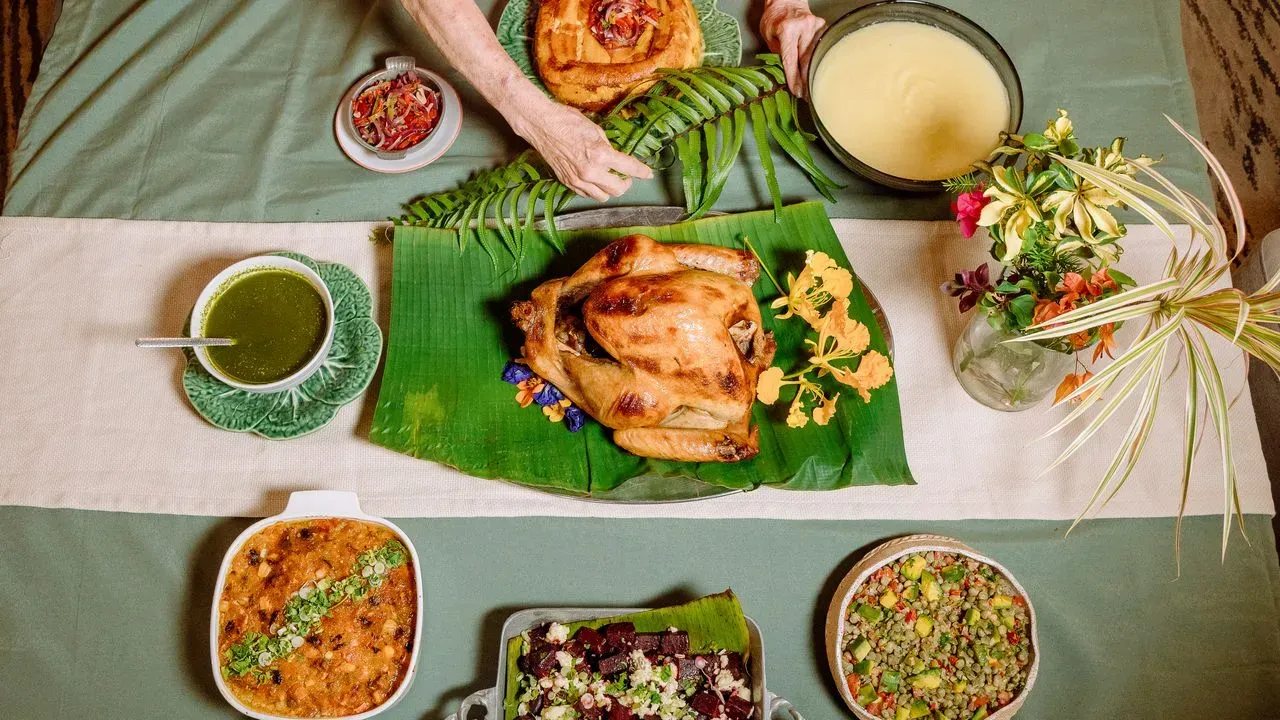
Puerto Rico's take on Thanksgiving is a vibrant celebration that combines local flavors with traditional American dishes.
The holiday has been observed on the island since the early 20th century, when it was introduced by the United States following its invasion in 1898. Today, Puerto Ricans cherish Thanksgiving just as much as their mainland counterparts do.
One of the island's leading culinary authorities is chef Giovanna Huyke, who has spent over four decades perfecting the art of traditional Puerto Rican cooking. Huyke's expertise on the subject makes her a beloved figure in local kitchens and restaurants.
I met with Chef Huyke at SatoFino, a colorful woman-owned restaurant in San Juan where she is a regular fixture. The bartender recognized her immediately, thanks to her signature bright red hair, and prepared her go-to drink: a strong Manhattan cocktail.
As we settled into our barstools, I asked Chef Huyke about her busy schedule. She had just returned from cooking for Ser Familia, a nonprofit that supports Hispanic families in Atlanta, and was already planning her next project, an epic cooking adventure that would involve local ingredients and traditional methods.
As we step into the kitchen, Huyke is eager to share her expertise on preparing a traditional Puerto Rican Thanksgiving feast. She begins by explaining that the island's rich and resilient food history has been shaped by its complex cultural heritage.
This culinary evolution has been ongoing for centuries, with influences from Spain, Indigenous Taíno people, and West Africans who were brought to the island as enslaved workers. Despite the many obstacles faced by the Puerto Rican people, their cuisine continues to thrive and emerge full of flavor.
Huyke's own career as a local TV personality, newspaper columnist, and cookbook writer has spanned decades, with generations of home cooks seeking her guidance on preparing the island's most treasured dishes. Among them was my grandmother, who I affectionately call Tata, and her Thanksgiving table was always a testament to the blending of traditions.
Tata's menu often featured a traditional turkey at its center, but her stuffing was uniquely Puerto Rican in flavor and texture. She combined Pepperidge Farm stuffing mix with picadillo, ground beef cooked with sofrito and pimiento-stuffed Manzanilla olives, all seasoned with sazón, the golden spice blend that is a staple of the island's cuisine.
Huyke's influence on my family's holiday cooking was not immediately apparent, but it became clear when I inherited her 2004 recipe booklet Celebraciones after Tata passed away. The recipes within its pages had clearly informed Tata's Thanksgiving menu, and I began to appreciate the depth of Huyke's impact on our culinary traditions.
As we continue to cook together, Huyke's passion for Puerto Rican cuisine is palpable, and her enthusiasm is infectious. It's clear that this is more than just a cooking lesson, it's an opportunity to explore the rich cultural heritage of the island and the people who call it home.
The culinary traditions of Thanksgiving in Puerto Rico are a unique blend of Spanish, African, and Indigenous influences. The island's staple dish, adobo, has two forms: wet and dry, each a masterful combination of garlic, onion, peppers, herbs, and Taíno roots pounded together with a pilón.
The use of adobo on the turkey is just one example of how Puerto Rican cuisine intersects with Thanksgiving traditions. The island's standard Thanksgiving table also includes sofrito-infused sides, which showcase the rich cultural heritage of the region. This fusion of flavors reflects the complex history and identity of the Puerto Rican people.
Puerto Rico's relationship with the United States has had a lasting impact on the island's food culture. In 1917, just before the US entered World War I, Puerto Ricans officially became American citizens and draft-eligible. As a result, many locals served in the military, introducing them to new foods and cooking techniques that would eventually find their way back home.
The legacy of these wartime soldiers can be seen in the prevalence of shelf-stable foods on the island's tables. Due to Puerto Rico's storm-prone location, reliance on imported goods is a necessity, resulting in a diet that often feels connected to military cuisine. Foods like tinned corned beef, Vienna sausages, and Spam have become staples, alongside canned vegetables and club soda crackers.
The transformation of Puerto Rico's economy from an agrarian system to an industrial manufacturing one has also had a lasting impact on the island's food culture. Today, approximately 85 percent of all food consumed in Puerto Rico is imported, reflecting the complexities of the island's history and its relationship with the United States.
As a result of this complex cultural heritage, Thanksgiving in Puerto Rico is a truly unique celebration that reflects the island's rich history and identity. The blending of Spanish, African, and Indigenous influences with American traditions has created a culinary landscape that is at once both familiar and distinct.
In a nod to her family's culinary traditions, Huyke has tweaked her mother's classic recipe for instant mashed potatoes to create a garlicky variation that features on her Sanguiving table.
Huyke's father, Hector, had developed a strong aversion to the military's bland instant mashed potatoes after serving in the Korean War. However, during holidays, his wife Alice, a trained cooking instructor, would make an irresistible version by slowly simmering yellow potatoes in cream and enriching them with chicken bouillon.
This family recipe has been adapted over time, and Huyke now prefers to use fresh ingredients that showcase Puerto Rican cuisine's rich culinary heritage. She favors from-scratch dishes that highlight regional bounty, including Indigenous staples like maize, peppers, yuca, and other root vegetables.
In addition to these traditional ingredients, Huyke also incorporates later introductions to the island such as plantains and coconuts into her recipes. Her approach emphasizes the importance of using fresh foods not only for their health benefits but also for the depth of flavor they bring to dishes.
For those looking to learn more about Puerto Rican cuisine, Huyke recommends cooking alongside a seasoned chef like herself. She believes that this hands-on approach is the best way to understand the nuances and complexities of traditional recipes.
As I have the opportunity to cook with Huyke in her own kitchen, I quickly realize that she makes education a central focus of her work. This is evident not only in her teaching style but also in her efforts to mentor young chefs like Natalia Vallejo, who has become the island's first James Beard Award–winning chef.
Huyke's family recipe for yuca stuffing is a traditional Puerto Rican dish known as "estuffing," which has been passed down through generations.
The recipe is named Agüeybaná in honor of the island's powerful Taíno chief who led the local people at the time of the Spanish invasion in 1493.
To prepare the yuca, Huyke peels and grates it before grinding it into a fine paste using her food processor.
She then sautés sofrito in olive oil before adding ground pork, annatto, herbs, and aromatics to create a rich and flavorful mixture.
This is all combined with the grated yuca and piled high into a baking dish for a delicious side dish that's sure to be a hit at any meal.
The next step in preparing the Sanguiving feast is to make pastelón, a layered casserole of fried sweet plantains and creamy queso fresco.
This dish likely originated in New York City, where Puerto Rican and Italian communities came together and influenced each other's cuisine.
Huyke explains that the convergence of these two diasporas led to the creation of this unique dish, which combines traditional Puerto Rican ingredients with Italian flavors.
The finishing touches are being put on Huyke's Sanguiving spread, where a tangy-sweet guava-infused gravy is carefully preserved from the drippings of earlier preparations.
This condiment is just one of many flavors that will be drizzled over the various dishes, including ajilímojilí - an herbaceous sauce made with garlic, ají dulce peppers, culantro, cilantro, olive oil, vinegar, and a special addition of capers.
Guests at Huyke's table are in for a treat as they sample nearly every dish that has been lovingly prepared using a range of traditional tools, from the pilón to the modern Vitamix blender.
The end result is an unmistakable blend of American Thanksgiving traditions refracted through the vibrant colors and flavors of Puerto Rican cuisine.
Facts based on reporting originally published by Bon Appetit.
You may republish this story, in full or in part, if you credit News Central Site and link to it (licence CC BY 4.0). Photos are not included.