Postharvest Losses Remain a Significant Challenge in Global Food Production
A recent study published in Advances in Agriculture has highlighted the issue of postharvest losses in various food commodities.
Food production is under intense pressure to meet the demands of a growing global population while addressing climate change and resource constraints in the Global South. Despite efforts to boost yields, postharvest losses remain a significant challenge. A recent study published in Advances in Agriculture has shed light on this issue.
Researchers analyzed 324 studies from across the region to understand the scale, causes, and drivers of postharvest losses in various food commodities. The findings indicate that the evidence is scattered and inconsistent due to differing methods and indicators used by each study.
Measuring postharvest losses accurately proves difficult because different commodities are studied at varying stages of the production chain. For instance, research has focused primarily on storage losses for staples like maize, rice, and pulses. This leaves gaps in knowledge about losses associated with fruits, vegetables, roots and tubers, animal products, and other foods.
To date, there is a significant lack of data on postharvest losses for certain food categories. Most studies have concentrated on staple crops, overlooking the needs of farmers who grow other essential commodities. This oversight hampers efforts to develop targeted solutions to reduce waste throughout the production chain.
The dearth of information about postharvest losses in various food groups makes it challenging to establish a comprehensive understanding of this complex issue. Further research is required to address these knowledge gaps and provide more accurate estimates of the scale of postharvest losses globally.
Postharvest losses occur throughout the entire food supply chain, from harvesting to marketing. This comprehensive scope is a critical factor in understanding the scale of waste, as it encompasses various stages where spoilage can occur.
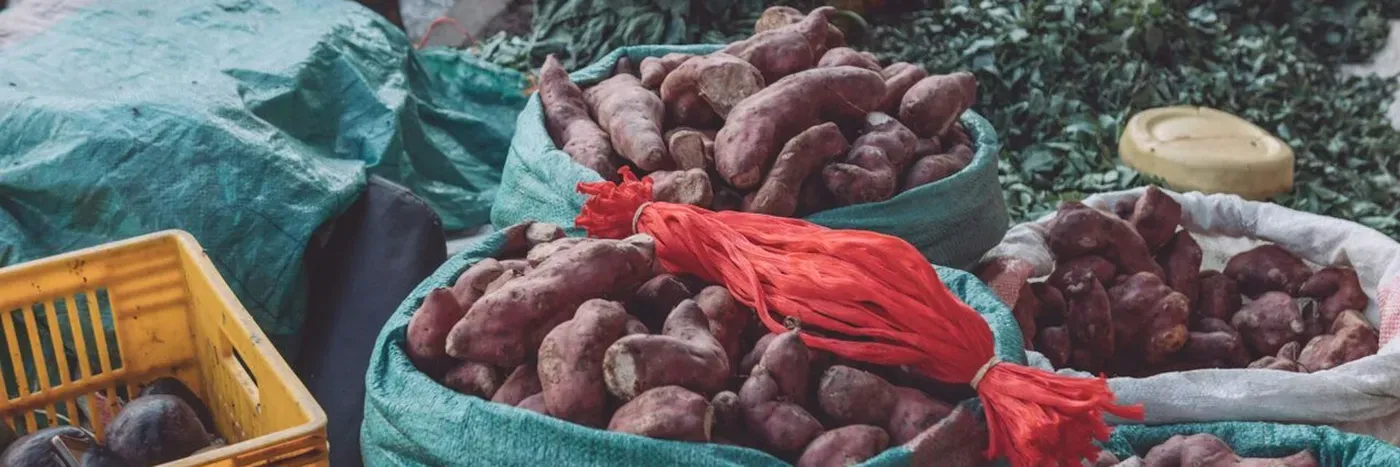
A closer examination of different food groups reveals significant variations in estimated losses. For instance, without interventions, cereals experience approximately 27.7% loss, while vegetables and fruits face even higher rates at 35.1% and 25.8%, respectively. Roots and tubers are the most susceptible to spoilage, with a staggering 42.9% loss.
The introduction of mitigation measures can significantly reduce these losses. Improved harvesting and handling practices, coupled with hermetic storage technologies and advanced cold-chain infrastructure, better packaging, and enhanced processing and transportation systems, contribute substantially to minimizing waste.
In addition to the varying impact on different food groups, postharvest losses are often caused by a multitude of interconnected factors. Infrastructure constraints, such as poor roads and inadequate warehouses, combine with technological limitations, environmental challenges, financial constraints, and market pressures to create an environment conducive to spoilage.
Measuring postharvest losses accurately is essential for governments to make informed decisions about resource allocation. Standardized methods for measuring these losses would enable policymakers to target their efforts more effectively, providing a basis for evidence-based interventions aimed at reducing waste in the food supply chain.
To develop standardized methods for measuring postharvest losses, a collaborative effort is needed among researchers, national statistical agencies, governments, international organizations, and commodity-sector stakeholders.
National statistical offices, agricultural research institutions, universities, extension services, and value-chain organizations can gather evidence by working together to establish these methods. This collective approach will enable policymakers to target their efforts more effectively in reducing waste in the food supply chain.
Infrastructure that keeps food moving and preserves its quality is crucial in preventing losses. Storage facilities, rural roads, processing facilities, and cold chains are not secondary agricultural infrastructure but rather integral components of the food-production system.
Improved storage, drying, packaging, and cold-chain systems have been shown to significantly reduce losses, increase farmers' incomes, and provide access to higher-value markets. These solutions can be tailored to local conditions, making them more accessible to smallholders.
Adapting technologies to local needs and combining them with Indigenous knowledge is essential in reducing postharvest losses. Practical demonstrations and locally adapted training can encourage the adoption of these approaches through various channels, including farmer extension services, demonstration farms, and digital platforms.
Many smallholder farmers struggle to access the financial resources needed to invest in improved storage and processing technologies, which can help reduce postharvest losses.
Price fluctuations and harvest gluts often leave farmers with more produce than markets can absorb, resulting in increased losses of perishable foods before they are sold. Credit constraints can further hinder farmers from adopting postharvest technologies, exacerbating the problem.
Governments and financial institutions can alleviate these barriers by providing targeted subsidies, affordable loans, grants, and risk-sharing mechanisms to support smallholder farmers. This can help level the playing field and enable farmers to invest in technologies that reduce waste.
Women play a crucial role in postharvest handling, and their needs must be explicitly included in technology design, training, and financing. By doing so, their contributions can be better leveraged to minimize food loss and improve overall efficiency.
Public investment could support rural infrastructure, research, extension services, and enabling policies that promote the adoption of postharvest technologies. Private-sector partnerships can also help with storage, processing, logistics, and cold-chain services where viable markets exist.
To effectively reduce food waste and help farmers cut postharvest losses, it's crucial to adopt a multi-faceted approach that goes beyond simply increasing production.
A comprehensive framework for addressing this issue involves understanding the root causes of loss at each stage of the supply chain, from harvesting to consumption. This includes identifying areas where storage facilities can be improved, processing techniques optimized, and logistics streamlined.
Facts based on reporting originally published by Phys.org.
You may republish this story, in full or in part, if you credit News Central Site and link to it (licence CC BY 4.0). Photos are not included.