Paraguay Faces Financial Crisis After Collapse of Ueno Bank
The collapse of Paraguayan bank Ueno has led to suspected banking irregularities involving hundreds of millions of dollars in public funds.
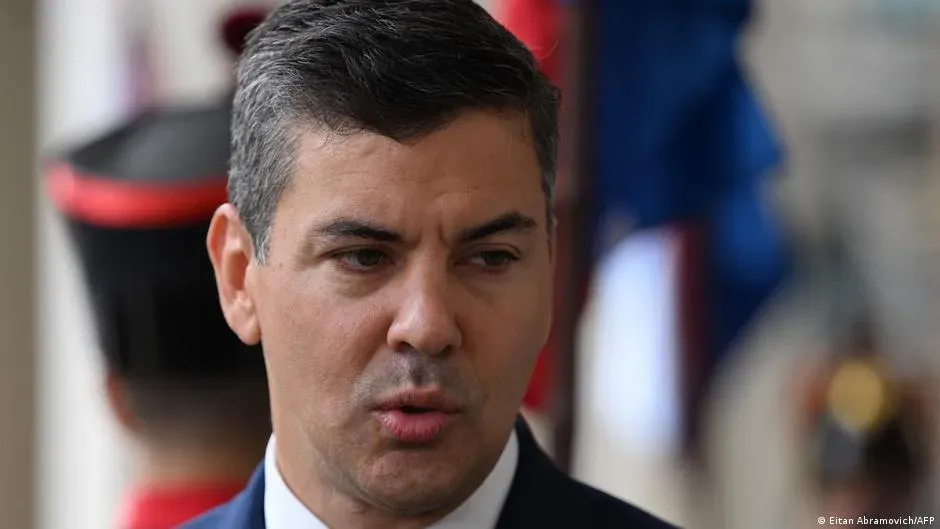
Paraguay is facing a major financial and political crisis as the collapse of Ueno Bank has revealed suspected banking irregularities on a massive scale, involving hundreds of millions of dollars in public funds.
The situation took a dramatic turn when the Paraguayan central bank initiated resolution procedures against Ueno on November 3, after determining that it had failed to meet minimum solvency requirements. In response, the public prosecutor has launched three investigations into suspected financial crimes and has already formally charged 27 individuals.
Pressure is mounting on President Santiago Pena, who has been accused of having business ties with the bank through his conglomerate Grupo Vazquez. The scandal has led to calls for Pena's resignation, which he tendered on November 5. However, the Paraguayan Congress did not accept it, instead voting unanimously in the Chamber of Deputies to impeach him.
The situation remains uncertain as a joint session of both legislative chambers was called to consider Pena's resignation, but the session was unable to take place due to a lack of quorum. As a result, Pena remains in office for now, and the Senate has opened impeachment proceedings against him.
Ueno Bank, which launched just two years ago, had grown rapidly to serve around three million customers - almost half the population of Paraguay. However, concerns have been raised about the bank's lending practices, with warnings that it may have extended excessive loans to companies associated with its owners.
The Paraguayan Central Bank's intervention into Ueno Bank on November 3, 2026, has left millions of customers without access to their accounts as business operations were abruptly suspended due to insufficient capital.
Investigations are currently focused on three key areas: the bank's lending practices, potential mismanagement of financial dealings, and the Central Bank's delayed response to emerging problems.
One area of concern is that Ueno Bank may have exceeded legal limits in its loans to other companies within the same group, raising questions about the bank's management of risk and capital allocation.
Another issue under scrutiny is whether certain business transactions were used to conceal the bank's financial struggles, artificially inflating its solvency levels.
Ueno Bank held substantial public deposits, including funds from the Instituto de Prevision Social (IPS), which manages pensions and social welfare payments for Paraguay.
State institutions in Paraguay have come under scrutiny for their investment decisions after the collapse of Ueno Bank. The bank held substantial public deposits, including funds from pension and social welfare programs managed by the Instituto de Prevision Social (IPS). This has raised concerns about the risks to which public funds have been exposed.
Paraguayan President Mario Pena's business ties with Grupo Vazquez, the conglomerate that owns Ueno Bank, are also under investigation. Despite maintaining a relationship with the group until March 2025, several months after his election as head of state, Pena denies any direct involvement with the bank.
The appointment of Carlos Carvallo as president of the Central Bank in 2023 has sparked controversy. Before taking on this role, Carvallo was the chair of Financiero Ueno, which later became Ueno Bank. This raises questions about potential conflicts of interest and the independence of banking supervision.
The public prosecutor's office has formally charged 27 individuals, including eight Ueno Bank executives and 19 others with connections to companies linked to the bank. The charges include suspected breach of trust, attempted fraud, and failure to maintain records as required by law.
A judge has taken custody of several former Ueno Bank executives, including its president Federico Miguel Vazquez Villasanti, who headed Grupo Vazquez. Two other accused individuals were placed under house arrest.
The Central Bank is now taking steps to dissolve Ueno Bank, a move that follows the bank's involvement in the scandal. Deposits up to $37,600 per customer are protected by law, but it remains unclear when affected customers will receive their money back or what will happen to deposits exceeding this limit.
Paraguay's political situation has become increasingly complicated as a result of the Ueno Bank scandal. President Santiago Pena tendered his resignation, but chose to remain in office pending further developments.
The Senate has initiated impeachment proceedings against Pena on charges related to serious breaches of duty. If impeached, Pena would lose parliamentary immunity and could face prosecution.
If President Pena is forced out of office, Vice-President Pedro Alliana would assume the presidency according to the country's constitution. This would trigger a new round of elections in Congress to fill the vacant vice-presidency.
The current presidential term runs until August 2028, leaving Paraguay with a prolonged period of uncertainty as it navigates its ongoing political crisis.
Facts based on reporting originally published by DW English.
You may republish this story, in full or in part, if you credit News Central Site and link to it (licence CC BY 4.0). Photos are not included.