Oven Rack Placement Can Significantly Impact Cooking Results
Research suggests that where a dish is placed in the oven can have a notable effect on its cooking and browning.
Oven Rack Placement Can Significantly Impact Cooking Results
For many home cooks, oven rack placement has often been an afterthought when following recipes. However, research suggests that where a dish is placed in the oven can have a notable effect on its cooking and browning.
The position of heating elements in ovens plays a crucial role in this phenomenon. Most modern ovens have a broiler located at the top, which emits intense direct heat ideal for crisping or browning food.
Cooking experts recommend placing dishes in the middle of the oven as often as possible to achieve even cooking and prevent hotspots.
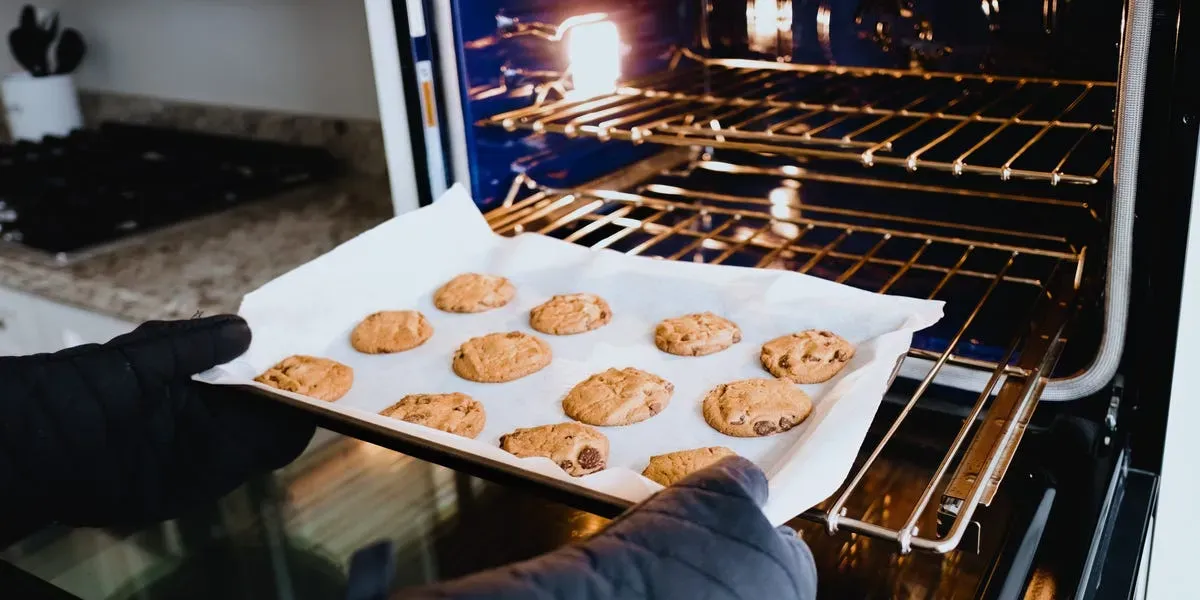
When baking multiple items in the oven, it's essential to consider their positioning to achieve even cooking and prevent hotspots. This is particularly crucial when making delicate baked goods like cookies, which can quickly become overcooked or undercooked if not placed correctly.
Positioning your dishes on the top rack can be beneficial for certain types of food, as it brings them closer to the broiler's intense heat. This is ideal for browning toppings on pizzas, lasagnas, casseroles, and baked zitis, as well as giving meringues or crème brûlée a nicely browned finish through broiling.
When it comes to achieving a perfect golden brown on your baked goods, the placement of your oven rack can make all the difference. Moving food to the middle rack, farther from the heat source, is ideal for gentler browning.
However, there are instances where placing food on the bottom rack can be beneficial. For example, when baking certain homemade breads that require a crusty, browned bottom, positioning them on the lower rack can achieve this desired texture.
For those who prioritize presentation, such as bakers of picture-perfect desserts like cakes, it's worth noting that most cakes should be placed on the center rack in the oven for even results.
For optimal results, even when using the center rack as a starting point, rotating pans midway through cooking can help ensure that food is heated evenly.
The type of oven being used - conventional or convection - does not affect the placement of racks, although it's worth noting that convection ovens have a built-in fan that circulates hot air, promoting more even cooking.
When using either type of oven, placing food on different levels can be beneficial for achieving desired browning effects; checking the manual for model-specific guidance is also recommended to fine-tune rack placement.
Placing food on different levels within the oven can significantly impact its cooking outcome. This is because heat distribution varies across multiple shelves, potentially leading to uneven browning or undercooked areas. To achieve optimal results, it's essential to familiarize yourself with your oven model's specific guidelines for rack placement.
Checking the manual will provide valuable insights into how to position food for desired browning effects. By taking this extra step, you can fine-tune your cooking technique and enjoy perfectly cooked meals every time. With practice and patience, mastering oven rack placement becomes a crucial skill in achieving culinary success.
Facts based on reporting originally published by Good Housekeeping.
You may republish this story, in full or in part, if you credit News Central Site and link to it (licence CC BY 4.0). Photos are not included.