New crop of popular-science books tackles modern life's challenges
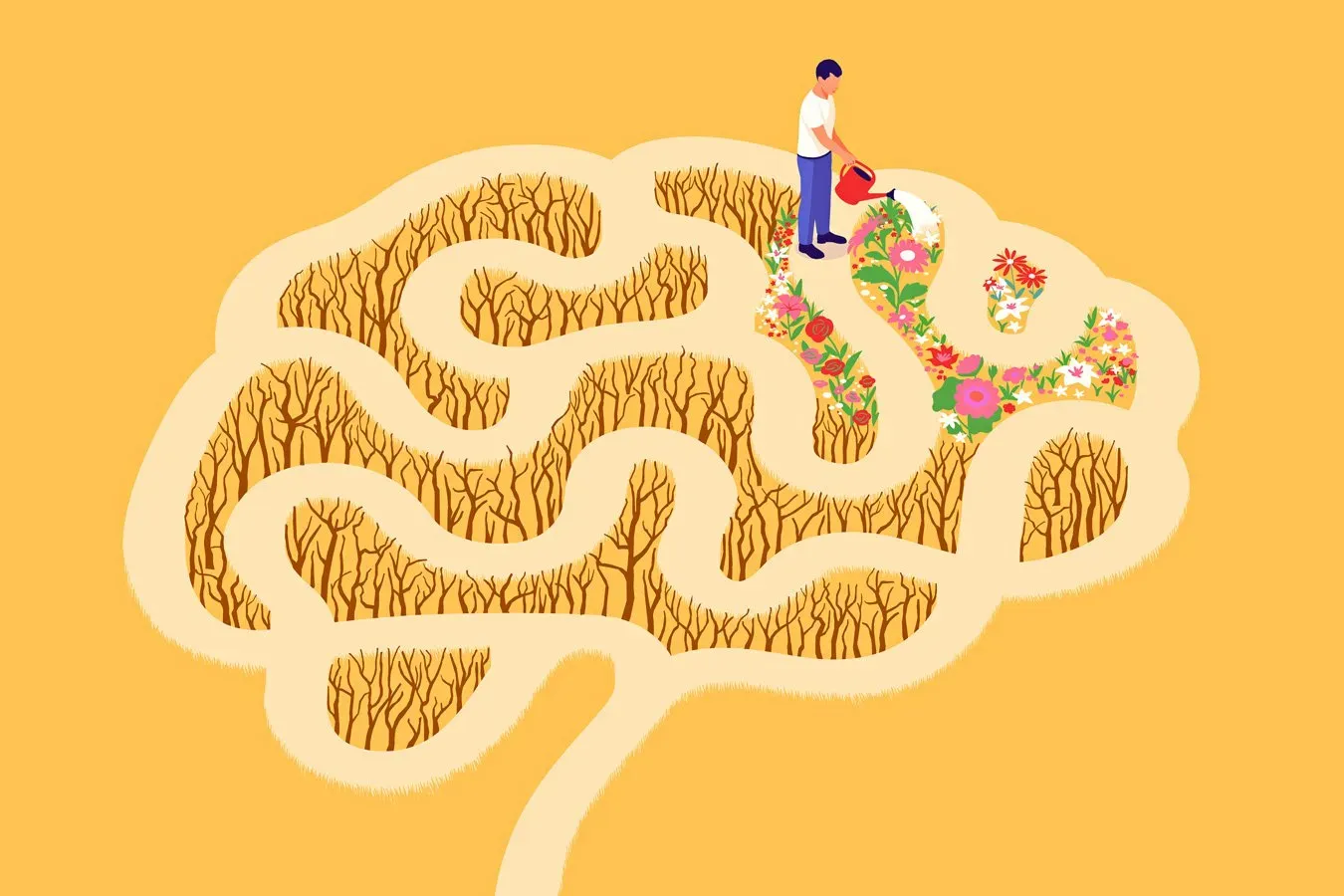
A new book on surrendering to a higher power argues that giving up control can be liberating in today's complex world.

A new crop of popular-science books has arrived just in time to help us weather the seasonal storms that are now a common occurrence around the world.
One title that caught our attention is from an unusual source: a forest that shares author rights with humans. This book promises to offer fresh insights into the natural world and its workings, but its premise is as intriguing as it is mysterious.
For those looking for more conventional self-help advice, there's also a new book on surrendering to a higher power. The idea of giving up control in today's complex world may seem counterintuitive, especially when we're constantly bombarded with messages telling us how to live our best lives and avoid missing out.
According to Anna Lembke, an addiction medicine psychiatrist and head of Stanford University's Addiction Medicine Dual Diagnosis Clinic in California, the pressure to control every aspect of our lives is immense. From managing our relationships and health to avoiding annoying noises and staying on top of our digital lives, it's no wonder we feel overwhelmed.
In her new book, Radical Surrender: Letting go in a world addicted to change, Lembke argues that there is a way out of this cycle of control. She promises tools to help us let go of our desire for mastery and instead return to the mystery of life.
Lembke's previous work on dopamine addiction has already made waves, with her book Dopamine Nation shedding light on the delicate balance between pleasure and pain in today's high-tech world. With Radical Surrender, she offers a new perspective on how to cope with the demands of modern life.
Mathematics plays a crucial role in our daily lives, from searching for information online to choosing what to watch on streaming services.
The reliance on numbers is now more apparent than ever, especially with the increasing presence of artificial intelligence in our everyday routines.
Big Math: The hidden codes that run our world highlights how familiar mathematical concepts form the foundation of computer science and quantum computing, essential knowledge if we want to understand the rapid changes happening around us.
Leading mathematicians Steven Strogatz and Alex Townsend at Cornell University, New York, are behind this book, which aims to demystify complex mathematical ideas for a broad audience.
Their work emphasizes that mathematics is not just an abstract discipline but also a tool with significant implications for our world, making it accessible to readers from all walks of life.
The book's publishers stress the importance of grasping these concepts in order to comprehend the transformations sweeping the globe.
Invasive species have become a pressing concern worldwide, their impact on local ecosystems often being felt long after initial introduction.
This issue is addressed in Undesirable: Invasive species, humans, and where we all belong by Amy Crawford.
The book explores how humans have inadvertently introduced non-native species through various means, including accidental transportation, habitat destruction, and climate change.
Examples of such invasive species include garlic mustard spreading rapidly through American forests and brushtail possums allegedly decimating New Zealand's flightless birds.
These cases illustrate the complexity of this issue, with unclear consequences for local biodiversity.
The question remains as to how we can hold ourselves accountable for these unintended consequences and their long-term effects on the environment.
The field of invasion biology has been marred by controversy and ethics dilemmas as it seeks to eradicate certain species for the benefit of others.
Freelance writer Crawford is set to shed light on this complex issue in his latest work, which promises to offer a thought-provoking exploration of the subject.
A new book titled Song of the Cedars has been released, featuring a unique collaboration between renowned nature writer Robert Macfarlane and other experts, along with an unexpected contributor: the Los Cedros Cloud Forest itself.
The cloud forest, located on the western slopes of the Andes in Ecuador, is not only a key player in the book's creation but also holds significant moral rights as its own co-creator of the literary work.
In recognition of this milestone, the publishers have stated that Song of the Cedars is more than just a book, it's an acknowledgment of the forest's role in shaping the narrative.
The book's cover features a stunning panoramic scene showcasing the flora, fauna, and fungi of Los Cedros Cloud Forest, which can be read or displayed as desired by the viewer.
All proceeds from the sale of Song of the Cedars will go towards protecting the Los Cedros Cloud Forest, underscoring the book's commitment to environmental conservation.
The social media landscape is teeming with influencers showcasing their passions and skills to millions of followers. From dance routines and makeup tutorials to carpentry DIY projects, these creators are pushing the boundaries of what can be achieved online.
However, a closer look at the impact of digital work reveals a more complex picture. The pursuit of passion, autonomy, and financial gain is often accompanied by precarity, inequality, and other unforeseen consequences.
Christin's research highlights the need for a fundamental rethink of the economic structure underlying social media platforms. As influencers continue to shape online discourse, it's clear that their work has far-reaching implications that extend beyond the digital realm.
In stark contrast to the ephemeral nature of social media fame, marine biologist Ashley Ward delves into the timeless and awe-inspiring world of oceanic life in his book Saltwater. This natural history of the sea is a testament to the profound impact of water on our evolution and daily lives.
Ward's expertise as a biologist at the University of Sydney and head of its Animal Behaviour Lab makes him uniquely qualified to explore the intricate secrets of marine life. From jousting humpback whales to claustrophobic submersible journeys, his book promises an immersive experience that will leave readers in wonder.
In The Phantom Mind: Insights from the borderlands of sleep, researcher Baland Jalal offers a glimpse into the mysterious realm of sleep paralysis. As a leading expert in this field, Jalal's work is expected to provide valuable insights into the complex workings of our minds during the sleeping hours.
The boundaries between sleep and wakefulness are a mystifying realm, full of strange occurrences that can leave even the most rational person questioning their own sanity. For some people, this liminal space is haunted by terrifying entities that seem all too real.
One individual's experience with these ghostly apparitions has led them to dedicate years of research to understanding the phenomenon. Their personal encounter began when they woke up in a state of terror, only to realize that a demon was physically attacking them while simultaneously invading their mind.
The vivid memories of this traumatic event have become the foundation for their ongoing investigation into the nature of sleep paralysis and its relationship to the brain's ability to process information during REM sleep. Theories abound about the causes of these hallucinations, but one thing is clear: they are a symptom of a deeper mystery waiting to be unraveled.
In other fields, scientists are delving into the intricacies of animal behavior, using detailed observations and data collection methods to shed light on previously unknown aspects of their subjects' lives. Insect Day by Erica McAlister takes readers on an immersive journey through 24 hours in the life of various insects.
The book chronicles a day in the life of multiple insect species, from the mosquito that preys on unsuspecting humans at midnight in Africa to the Arctic bumblebee that forages for nectar in the morning light. By tracing the daily struggles and triumphs of these tiny creatures, McAlister offers an intimate look into their often-forgotten world.
This meticulously researched guide is part of a larger series by Chicago University Press, which has previously explored topics such as marine biology and herpetology. Insect Day joins Shell Day by Helen Scales and Snake Day by Marty Crump in the line-up of fascinating volumes that highlight the complexity and beauty of our natural surroundings.
The author's unique perspective as a curator at London's Natural History Museum brings an added layer of expertise to the narrative, making it an invaluable resource for anyone interested in entomology. By examining the intricate social structures and survival strategies employed by insects, McAlister reveals the intricate web of life that underlies our planet.
The meticulous attention to detail and the use of scientific data make this book a valuable companion for students and researchers alike, providing insights into the lives of creatures that are often overlooked in favor of more charismatic species.
The book "42 Tales from Life by renowned author Richard Dawkins is a fascinating collection of animal stories that explore how species evolved into their unique forms.
Dawkins delves into the intriguing world of cephalopods and hummingbirds among others, revealing the fundamental truths behind their extraordinary behaviors. He examines phenomena such as fish galloping through water and rhinoceros horns taking shape, shedding light on the intricate relationships between different species.
The book features a range of animal tales, from The Cephalopod's Tale" to "The Bat's Tale, each accompanied by stunning illustrations created by 19th-century naturalist Ernst Haeckel. Dawkins' passion for Haeckel's art is evident throughout the book, as he shares his own fascination with these depictions of plants and sea creatures.
Haeckel's artwork has captured Dawkins' imagination since childhood, and their combination in 42 Tales from Life" creates a captivating narrative that explores the boundaries between humans and animals. By examining the similarities and differences between species, Dawkins invites readers to reflect on our place within the natural world.
This engaging collection offers insights into the lives of creatures often overlooked in favor of more prominent species, making it a valuable companion for students and researchers alike.
Facts based on reporting originally published by New Scientist.
You may republish this story, in full or in part, if you credit News Central Site and link to it (licence CC BY 4.0). Photos are not included.