Mount Everest Climber Eva Steinwald Sets Sights on Seven Summits
Eva Steinwald has become the oldest American woman to reach the summit of Mount Everest at 63 after discovering mountaineering in her early sixties.
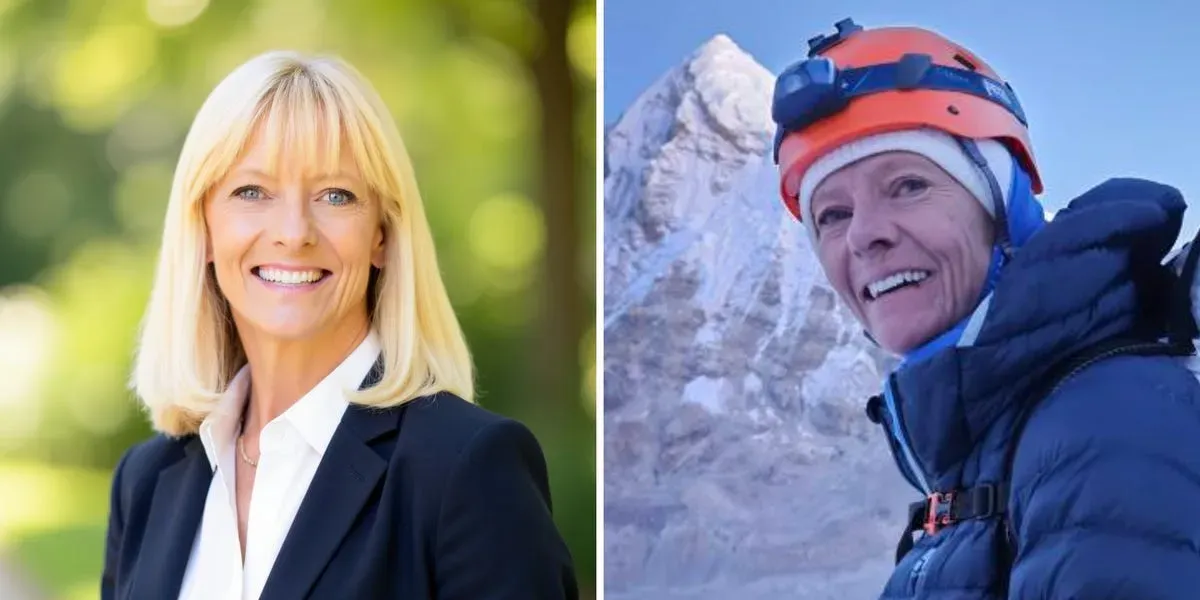
Eva Steinwald, an Idaho-based real estate broker, has set her sights on conquering the world's most iconic mountains after overcoming a lifelong fear of heights following the loss of her husband in 2018.
Steinwald, who was previously content with skiing and jogging, discovered a new passion for mountaineering in her early sixties. She had never considered herself an athlete before but decided to take on the biggest challenge she could think of after decades of marriage.
A few years of climbing experience later, Steinwald stood at the summit of Mount Everest, becoming the oldest American woman to achieve this feat at the age of 63. Her remarkable achievement has left many in awe of her determination and resilience.
Steinwald's training routine is a testament to her commitment to staying fit for mountaineering. She works out six days a week, combining strength and endurance exercises that are recommended by doctors and performance scientists as a blueprint for longevity.
As Steinwald embarks on the next phase of her climbing journey, she has set her sights on completing the Seven Summits, the highest peaks on each continent, before reaching the age of 70. With her impressive record already established, many will be watching with bated breath to see if she can achieve this ambitious goal.
As she delved into climbing, Steinwald realized that building strength was crucial to tackle the tough terrain of Everest.
She began incorporating obstacle course racing into her routine, quickly identifying the need for more physical conditioning and hiring trainers to guide her.
Her current exercise regimen consists of three days a week dedicated to strength training, focusing on long-term durability rather than short-term gains.
Strength training is a key component in both athletic performance and longevity, with extensive research backing its importance for maintaining overall health.
Eva Steinwald's fitness routine is tailored to her climbing needs and includes strength training to maintain stability and durability while navigating challenging mountain terrain.
Steinwald's experience began with a trip to Mount Rainier in Washington State, where she tackled the grueling hike followed by an icy climb at midnight when the conditions are more stable. This initial foray into high-altitude climbing was preceded by a crash course in using essential gear such as ice axes and crampons.
Steinwald's training regimen also incorporates endurance runs to build stamina for bigger adventures. She dedicates several hours each week to running at an easy pace, allowing her body to adapt without exhausting itself.
To improve physical and mental well-being, Steinwald prioritizes slower Zone 2 cardio sessions that allow the body to recover more easily. This approach is particularly beneficial for beginners who can start with short periods of walking or light jogging before gradually increasing duration and intensity.
As part of her rigorous training regimen, Steinwald engages in rucking, which involves carrying a weighted pack over long distances to build strength and endurance. This form of exercise has gained popularity among athletes due to its ability to combine strength and cardio training simultaneously.
To prepare for the physical demands of hauling heavy gear up steep cliffs, Steinwald often spends several hours per day carrying a weighted pack, either outdoors or in the gym. When inclement weather prevents her from training outside, she adapts by using equipment such as the stair stepper and treadmill to simulate the experience.
Steinwald's training schedule involves alternating between periods of high-intensity exercise and longer, more low-key sessions. For instance, a recent gym session involved two hours on the stair stepper followed by two hours of treadmill running while wearing a heavy pack.
The intense workout regimen played a crucial role in preparing Eva Steinwald for her Everest climb. By incorporating shorter, more frequent sessions into her routine, she was able to increase her body's endurance and ability to handle prolonged periods of hard effort.
This interval training also helped cultivate mental resilience, teaching Steinwald how to problem-solve under pressure and think critically when faced with challenges. According to Steinwald, this skill is essential for tackling the physical and emotional demands of mountaineering, where failure can be a very real possibility despite one's best efforts.
Steinwald attributes her success on Everest not just to her physical fitness but also to the mental fortitude she developed through her climbing experiences. She notes that mountaineering has given her greater emotional resilience and a deeper appreciation for life's everyday moments, allowing her to build stronger relationships with others.
Facts based on reporting originally published by Business Insider.
You may republish this story, in full or in part, if you credit News Central Site and link to it (licence CC BY 4.0). Photos are not included.