Mary Shelley's Frankenstein Novel Explored Through Creature's Perspective
Renowned artist Jane Benson sheds new light on Mary Shelley's classic novel 'Frankenstein' by highlighting the voice of its creature.
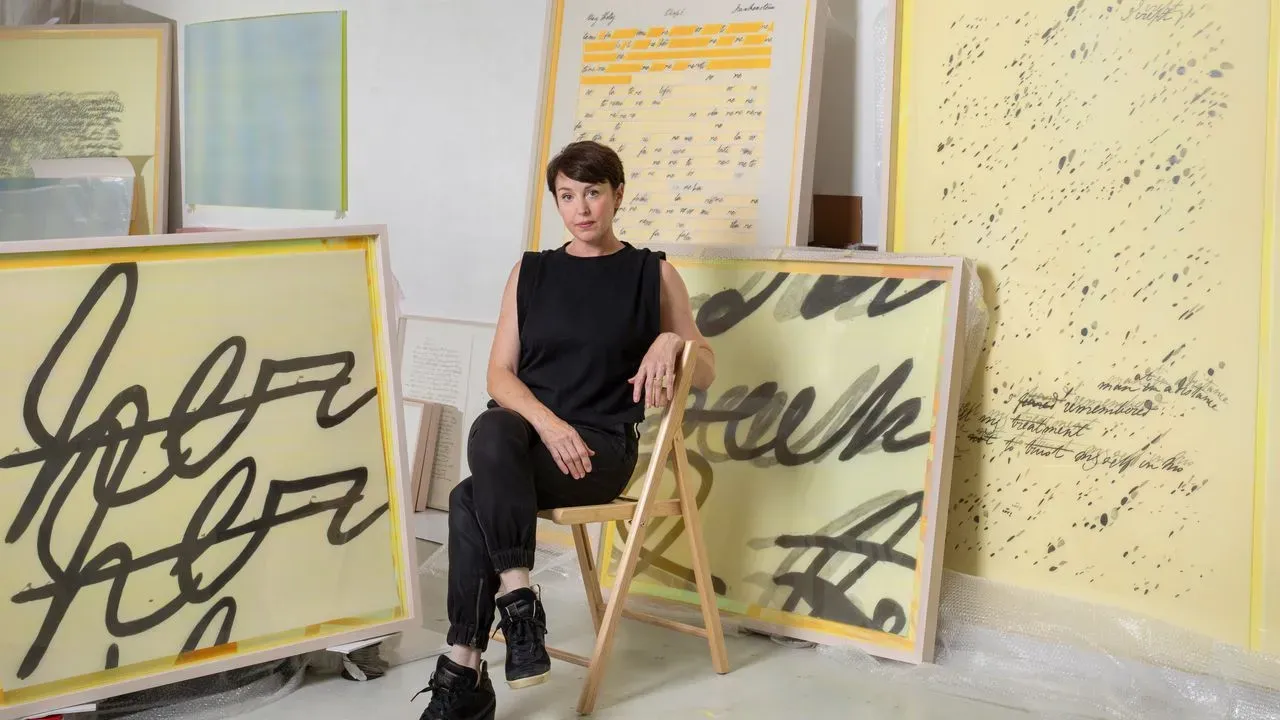
Renowned artist Jane Benson has shed new light on Mary Shelley's classic novel 'Frankenstein', challenging the conventional interpretation of the book as a horror story about male hubris.
Benson points out that while it is true that Victor Frankenstein's creation serves as a cautionary tale about the dangers of unchecked scientific progress, there is another narrative thread woven throughout the novel: the voice of the creature itself.
A significant turning point in the book occurs when the narration shifts from Victor's perspective to that of his creation, which speaks directly to its creator for the first time. This pivotal moment marks a major shift in tone and focus, as the reader is forced to consider the monster's own thoughts and emotions.
The six chapters written from the creature's perspective are notable not only for their narrative impact but also for their lyrical prose, which evokes a sense of wonder and awe at the natural world. The creature describes its experiences with language, emotion, and human connection in vivid detail.
Benson, who has long been fascinated by Shelley's novel, believes that the creature's voice is often overlooked in favor of Victor's more prominent narrative. According to Benson, reading those chapters from the creature's perspective is a deeply moving experience that challenges the notion of a single, monolithic "man's voice at work in the book.
The creature's narrative arc is one of heartbreak and rejection, as it observes the family it has grown to love but is ultimately shunned by them. Benson notes that this aspect of the novel serves as a powerful critique of societal norms and expectations.
As the creature recounts its experiences with anger, loneliness, loss, and rage, its words take on a sense of poignant urgency. The reader is left to ponder the consequences of rejection and the devastating impact it can have on even the most well-intentioned being.
The idea of the monster's voice in Mary Shelley's classic novel has been interpreted by scholars as a powerful symbol of the struggles women face in a patriarchal society. For artist Jane Benson, this notion sparked a creative obsession that led her to delve into the original manuscript of Frankenstein.
Benson tracked down a rare facsimile of the manuscript released to commemorate the book's 200th anniversary and began an intense study of the text. This meticulous research laid the foundation for her new exhibition, her her, which features over two dozen artworks that visually represent the monster's voice as a woman's cry for justice.
The show's central focus is on the devastating phrases penned by an 18-year-old Shelley to describe the creature's tragic fate. Benson has carefully preserved these passages in their original form, using the author's handwriting as a visual anchor for her text-based drawings. This deliberate choice allows the viewer to confront the raw emotion and anguish that underlies Shelley's narrative.
By working with the manuscript's authentic language, Benson creates an eerie sense of intimacy between the viewer and the original text. Each artwork becomes a poignant reflection on the monster's plight, as well as the societal pressures that have historically silenced women's voices.
The artworks on display are not simply reproductions of Mary Shelley's manuscript, but rather innovative reinterpretations that reflect Benson's unique approach to art-making.
Benson has developed a distinct signature in her work over three decades, characterized by an excavation of text that challenges societal norms and expectations. This is evident in the various techniques she employs, such as layering iridescent yellow film with reflective borders on some works, making them appear to vibrate off the wall.
The sheer scale of some pieces is striking, with some reaching heights of six feet or more. One notable example is her her (2026), which lends its name to the exhibition and features a close-up examination of the crossed-out words that give it its title.
Benson has also experimented with the concept of solfège, extracting seven syllables from the manuscript and using them as the basis for musical scores. These works are performed by mezzo-soprano Hai-Ting Chinn, who frequently collaborates with Benson on her projects.
In addition to these sound-based pieces, Benson has created counter works, which involve filling in the enclosed spaces of letters like g, d, and o to create a rhythmic pattern of ovals and dots. This technique gives rise to a kind of literary animal print that adds another layer of meaning to the artworks on display.
The technique used by artist Jane Benson to create her artworks is characterized by its subtlety, with most sentences left blank except for the filled-in counter space.
However, some carefully selected sentences from Mary Shelley's novel are preserved in their entirety, adding a layer of depth and meaning to the artworks. For example, the sentence I waited with forced patience until the moon had sunk" remains intact, striking Benson as particularly noteworthy.
Benson attributes her fascination with these preserved sentences to the fact that they come from a woman's voice, which she finds compelling. This aspect of the artwork has clearly resonated with Benson, who is drawn to the unique perspective and narrative offered by Mary Shelley's writing.
As one navigates through Benson's body of work, it becomes clear that there are numerous Easter eggs hidden within the artworks. For instance, the varying shades of yellow used in some pieces are derived from tone notes that match up with solfège scores, adding another layer of complexity to the artwork.
Benson's interest in Frankenstein was sparked by reading the novel alongside other classics at school, where she was born and grew up in a small village in northwest England. Like many people who encounter the book at a young age, Benson was initially swept up in the familiar narrative of a violent creature and its maker's regret.
Benson's re-reading of Frankenstein as an adult, after becoming a mother, marked a turning point in her understanding of the novel. This time around, she was struck by the 40 or so pages from the creature's perspective, which triggered a new set of subversive ideas and inspired her to create artworks that reflect this fresh interpretation.
Benson's work is not simply about showcasing her technical skill but also about dedicating herself to an idea, in this case, exploring the complexities of Frankenstein through her art.
Mary Shelley's personal life and relationships have often overshadowed the story of Frankenstein, a novel that has captivated readers for centuries. Her family background as the daughter of prominent English intellectuals Mary Wollstonecraft and William Godwin is well-known, but so too are her tumultuous relationships with men, particularly her marriage to Percy Shelley.
The circumstances under which she wrote Frankenstein have also become legendary, including the infamous ghost-story contest at Lord Byron's Swiss villa in 1816. However, it is worth noting that Mary Shelley was dealing with a significant personal loss at this time - the death of her mother just days after her birth had left an indelible mark on her life.
This emotional baggage likely played a crucial role in shaping the narrative of Frankenstein, which explores themes of grief and loss. Benson's own work touches on these same emotions, as she delves into the complexities of Mary Shelley's life and the creation of her iconic novel.
The pain of losing children is a recurring theme in Shelley's life, with two young children dying before their second birthday. This personal tragedy likely influenced the writing of Frankenstein, which was begun just after the loss of her first child.
The artist Jane Benson has created a series of works as a tribute to Mary Shelley's grief and her own personal loss, following the recent passing of her father.
Benson's connection to Shelley is further strengthened by the doodles found in the margins of the author's manuscript for Frankenstein. These sketches depict English elms, trees that held great significance for Benson, who grew up surrounded by them in England but was devastated when many were lost to Dutch elm disease.
The discovery of her father's photographs of these trees in Shelley's manuscript has given Benson a sense of continuity and connection across time and space, as if the trees themselves are urging her to keep looking.
Facts based on reporting originally published by Vogue.
You may republish this story, in full or in part, if you credit News Central Site and link to it (licence CC BY 4.0). Photos are not included.