London-based designer Alex Eagle launches new column exploring intersection of fashion and home design
The column is inspired by connections between personal style and living spaces, with a focus on interior design and its influence on other areas.
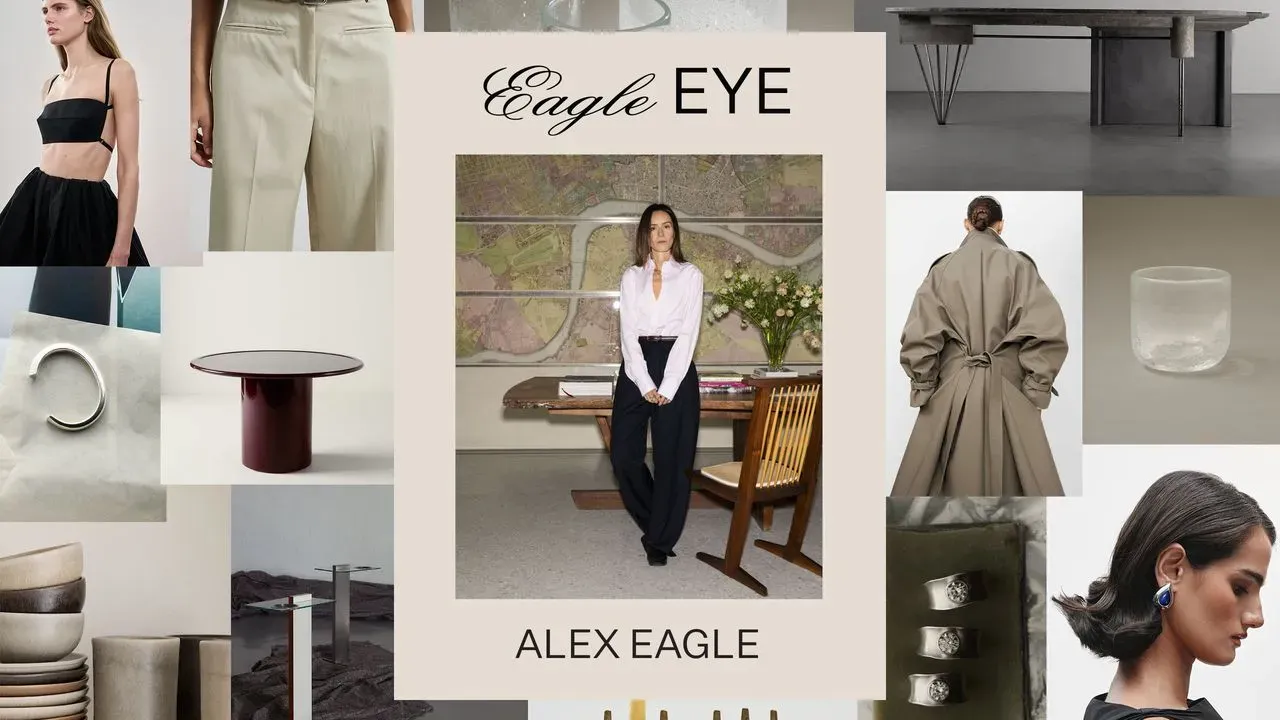
London-based designer and creative director Alex Eagle has launched a new column on her digital storefront, where she explores the intersection of fashion and home design each month.
The column, which delves into the "why behind certain themes, is inspired by the connections between our personal style and living spaces. By examining these relationships, Eagle aims to shed light on how our tastes and preferences develop over time.
At its core, the column is rooted in interior design, but it also branches out into other areas of interest. Each month, Eagle will be joined by experts from her network as they explore a new theme and share their insights with readers.
For those looking for inspiration and ideas to refresh their homes, Eagle's digital storefront offers a curated selection of products that reflect her personal style and aesthetic.
The raw aesthetic of Brutalism has gained significant appreciation in recent years, not just for its architectural grandeur but also for its influence on interior design and fashion. This style's emphasis on raw materials and strong forms creates a striking contrast to the polished visuals that dominate modern visual landscapes.
Image director Andrew Taylor-Parr notes that people are increasingly drawn to Brutalism due to its authenticity and confidence, which resonates across various creative fields. He believes this trend is particularly evident in interior design, furniture making, and fashion, where individuals seek out bold statements and uncompromising styles.
For Eagle + Hodges, the studio's proximity to Sir Frederick Gibberd's 1970s landmark at 180 The Strand has a profound impact on their work. They strive to showcase materials as they are, without disguise or embellishment, reflecting the unadulterated spirit of Brutalism.
The beauty of Brutalism lies in its imperfections, and it's best when left unadorned. This architectural style is often associated with industrial materials, but there's a depth to it that goes beyond mere functionality.
When incorporating Brutalist elements into fashion, designers take an abstract approach by focusing on the individual components of concrete. A surface that showcases the manufacturing process, texture left unfinished, and some weight can create a unique aesthetic. This is achieved through textures such as knitted slub on cashmere jumpers or the rigid structure of stripped-back trench coats contrasted with soft cotton fabrics.
The appeal of concrete lies in its ability to take on the material qualities of whatever it's cast against. As Stevens notes, this often results in visible imprints of the casting material, which can resemble marble, stone, or wooden planks. Martin Laforet's works are exemplary of concrete's versatility and range.
For a subtle touch, designers can incorporate Brutalist elements into smaller home decor items, such as Serax's round stool. This understated piece adds a hint of the style to any room, allowing materials to take center stage without overwhelming the senses.
Brutalist design emphasizes form, proportion, and texture, forcing one to focus on these key elements alone.
Veronica De Piante's Gaia burgundy ankle boots are a prime example of material honesty in fashion. Crafted with attention to detail, the heel is made from wood and leather with a patent finish, allowing each material to speak for itself. The boots' understated design highlights the beauty of individual components.
In interior design, materials such as calf hair, plush velvet, and lacquered furniture can add interest to an otherwise simple palette. A shiny finish on a piece like the Thames table from our collection can instantly boost the mood of a room, which is exactly what a single-material scheme needs.
Brutalist architecture often features geometric forms and sharp lines that give spaces a sense of strength and presence. This aesthetic can be achieved through modernist interpretations, such as Stevens' stainless steel tables with slender proportions despite their solid base.
The essence of Brutalism lies in its emphasis on materiality and construction over ornamentation. As interior designer Taylor-Parr puts it, Without ornament, material and construction become much more important.
This minimalist approach requires a delicate balance, as evident in both interiors and fashion. Stevens notes that it's a wonderful exercise in design that forces you to find clever solutions" to create visually appealing spaces.
To achieve this aesthetic at home, Taylor-Parr advises balancing restraint with warmth through the use of natural materials, textures, books, art, and meaningful objects.
Facts based on reporting originally published by Vogue.
You may republish this story, in full or in part, if you credit News Central Site and link to it (licence CC BY 4.0). Photos are not included.