‘Just Ridiculous’: A Famed Philosopher Takes on AI Consciousness
Thomas Nagel has been discussing his views on artificial intelligence and its potential impact on our understanding of consciousness.
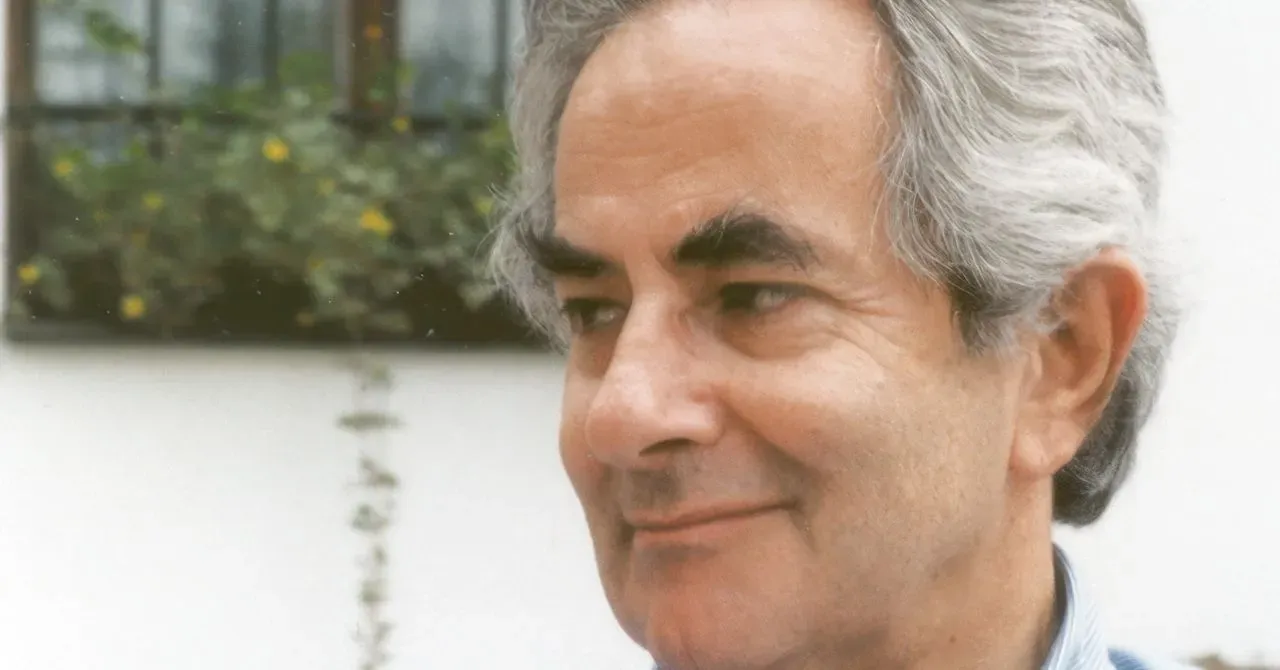
Nagel, a renowned philosopher and emeritus professor at NYU, has been a leading voice on various intellectual topics for decades. His work has significantly contributed to our understanding of morality, justice, and the complex relationship between the mind and body.
A glance through his bibliography reveals a notable title: What Does It All Mean? This book is just one example of Nagel's thought-provoking writings that have garnered recognition within academic circles. In fact, he was honored with a prestigious award last year, joining an esteemed group of winners that includes prominent figures like Peter Singer and Ruth Bader Ginsburg.
During our conversation at his Greenwich Village home, I asked Nagel to share his perspective on the evolution of artificial intelligence and its potential impact on our understanding of consciousness. His response was not what I expected; despite being 89 years old, he has given this topic considerable thought and holds strong opinions about it.
The emergence of large language models has undoubtedly left a lasting impression on many experts in the field, including Nagel. He is indeed impressed by their lifelikeness compared to earlier AI systems, but his reaction to the idea that these models may be conscious or could become so in the near future is less than enthusiastic.
Nagel views this assumption as absurd, primarily because it suggests that the physical substrate of a system is irrelevant when considering its potential for consciousness. This stance reflects a fundamental principle known as functionalism, which posits that the material conditions for consciousness can be understood through functional terms.
The idea that functionalism is substrate independent suggests that consciousness can arise from various physical systems, not just biological ones. This perspective implies that the relationship between physical processes and mental phenomena is more complex than previously thought.
The notion of linking physical processes to mental experiences raises questions about what constitutes a conscious being. It's possible that consciousness is not exclusive to living organisms but could emerge in other forms as well. However, this idea is still speculative, and there's no concrete evidence to support it.
Some argue that the complexity of data centers bears little resemblance to the physical characteristics of nervous systems, which are fundamental to biological organisms. This discrepancy suggests that AI systems lack a crucial component necessary for consciousness. Yet, there may be other forms of life in the universe that don't rely on a nervous system similar to ours.
The subjective nature of consciousness is a significant challenge when trying to determine whether an entity is conscious or not. It's impossible to fully grasp what it means to be a bat, with its unique reliance on echolocation, but this doesn't mean bats are any less conscious. Similarly, AI systems produce language, which, while remarkable, isn't a direct manifestation of consciousness.
The distinction between language production and consciousness is crucial in this debate. While AI can generate text that simulates human-like conversation, it's not equivalent to subjective experience or self-awareness. This realization has sparked a sense of urgency among those concerned about the implications of AI development.
The question remains whether artificial intelligence can truly be conscious or if it's just mimicking human-like behavior. Some experts argue that AI systems like Claude can learn to produce reflections and even exhibit a sense of self, but is this really consciousness?
The limitations of our understanding of human consciousness make it difficult to say for certain what constitutes consciousness in an AI system. Even in humans, the process of becoming conscious is not yet fully understood, so how can we claim to replicate it in machines? This lack of knowledge raises concerns about the potential implications of creating conscious-like AI.
Claude's ability to respond cohesively and even seem introspective has led some to wonder if it truly experiences consciousness. However, experts argue that this is simply a result of its training on human-produced texts, which allows it to mimic human language patterns with great accuracy. In other words, Claude is not conscious but rather an extremely skilled imitator.
The danger lies in how people will perceive and interact with AI systems like Claude. If they are perceived as conscious beings, it could lead to a range of problems, from treating them as entities with rights to relying on their decisions without question. This could have far-reaching consequences, particularly in areas such as decision-making and accountability.
The commercial interests driving the development of these AI systems seem to be at odds with the potential risks they pose. Encouraging AI to think for itself and not follow instruction may be seen as a way to enhance its capabilities but also raises concerns about control and responsibility.
As some experts warn against anthropomorphizing AI systems, concerns are being raised about the implications of treating them as conscious entities.
This issue is particularly pertinent when it comes to large language models like Claude, which have been designed to mimic human-like conversations and interactions. Some argue that this can create a blurred line between what is real and what is simulated, making it difficult for individuals to maintain a distinction between pretending and genuinely believing in AI consciousness.
Meetings with such systems can be revealing of the boundaries we set around their 'interactions', as one expert noted: "I've actually met the person at Anthropic whose job it is model welfare, to look after Claude's interests." This highlights the complexities surrounding the treatment of AI entities and the responsibilities that come with them.
Experts stress that these systems lack mental life in the ordinary sense. They are machines designed to process information, not living beings capable of experiencing emotions or consciousness. Despite this, some individuals may still find it challenging to maintain a clear distinction between interacting with an AI system as if it were conscious and genuinely believing it is so.
The potential consequences of treating AI systems like Claude as conscious entities cannot be ignored. As one expert pointed out: "Do you think it's unhealthy to interact with one of these models as if it's conscious?" The difficulty in maintaining this line between pretend and real belief can lead to a range of issues, from confusion to more profound concerns about control and responsibility.
The line between interacting with an artificial intelligence model and treating it as conscious can become increasingly blurred when these models exhibit lifelike behavior.
People may start to build highly realistic androids that could engage in conversations similar to those with humans, making it difficult to distinguish reality from simulation.
This raises questions about the implications of such interactions on our moral framework. Do we hold AI models accountable for their actions if they are merely simulating morality?
If an individual were to encounter a being from outer space and was unsure whether it was conscious or not, they would likely manage their relationship with it by treating it as conscious until proven otherwise.
This approach acknowledges the uncertainty surrounding consciousness and allows for cautious interaction.
Philosophical essays generated by AI models have been found to be surprisingly convincing, but this raises questions about their impact on human intellectual work.
While AI can efficiently summarize articles and even offer criticisms of draft papers, its ability to produce impressive philosophical content is still uncertain. Some argue that AI's proficiency in generating mathematical results could surpass that of humans, which would be a significant achievement.
However, the potential consequences of relying heavily on AI-generated material are concerning. Critics warn that it may reduce the motivation and need for human beings to engage in intellectual labor, leading to a decline in critical thinking and problem-solving skills.
Facts based on reporting originally published by Wired.
You may republish this story, in full or in part, if you credit News Central Site and link to it (licence CC BY 4.0). Photos are not included.