
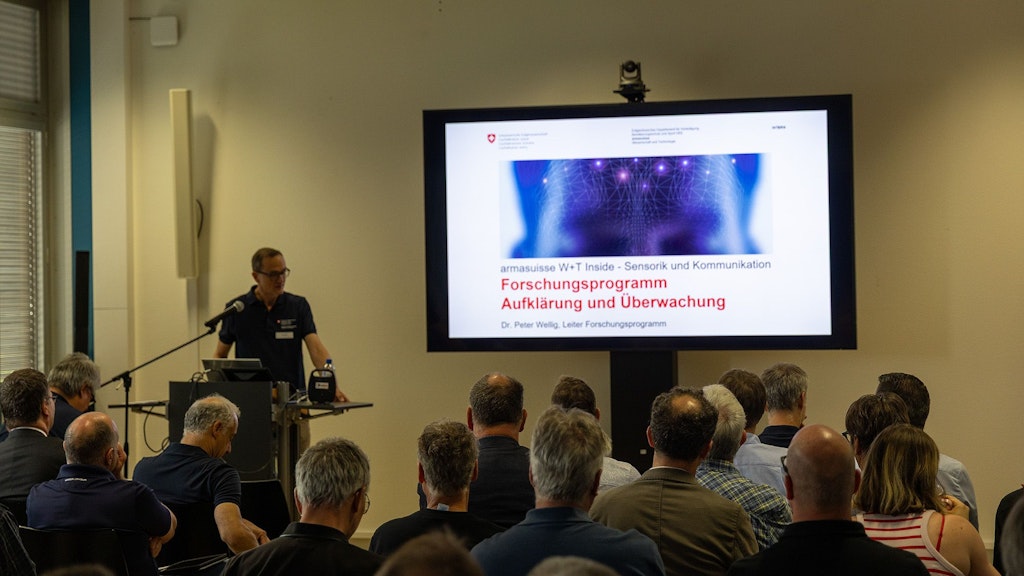
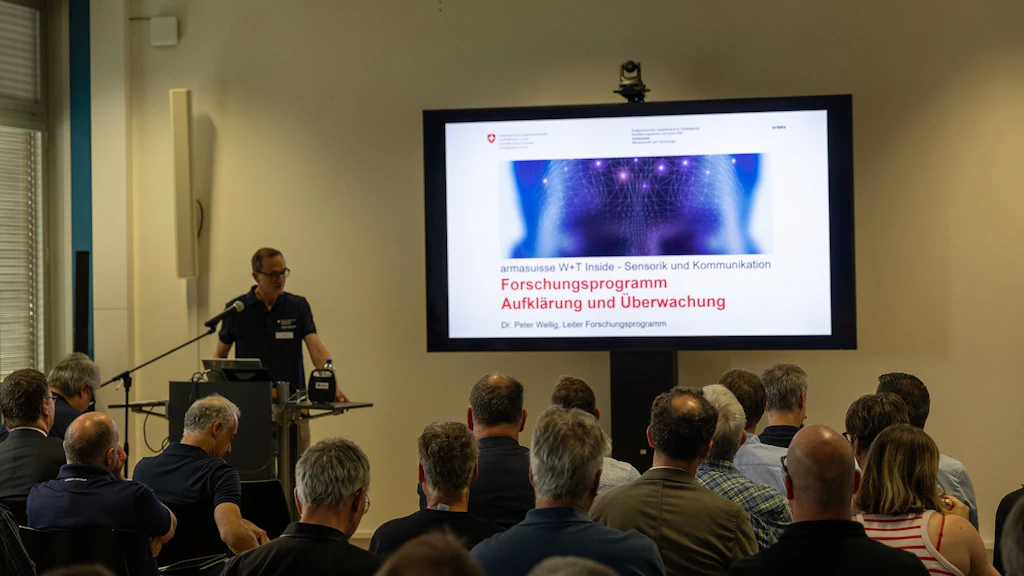
The inaugural “Inside S+T” event generated a great deal of interest. Approximately 100 participants from the DDPS gained first-hand insight into current technological developments and their benefits for defense. They took the opportunity to engage directly with subject matter experts from armasuisse S+T.
Where does “Reconnaissance and Surveillance” stand today?
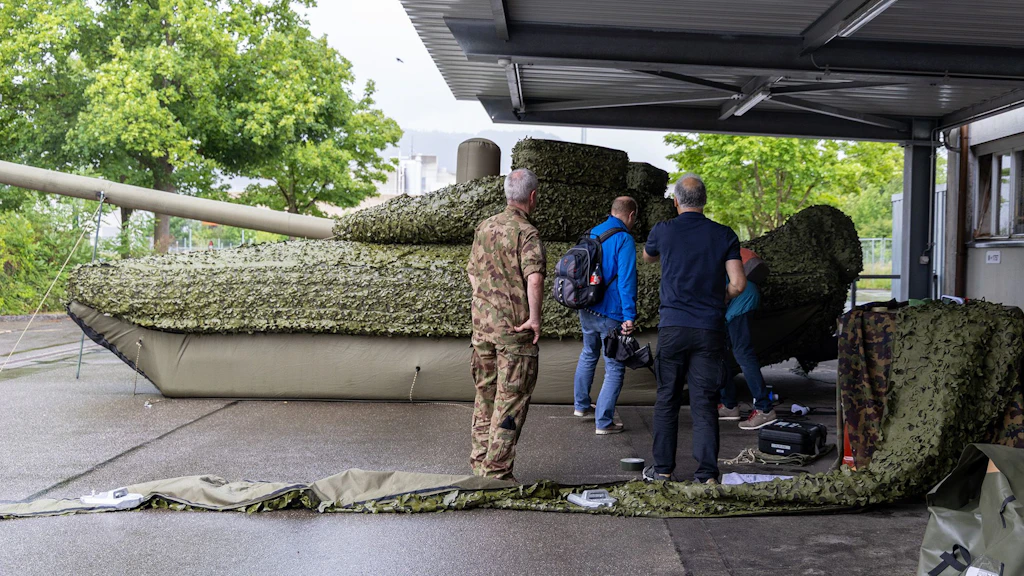
As part of the newly conceived Inside S+T event series, Dr. Peter Wellig, head of the “Reconnaissance and Surveillance” research program, presented the current state of the field. The program covers modern technologies such as advanced radar systems, electronic warfare technologies, and camouflage and deception techniques. It also incorporates the latest developments from industry and academia. This close collaboration with national and international partners from industry, academia, and the military is carried out through joint research projects and serves to continuously build expertise and create new opportunities. To ensure that research activities align as closely as possible with the Swiss Armed Forces’ objectives, the research program is structured into four areas of expertise in consultation with the Armed Forces Staff (AFS): airspace surveillance, airborne ground reconnaissance, surveillance of large and urban areas, and camouflage and deception. To provide a deeper understanding of these fields, experts from armasuisse S+T presented their current work and clearly demonstrated how research, testing, and procurement are interconnected. This close connection was evident, for example, in the “multispectral camouflage systems” (MSTS) procurement project. armasuisse S+T’s task is to assess the material properties and camouflage effectiveness in the field through ground tests and to evaluate the effectiveness of multispectral camouflage.
Communication Research Program – Structure, Objectives, and Practical Examples
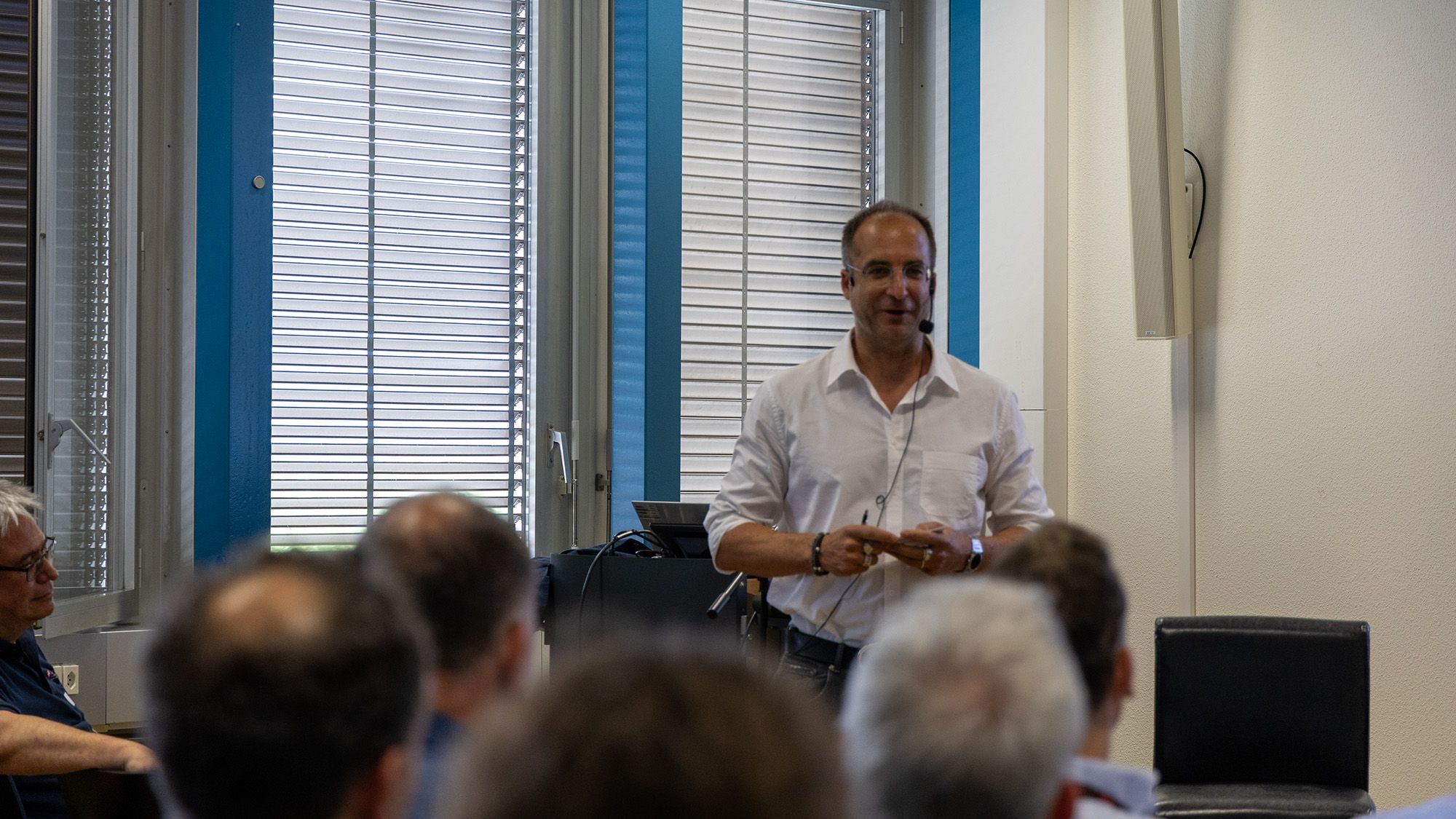
In the second part, Dr. Christof Schüpbach, as the program director, presented the Communication Research Program. He structured the program around three central thematic areas: transmission technologies, electronic warfare, and command and control information technologies. The latter area, in particular, addresses the need to ensure interoperability between command and control information systems and communication systems. The aim is to close the loop in the intelligence collection and tactical reconnaissance network (SNFW) and further strengthen operational capability. Christof Schüpbach also emphasized the importance of a broad partner network for the continuous expansion of technical expertise. In particular, active knowledge transfer among project leaders plays a central role in leveraging synergies and driving innovation in a targeted manner.
To illustrate the projects in this research program, various experts presented their work and current research priorities in the individual subject areas. They provided practical insights into ongoing projects and highlighted specific applications as well as challenges in their fields of expertise. A prime example is the INSIGNE project, which focuses on the modernization of electronic warfare. armasuisse S+T is leading the technical implementation of the project. It ensures that the armed forces have state-of-the-art capabilities for electronic reconnaissance, jamming, and deception. In addition to procuring lightweight, modular, and interoperable systems, the project prioritizes their integration into the existing system network.
Panel Discussion: Long Procurement Cycles and the Innovation Ecosystem
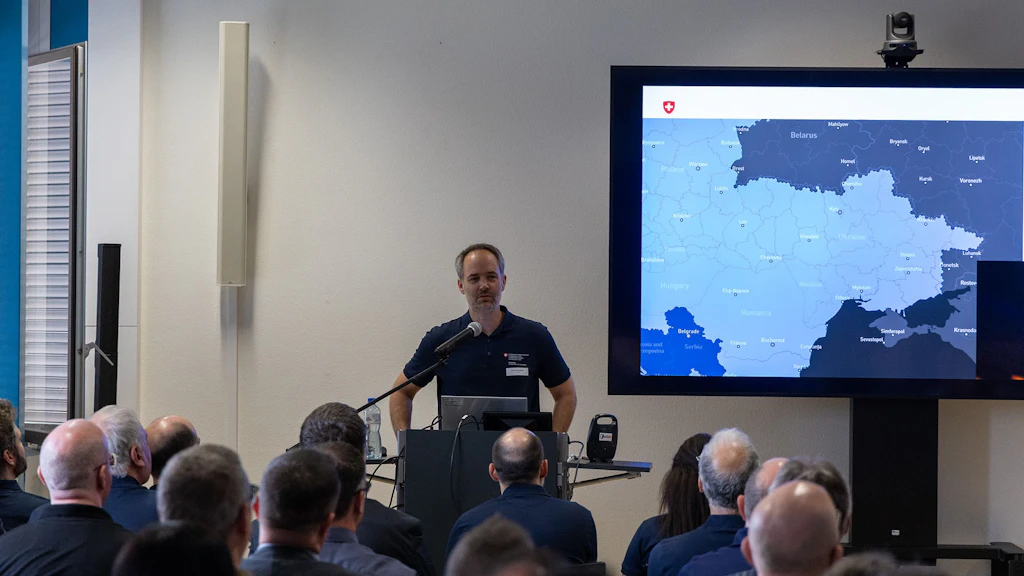
The afternoon began with a panel discussion moderated by Dr. Quentin Ladetto, Head of the Research Program Technology Foresight. The panelists were: Dr. Thomas Rothacher, Head of armasuisse S+T, as well as one representative each from AFS and the Military Intelligence Service (MI). Quentin Ladetto opened the discussion by turning his attention to Ukraine and emphasizing how crucial electromagnetic superiority and the interplay between sensor technology and real-time communication are for success on the battlefield. Against this backdrop, the discussion addressed, among other things, Switzerland’s excessively long procurement cycles. The panelists agreed that the innovation ecosystem – comprising the Army, industry, and universities – must be more closely networked and enabled to act more quickly in order to respond promptly to new requirements. While established risk-mitigation processes remain necessary, they often come at the expense of the required speed. Accordingly, the participants called for greater boldness in decision-making processes and a stronger willingness to implement innovative approaches more quickly.
Practical Insights into Sensor Technology and Communication
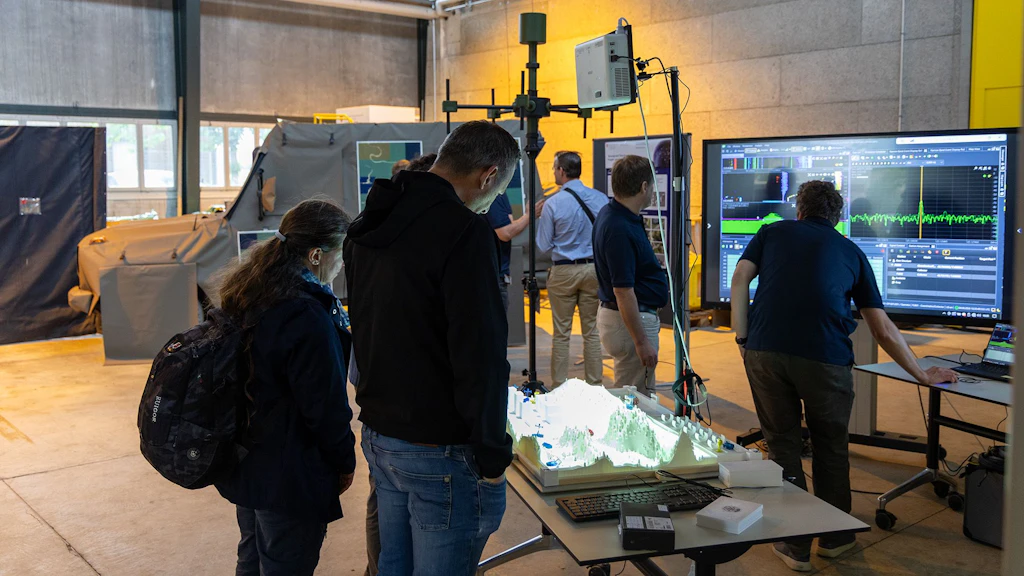
Following the panel discussion, visitors had the opportunity to further explore the morning’s topics at an exhibition.
The systems presented that morning were set up there and demonstrated in a hands-on manner. This allowed participants to experience the applications up close and gain a better understanding of how they work. At the same time, it provided an opportunity to ask specific questions and clarify individual aspects in detail.
The experts were on hand to provide in-depth insights into the technologies presented. The direct exchange fostered engaging discussions and allowed visitors to further reflect on and deepen the impressions they had gained that morning.
_bearbeitet.jpg?w=1024&auto=format)
Conclusion and Outlook
The new format was very well received by the guests. The advantage lies in the fact that knowledge and projects are not merely presented but are made tangible and experiential through exhibitions. On behalf of all participants, armasuisse S+T would like to thank the speakers for their contributions, as well as for the lively interest and the open and valuable exchange among attendees.