Household Spills and Stains Can Be Tackled with Common Pantry Items
Tomato paste, white vinegar, baking soda, and club soda are among common kitchen staples that can be used for cleaning due to their unexpected properties.
Household spills and stains can often be tackled with specialized cleaning products, but it's worth exploring alternative uses for common kitchen staples.
Many pantry items have unexpected cleaning properties, making them ideal for specific tasks when a dedicated cleaner is not available. Tomato paste, for instance, can prove surprisingly effective at removing stubborn stains from surfaces such as countertops and sinks.
White vinegar has long been touted as a versatile household hero, but other kitchen staples like baking soda and club soda also deserve recognition for their cleaning prowess. These ingredients are often overlooked in favor of specialized products, yet they offer a range of benefits when used correctly.
The convenience of using pantry items for cleaning is undeniable, it saves money, reduces waste, and eliminates the need to purchase additional plastic bottles. As Julian Silva, founder of Plastnon non-toxic cleaners, notes: "The most sustainable cleaner is usually the one already in your kitchen."
However, not all pantry products are created equal when it comes to cleaning tasks. According to Sofia Martinez, a cleaning expert and owner of Sparkly Maid Austin, disinfecting requires more than just removing dirt or odors, it demands a thorough sanitizing process.
To successfully repurpose pantry items for cleaning, it's essential to understand the underlying chemistry behind each product's effectiveness. This knowledge can then be applied to other tasks, allowing homeowners to make the most of their existing supplies and reduce waste.
When it comes to everyday cleaning tasks, many people reach for specialized products from the supermarket or hardware store. However, a closer look at the contents of our kitchen pantries reveals that some common staples can be repurposed as cleaning agents.
Olive oil, often used in cooking and dressings, can also be employed to polish stainless-steel appliances. This is due to its ability to create an ultra-thin coating on surfaces, making fingerprints less noticeable by altering how light reflects off the material.
Experts recommend using a tiny drop of olive oil applied to a microfiber cloth, rather than pouring large quantities directly onto the surface. Testing on a small, hidden area first is also crucial to prevent any greasy residue from forming. This subtle approach can make all the difference in achieving a satisfactory result.
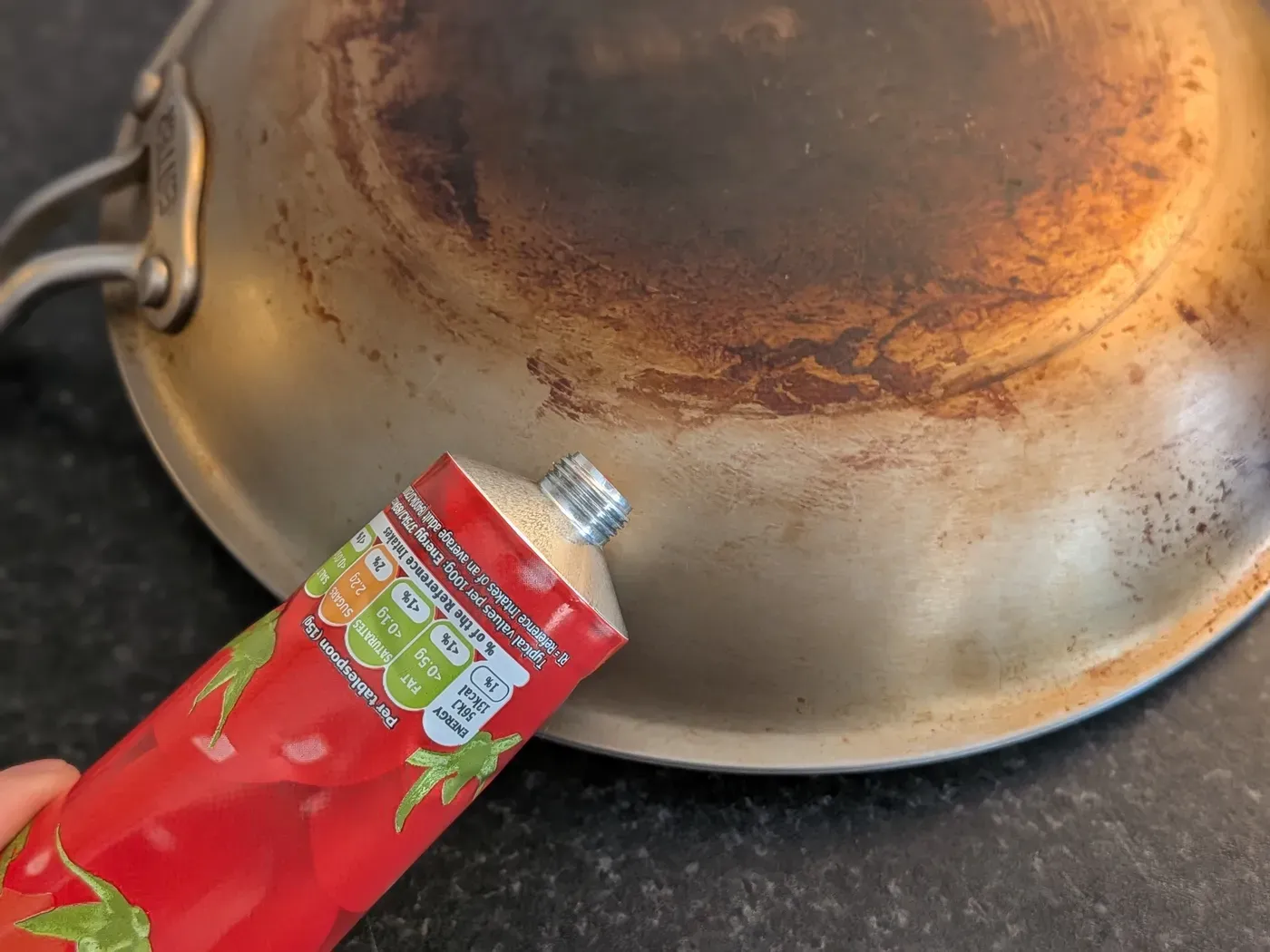
In addition to its polishing properties, tomato paste has been found to be effective at removing tarnish from certain surfaces. Its acidity helps loosen oxidation, while its thick consistency allows it to stay in contact with the surface for longer. However, this should not be seen as an all-purpose cleaner and is best used sparingly on specific areas.
The use of tomato paste for polishing is particularly suited to stainless steel, copper pots and pans, or brass fixtures. As with any new cleaning method, a small test area should be tried first to gauge the effectiveness and avoid damaging the surface in question.
When dealing with broken glass, it's essential to have a safe and effective method for cleaning up the mess.
Soft bread can be used as an alternative to a broom when picking up small shards of glass that may have been missed by other cleaning methods. To use this technique, carefully pick up any large pieces of glass first before pressing a slice of soft bread over the area.
The crumb on the bread is designed to grab onto tiny glass particles, making it easier to clean up the mess.
It's crucial to dispose of the bread immediately after using it for cleaning, and to ensure that it ends up in the trash deep enough that pets or other animals can't mistake it for food.
When dealing with stubborn grime on stainless steel sinks, a common solution is to use baking supplies.
Flour can be sprinkled over a clean and dry sink before being rubbed around with a soft cloth or paper towel to remove residual grime and leave the surface shiny.
Using cream of tartar as a cleaning agent can give this baking supply a second life in the kitchen. Its mildly acidic properties make it an effective abrasive that won't damage most surfaces.
When ceramic plates or sinks develop unsightly gray marks, they are often caused by metal residue from cutlery. Cream of tartar can be mixed with water to create a gentle paste that removes this unwanted metal without harming the glaze.
To restore old ceramics to their former shine, cream of tartar is an effective and non-damaging solution. It works best for minor imperfections rather than deep scratches, but it can make a significant difference in appearance.
Cast iron cookware requires regular seasoning to maintain its nonstick surface. However, even with proper care, rust spots may still appear due to exposure to moisture or high heat.
A common problem when dealing with cast iron is removing light surface rust without stripping the seasoning. One effective method involves using a half-cut potato mixed with baking soda.
The oxalic acid in potatoes helps break down rust buildup while the baking soda acts as a mild abrasive for a cleaner finish. This technique works best for new or light rust spots, rather than stubborn stains that require more aggressive treatment.
When faced with water rings on wooden surfaces, some people may find themselves at a loss for how to remove them without causing further damage. However, according to wood care experts, there are several household items that can be used as makeshift solutions.
One such item is mayonnaise, which contains vegetable oil that can help displace moisture locked within the finish of the wood. Before attempting to use mayonnaise, it's essential to determine the type of wood finish and the depth of the water-ring stain. This will help you decide on the best approach for removal.
To apply mayonnaise, spread a thin layer over the affected area and let it sit for at least 15 minutes or overnight, covered with plastic wrap. After allowing the mayo to absorb the moisture, wipe the area clean with a dry cloth.
The success of this method depends on the type and severity of the water ring stain; darker rings may be more challenging to remove and could result in an uneven appearance.
Facts based on reporting originally published by CNET.
You may republish this story, in full or in part, if you credit News Central Site and link to it (licence CC BY 4.0). Photos are not included.