Ford Starts Shipment of Lithium Iron Phosphate Battery Cells
Ford has made significant progress in its electric vehicle ambitions by starting shipments of lithium iron phosphate battery cells from its BlueOval Battery Park in Marshall, Michigan.
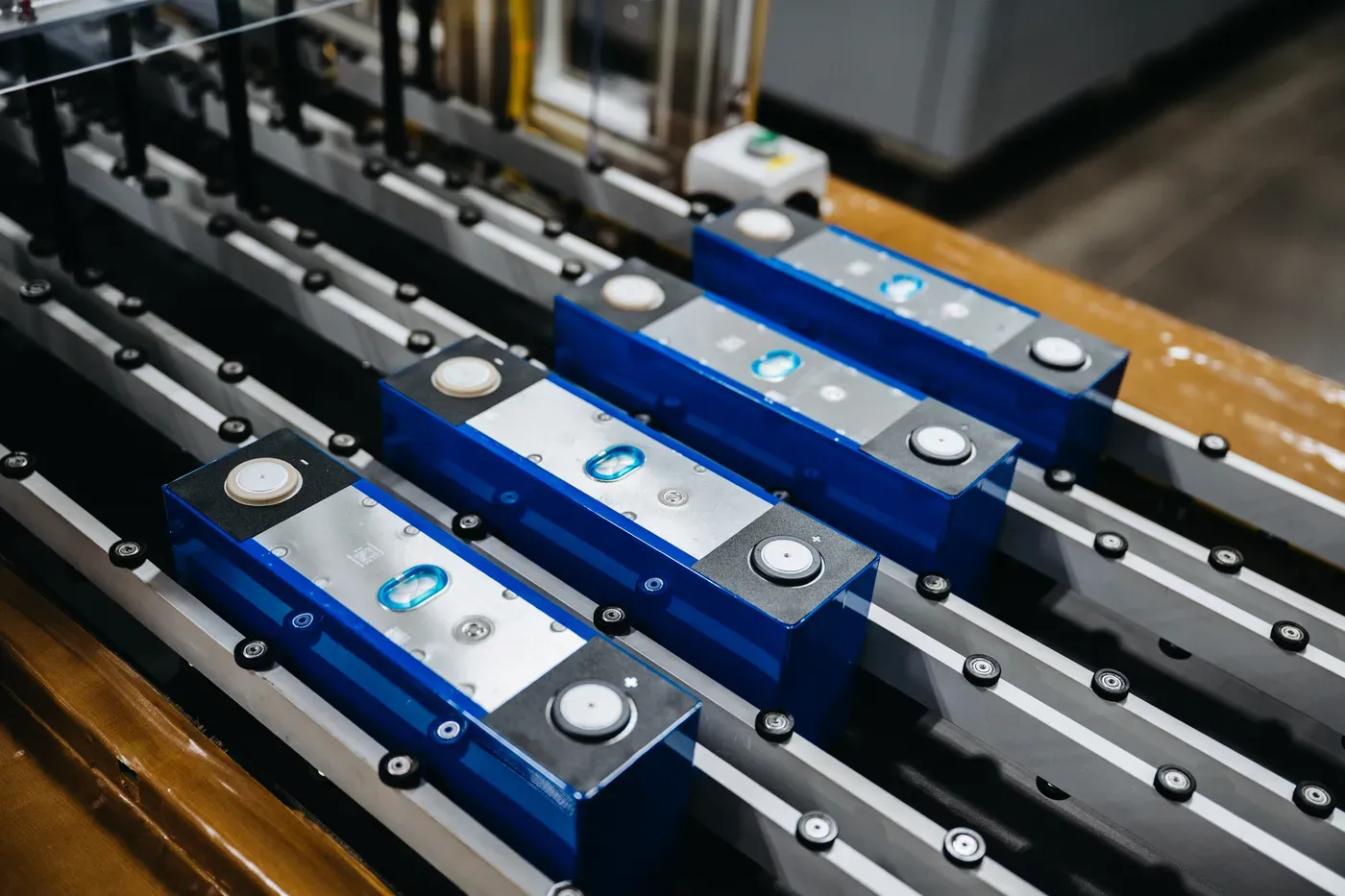
Ford has made significant progress in its electric vehicle ambitions by starting shipments of lithium iron phosphate battery cells from its BlueOval Battery Park in Marshall, Michigan. The prismatic cells are headed to Ford's Louisville Assembly Plant in Kentucky where they will power early prototypes and validation vehicles of the Fathom electric pickup truck.
The arrival of these battery cells is a crucial milestone for Ford as it prepares to launch the Fathom, an upcoming electric pickup truck, in 2027 at a competitive price. The automaker aims to make its Universal Electric Vehicle platform a reality with this new development. This move will also enable Ford to take advantage of incentives available under the Inflation Reduction Act.
Ford has set an estimated price point for the Fathom at $28,350, although the final cost may be slightly higher due to additional fees. The company plans to open preorders for the electric pickup truck early next year, giving customers a chance to reserve their spot in line.
The BlueOval Battery Park in Michigan is a major investment for Ford, with a price tag of $3 billion and a massive 2 million-square-foot facility. The plant has a targeted annual production capacity of 20 gigawatt-hours, which will be achieved through the work of approximately 1,700 employees operating across two shifts.
Ford's BlueOval Battery Park is expected to operate around the clock in order to reach its full production potential.
To gain access to the facility, visitors are required to don a clean suit, mask, hairnet, gloves, and two layers of shoe booties. This precautionary measure is essential due to the plant's strict cleanliness protocols. Upon entering, individuals must navigate through special magnetic and sticky floor panels designed to capture any metal particles that may have accumulated on their footwear. The air-blower airlocks then blast visitors' bodies clean of loose dust before allowing them to proceed.
The sheer scale of the facility is awe-inspiring, with a massive hallway stretching nearly a mile long from end to end. Raw materials, including rolls of copper and aluminum sheet, as well as chemical powders that coat them, are transported along this corridor in a straight line from east to west. The first 0.7 miles of the plant's production area is dedicated to cell manufacturing, with cathode and anode lines operating independently before joining forces for final assembly.
According to Ford's experts, lithium iron phosphate (LFP) chemistry was chosen due to its affordability and structural benefits. This prismatic format eliminates the need for nickel or cobalt, significantly reducing costs. Moreover, LFP is well-suited for bidirectional charging, a feature that enhances overall performance.
The decision to adopt LFP chemistry was likely influenced by its cost-effectiveness. By eschewing expensive materials like nickel and cobalt, Ford aims to keep production costs down while maintaining performance standards. The choice of prismatic format also provides structural benefits that contribute to the battery's overall reliability.
Ford's use of LFP chemistry is a strategic move in the rapidly evolving electric vehicle market. As manufacturers continue to push the boundaries of innovation, companies like Ford are reaping rewards by investing in research and development.
Ford's decision to license battery technology from a Chinese company has allowed it to tap into expertise while still maintaining control over its operations in the US.
The partnership with CATL, which is the world's leading battery manufacturer, was necessary for Ford to qualify for IRA manufacturing credits and keep costs low enough to deliver an affordable electric pickup.
However, despite working with a Chinese supplier, Ford emphasizes that its Michigan plant is completely US-owned, staffed, and operated, meeting all requirements for IRA compliance.
The company has taken steps to integrate the licensed technology into its own design, as evidenced by the development of a unique battery cell specifically tailored to the electric pickup's needs.
Charles Poon, who leads vehicle hardware engineering at Ford, explained that the taller and simpler cell delivers improved energy density, affordability, and durability, allowing for more comprehensive integration with the vehicle's design.
To build out its supply chain, Ford has sourced an IRA-compliant stream of battery chemistry, a material still entering the mainstream in North America, and collaborated with approved global partners and local suppliers to meet the demand.
The assembly process for Ford's lithium-iron-phosphate (LFP) prismatic cells involves several key steps. Cathode and anode foils are first layered and rolled into a cylinder before being pressed flat into what is essentially a rectangular shape with rounded edges.
This flattened cylinder, dubbed a jelly roll by Ford, consists of multiple layers of materials carefully arranged to facilitate efficient energy storage. The jelly rolls are then paired together and ultrasonically welded at specific points to create more solid terminals.
These terminals are subsequently laser-welded to a cap, effectively sealing the pair of jelly rolls within an aluminum box approximately the size and weight of a masonry brick. This nearly complete prismatic cell is then ready for final processing.
Engineers inspect each completed cell by vacuuming out any air that may have entered during assembly, pressurizing it with helium to check for leaks, before filling it with liquid electrolyte. Once filled, the LFP prismatic cell is complete and ready for use in electric vehicles.
Ford's BlueOval Battery Park has achieved a significant milestone in terms of production capacity, with its assembly lines capable of delivering 40 cells every minute. This rate makes the plant one of the fastest outside China to manufacture LFP prismatic cells.
The completed cells are currently being shipped to Louisville without integrated "e-box" electronics or cooling and wiring systems. Once pack manufacturing is validated at the Marshall plant, Ford plans to produce full battery packs with these essential components, aiming for a production rate of 50 battery packs per hour.
The exact energy capacity of the Fathom's cells and completed battery packs remains a closely guarded secret at Ford, with company officials declining to comment on expected range for the electric pickup.
While the number of cells that will make up each pack is also being kept under wraps, my examination of a cutaway unit revealed an estimated 90-108 cells, although this figure has not been confirmed by Ford.
The expertise and knowledge gained from battery production in Michigan are being shared with the manufacturing teams at Ford's Kentucky plant, which is currently undergoing retooling to produce LFP cells for large-scale energy storage applications through its subsidiary Ford Energy.
Ford's long history of developing electric vehicles dates back over 15 years, with notable milestones including the debut of the Focus Electric at CES in 2011 and the Mustang Mach-E in 2019.
The company's increased control and ownership over its battery production is expected to play a key role in the success of its next-generation UEV vehicles, as it seeks to build on the positive performance of existing models like the F-150 Lightning.
Facts based on reporting originally published by CNET.
You may republish this story, in full or in part, if you credit News Central Site and link to it (licence CC BY 4.0). Photos are not included.