Filipinos Gather in Cemeteries on All Saints' Day
Thousands of Filipinos gathered in cemeteries across Manila on Sunday to honor their loved ones on All Saints' Day.
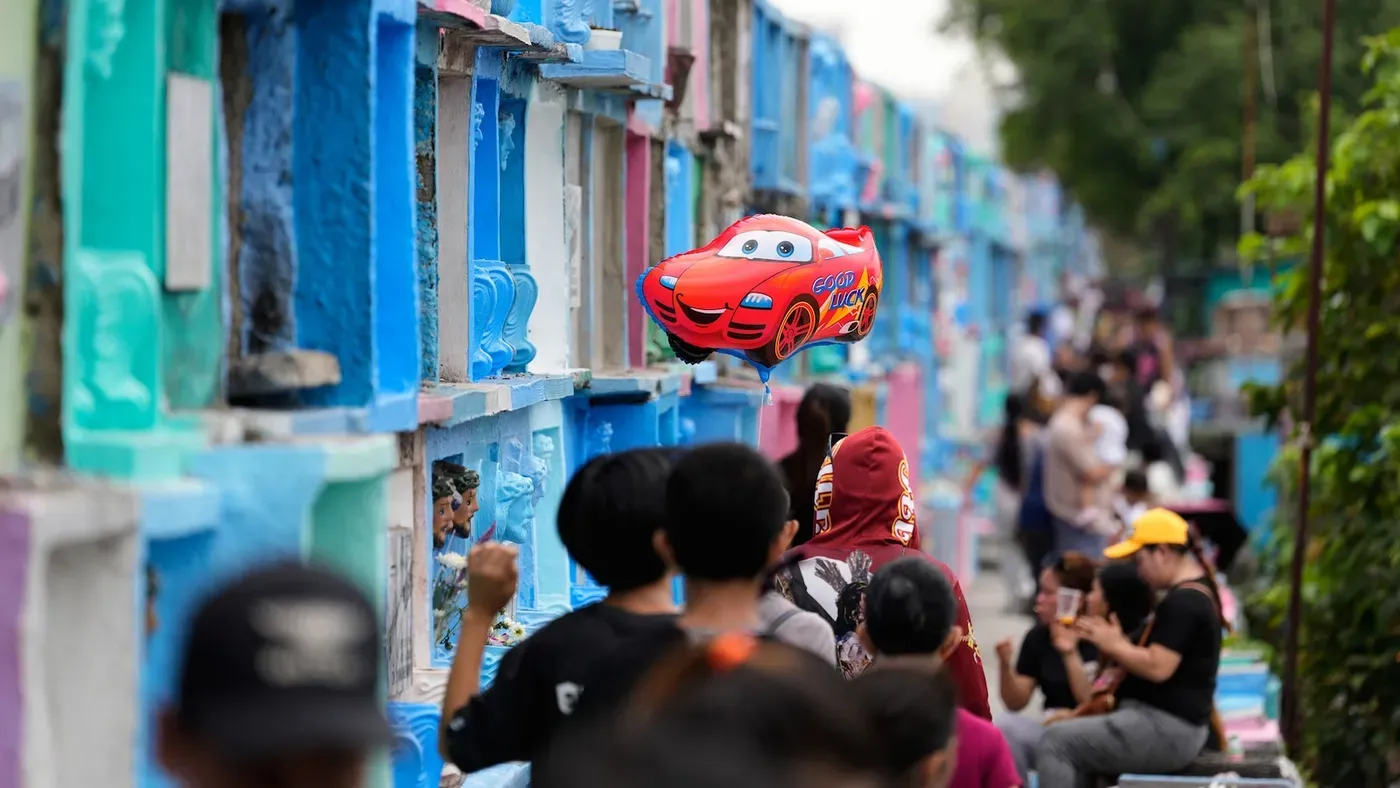
Thousands of Filipinos gathered in cemeteries across Manila on Sunday to honor their loved ones on All Saints' Day. The event, known locally as Undas, is a long-standing tradition that has been passed down through generations.
The name "Undas comes from the Spanish word honras," meaning "honors." For many Filipino families, this day is an opportunity to pay respects and offer prayers for their deceased relatives. Lorita Santos was among those who visited the graves of her loved ones.
Lorita's father may have passed away, but she cherishes the memories they shared. She fondly remembers how he would give small gifts to his children and grandchildren every payday. Visiting the cemetery is not just about paying respects; it's also a time for families to share stories and keep their loved ones' memories alive.
The tradition of visiting graves during Undas has been passed down through generations, with many Filipinos growing up accompanying their parents or grandparents on these visits. Lorita now teaches her own children the importance of this tradition, so they can continue it in the future.
The Philippines' All Saints' Day celebrations, known as Undas, have a rich history that predates Spanish colonization. This blend of Catholic traditions and pre-colonial customs is a unique aspect of Filipino culture. According to Nestor Castro, an anthropology lecturer at the University of the Philippines Diliman, there is a long tradition of ancestor worship in the country.
Filipinos honored ancestral spirits known as anito with offerings of food and gifts even before the Spanish arrived in 1565. These practices were not tied to a specific date but rather formed part of a broader tradition of ancestor veneration. This tradition is distinct from the Catholic observances of All Saints' Day and All Souls' Day.
The introduction of Catholicism by the Spanish led to an evolution of these traditions. Some of the new religious practices may have originated in Mexico, with which the Philippines has historical ties dating back to Spanish colonial rule. The Manila-Acapulco galleon trade connected the two countries for centuries, and they share similar customs for honoring the dead.
Similarities can also be seen in other countries with strong Catholic traditions. In Mexico, families often spend a day or night at their loved ones' graves or set up altars at home, filled with marigolds, music, and food. This joyful occasion is a key part of Mexican culture.
Other countries, such as Bolivia, Poland, and Hungary, also observe similar customs when honoring their dead. Families gather to place flowers, candles, and offer prayers for their loved ones who have passed away.
In Filipino culture, death is not just a time to pay respects to those who have passed away, but also an occasion that brings families closer together, according to experts.
During funeral wakes, families typically wait for relatives living far away to arrive before burying their loved ones, creating opportunities for family reunions. These gatherings are considered binding events that strengthen kinship ties. The sense of unity and togetherness is a hallmark of these occasions.
The tradition extends to All Saints' Day (Undas) celebrations, where sticky rice cakes are often shared among relatives. These cakes symbolize the bonds between family members through their sticky texture, representing the strong connections they share. This custom reinforces the idea that family relationships are an essential part of Filipino culture.
For many Filipinos, visiting their loved ones' graves is a cherished annual tradition, passed down from one generation to the next. During these visits, families often reminisce about happy memories and share stories of their ancestors, creating a sense of continuity and connection with their heritage.
Facts based on reporting originally published by ABC News International.
You may republish this story, in full or in part, if you credit News Central Site and link to it (licence CC BY 4.0). Photos are not included.