Ev Battery Pack Ejection System Shows Promising Results in China
A new safety feature is being developed in China to prevent electric vehicle (EV) battery fires from spreading damage to other vehicles or nearby objects.
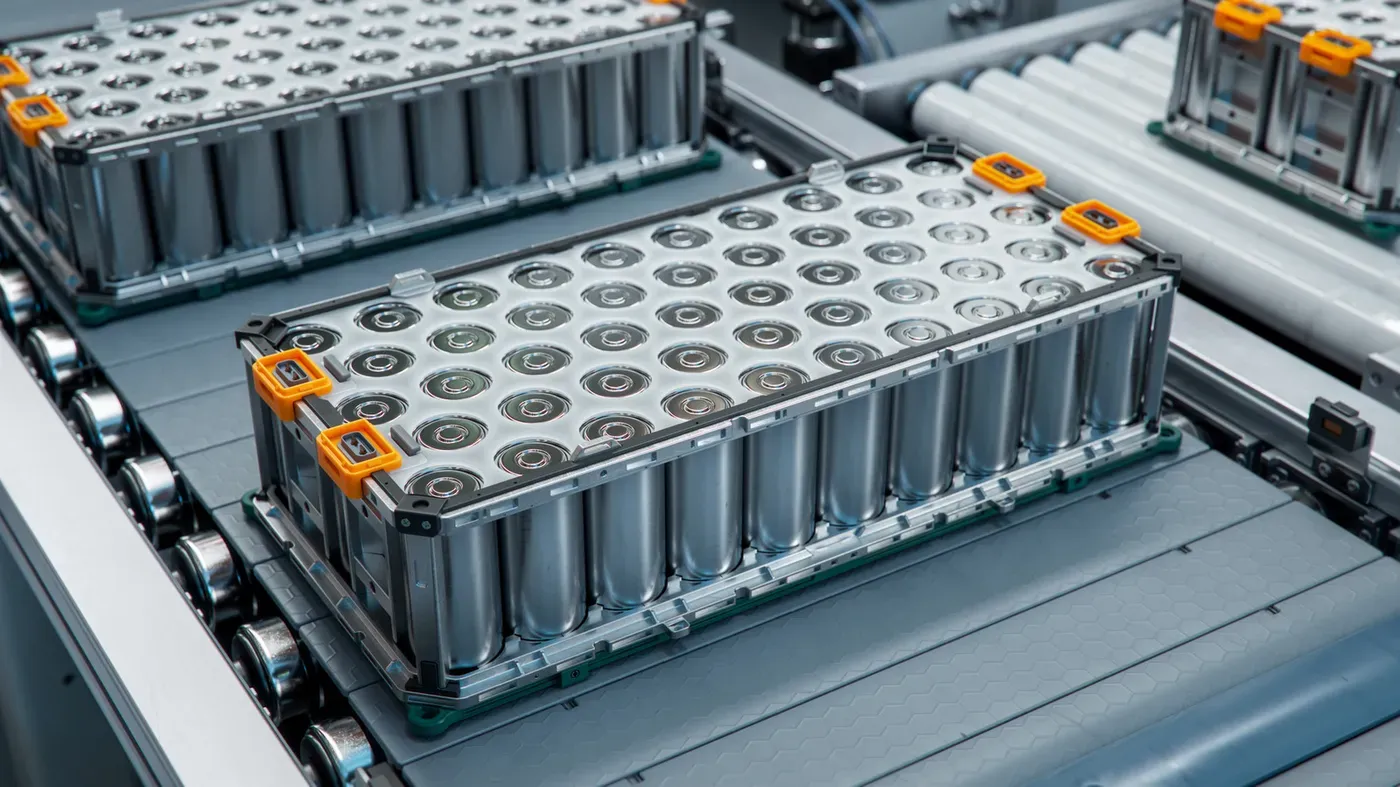
A new safety feature is being developed in China to prevent electric vehicle (EV) battery fires from spreading damage to other vehicles or nearby objects. Researchers at the China Collision Repair Technology Center have been working on an ejectable EV battery pack system that can sense a fire and rapidly remove the entire battery pack from its vehicle.
In testing, the system has shown promising results, with the battery pack being ejected in under one second when a fire is detected. Clips of the system's performance have surfaced online, demonstrating how it can quickly separate the battery pack from the vehicle in emergency situations.
The concept behind this safety feature is to prevent damage and harm caused by EV battery fires. These fires are a serious concern for automakers, as they can spread rapidly and cause significant damage to surrounding vehicles or property. With the increasing adoption of electric vehicles, finding solutions to mitigate these risks has become a priority.
Automakers have been exploring various ways to address this issue, with some companies already patenting innovative solutions. For example, Stellantis' US arm recently filed a patent application for a quick-release system that drops a burning battery pack, while Hyundai and Kia jointly hold a patent on a similar idea dating back to 2024.
While the ejectable EV battery pack system is still in its infancy, it represents an important step towards enhancing safety features in electric vehicles. Further testing and development are needed to ensure the effectiveness of this technology and address potential concerns, such as what happens if the ejected battery lands near another vehicle.
The ejection prototype uses a gas generator similar to those found in airbag systems to propel the battery pack out of the vehicle when a fire is detected by the battery management system. The system reportedly pushes the pack sideways, allowing it to come to rest about 10-20 feet away from the car.
According to project insiders, this technology originated from research into side-loading battery swaps, which are related to the Chinese-style EV battery swap stations that have been proposed for use in Europe. These swap stations would allow drivers to quickly exchange their depleted batteries for fully charged ones without having to physically remove them from the vehicle.
However, there appears to be some confusion regarding the development and implementation of this technology. While it is intended to remain locked in dense urban areas where pedestrians and other vehicles are present, the necessary software to enforce these restrictions has yet to be developed.
The video showcasing this ejection system credits its development jointly to the China Collision Repair Technology Center and Joyson Electronics, a Shanghai-listed car parts supplier. However, Joyson has denied any involvement or cooperation with the center in a statement to Yicai.
Further investigation by Yicai has revealed that the China Collision Repair Technology Center does not appear to have any business registration and may actually be owned by Maite Group, a car repair and aftermarket company that did not respond to calls from the outlet.
Thermal runaway in lithium-ion batteries is a critical issue that can lead to uncontrolled temperature increases and potentially catastrophic consequences. According to the UL Research Institutes, this state occurs when temperatures rise by more than 20 degrees Celsius per minute, reaching peaks of over 300 degrees Celsius, often accompanied by gas, smoke, or flames.
The US National Transportation Safety Board investigated four Tesla fires in a 2020 report, including one incident where a Model S battery caught fire twice after a Florida crash. The board found that batteries were able to reignite multiple times even after being initially extinguished by firefighters. In one case, it took over 20,000 gallons of water to put out the fire.
UL's Fire Safety Research Institute conducted a study in August 2026, burning 18 EVs to test various suppression techniques. Unfortunately, none of these methods were able to stop thermal runaway once it began, highlighting the need for alternative solutions.
Automakers are exploring innovative ways to address this problem. Stellantis' US arm has filed a patent application for a release system triggered by a switch in the cabin or trunk. When activated, the system uses sliding frames or explosive bolts to drop the malfunctioning battery pack to the ground, while a separate 12-volt battery powers a motor to roll the car clear.
Hyundai and Kia have also developed a solution, although it requires more driver intervention. Their 2024 patent uses a temperature sensor to detect when the battery is at risk of thermal runaway. However, the car must be stopped, and the driver must pull a lever before the pack falls under its own weight.
China has taken a proactive approach to addressing the risk of thermal runaway in electric vehicle batteries by implementing a mandatory standard that requires packs not to catch fire or explode when a cell goes into thermal runaway. This move aims to mitigate one of the most significant safety concerns associated with EVs.
Renault, a French automotive company, is also contributing to this effort by offering free licenses for its patented port technology, which enables emergency crews to flood battery packs with water using a fire hose. According to reports, this approach allows electric vehicle fires to be extinguished in approximately the same time as those involving combustion vehicles, thereby reducing response times and improving safety outcomes.
Facts based on reporting originally published by Engadget.
You may republish this story, in full or in part, if you credit News Central Site and link to it (licence CC BY 4.0). Photos are not included.