Ethiopia's economy faces challenges to continued growth
The International Monetary Fund is forecasting a real growth rate of 9.2% for the 2025-26 fiscal year in Ethiopia.
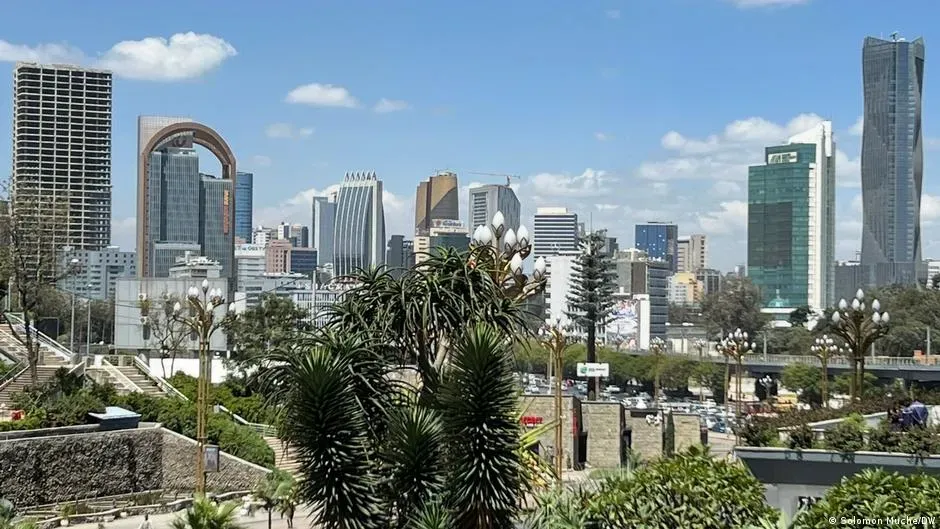
Ethiopia's economy has been experiencing a remarkable surge in growth, with the International Monetary Fund forecasting a real growth of 9.2% for the 2025-26 fiscal year. This upward trend is a welcome change from previous years, but it now faces several challenges that could derail the country's economic recovery.
Renewed fighting in the north and high reconstruction costs are major concerns, as they can divert resources away from development projects and hinder economic growth. Climate-related crop problems also pose a significant threat to agricultural productivity, which is a vital sector for many Ethiopians.
The damage inflicted by the war that ravaged Tigray and other parts of Ethiopia between 2020 and 2022 has been extensive, with infrastructure destroyed, businesses losing production capacity, and agricultural land rendered useless in some areas. This destruction has resulted in significant economic losses, both during the conflict itself and in its aftermath.
A World Bank-backed assessment of the damage caused by several conflicts in Ethiopia from November 2020 to December 2021 puts the total cost at over $22.6 billion, with economic losses amounting to around $6 billion.
The ongoing conflict in Ethiopia has left a trail of economic devastation that is still being felt today. Financial analyst Abdulmenan Mohammed points out that the war's impact on the economy was not just limited to direct destruction, but also included lost output, high inflation, and shortages of foreign currency at the time.
The country's trade conditions suffered significantly as well, particularly in 2022 when Ethiopia lost its benefits under the US African Growth and Opportunity Act (AGOA). This meant that certain African exports could no longer enter the US market duty-free. The loss of this preferential treatment has had a lasting impact on Ethiopia's export sector.
However, following the Pretoria peace agreement in November 2022, there are signs that the economy is slowly recovering. According to the International Monetary Fund (IMF), the country's GDP grew by 7.2% in 2022-23 and 8.1% in 2023-24. The IMF also forecasts growth of 9.2% for both 2024-25 and 2025-26, driven primarily by expansion in agriculture, mining, and electricity generation.
Despite these positive trends, it's essential to note that the economic damage caused by the war is still being felt. While major sectors outside conflict-affected areas are expanding, individual regions continue to suffer from the consequences of violence. This highlights the complexities of measuring a country's overall economic performance through GDP alone.
The challenges facing Ethiopia's economy persist, including high inflation rates and debt servicing. In late 2023, the country defaulted on an interest payment for a Eurobond, raising concerns about its ability to manage its finances. The IMF is working with the government to implement reforms aimed at addressing structural weaknesses in the economy.
The threat of renewed conflict in Ethiopia is casting a shadow over the country's economic growth prospects. Military spending would absorb a significant portion of government resources, leaving less for essential public services like infrastructure, education, and social programs.
According to Abdulmenan Mohammed, a substantial share of government funds would be diverted towards military personnel, equipment, and logistics. This shift in priorities could have far-reaching consequences, as it would otherwise be allocated to vital sectors that drive economic growth and development.
A prolonged war would likely deter businesses from investing in the affected regions, leading to a decline in tax revenues and further straining public finances. International lenders and donors might also become more cautious, while the government would need additional funds for security and humanitarian assistance, leaving less money available for crucial projects like roads and energy infrastructure.
The IMF's forecast of an average inflation rate of 11.7% for 2025-26 suggests that prices will continue to rise, albeit at a slower pace than in previous years. Abdulmenan Mohammed expects a further escalation to intensify inflationary pressures, with rising costs making it even harder for businesses to access credit and finance investments.
The ongoing conflict in Ethiopia is expected to have far-reaching consequences on the country's economy, particularly its foreign exchange reserves. The military's demand for foreign currency to purchase equipment from abroad could lead to a shortage of available funds for private businesses to import essential goods.
This scenario would put further pressure on the birr exchange rate, making imports even more expensive and driving up costs for fuel, industrial inputs, and other necessities. The impact of these effects on Ethiopia's economy would also depend on various factors, including export earnings, monetary policy, and developments in international markets.
Agriculture is a sector that could be severely affected by the renewed conflict, particularly in rural areas where much of the fighting takes place. Farmers' livelihoods are already precarious due to insecurity around farmland, disrupted transport routes, and shortages of agricultural inputs.
In addition, parts of the country are experiencing insufficient rainfall and poor harvest prospects, further reducing farmers' incomes and pushing food prices higher. The tourism sector is also highly vulnerable to security risks, with travel advisories and reports of fighting deterring visitors and reducing revenues for hotels and tour operators.
Ethiopia's economic growth could be threatened by renewed conflict if it deters international investors from putting their money into the country.
Investors consider factors beyond market size when making decisions, including political stability and security, as well as the reliability of state institutions. A further escalation of fighting could delay investment or prompt companies to look elsewhere for opportunities.
Despite the current tensions, there is no evidence that companies are pulling out of Ethiopia and relocating to neighboring countries like Kenya, where investors would currently see little economic advantage.
Facts based on reporting originally published by DW English.
You may republish this story, in full or in part, if you credit News Central Site and link to it (licence CC BY 4.0). Photos are not included.