Dune: Part Three Set for December 18, 2026 Release
The long-awaited conclusion to Denis Villeneuve's Dune trilogy is finally in sight with a release date set for December 18, 2026.
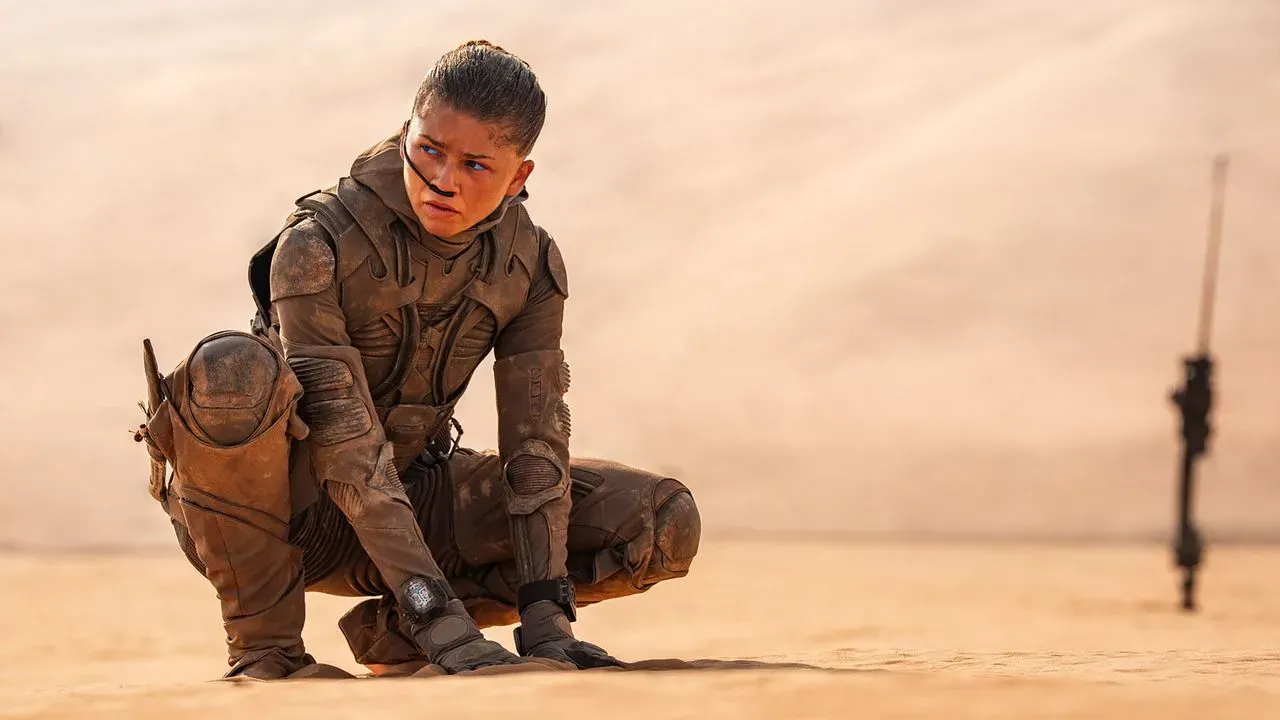
The long-awaited conclusion to Denis Villeneuve's Dune trilogy is finally in sight. The third installment, Dune: Part Three, has been a decade in the making and will hit theaters on December 18, 2026.
After years of development hell, Villeneuve's vision for the film has overcome numerous obstacles. His approach to creating the trilogy's universe was centered on grounding it in reality, using real-world locations to bring otherworldly planets to life. The volcanic shores of Iceland and the banded dunes of the Liwa Desert in the United Arab Emirates were among the sites chosen to capture the essence of Frank Herbert's space opera.
The challenge of adapting Dune for the big screen has been daunting for many filmmakers, with even David Lynch describing his experience as a "huge, gigantic sadness. Alejandro Jodorowsky also faced significant hurdles with his own vision for the franchise. Villeneuve's perseverance and dedication to bringing the story to life have paid off, setting the stage for an explosive conclusion to the trilogy.
The expansion of the Dune universe in Part Three takes fans on a thrilling journey to new and uncharted territories. Patrice Vermette, production designer, and his team have worked tirelessly to transport viewers to these breathtaking locations. Their efforts culminate in a visually stunning sequence that opens with the Fremen forces landing on Enfeil, a planet unlike anything previously seen.
Enfeil's wetlands prove to be a stark contrast to the desert environments of Arrakis, leaving the soldiers awestruck by its lush vegetation and rain-soaked landscape. The battle concludes, and the Fremen forces make their way to the black sand shores, where they wade into the sea in a poignant moment of reflection. This pivotal scene was filmed at Ingólfshöfði Beach in Iceland, a 250-foot-tall cape and nature reserve that provided the perfect backdrop for this dramatic sequence.
Location manager Duncan Broadfoot and director of photography Linus Sandgren also played key roles in bringing this vision to life. According to Vermette, Denis Villeneuve's original concept was to create an endless expanse of black sand punctuated by low clouds and a narrow band of light from the sun piercing through the horizon. The team seized on this idea, recognizing that Iceland's unique landscape could be adapted to meet their needs.
The harsh desert environment of the UAE's Liwa Desert proved to be a unique challenge for the film crew as they worked tirelessly to bring the world of Arrakis to life on screen.
Despite the difficulties posed by the extreme temperatures, which often reached scorching highs of 120 degrees Fahrenheit, the team was determined to capture the breathtaking landscapes and dramatic vistas that the desert had to offer. This involved setting up camp deeper in the desert than ever before, further pushing the boundaries of what was thought possible for a film shoot.
The Liwa Desert's ever-changing landscape presented a constant obstacle for the crew, but it also offered endless opportunities for creative problem-solving and innovation. As one member of the team noted, getting comfortable was often at odds with the production schedule.
Meanwhile, other locations in the UAE were being used to great effect, including Al Ain, where scenes depicting pivotal moments in the story were filmed.
The Liwa Desert's vast dunes provided a unique backdrop for pivotal scenes in 'Dune: Part Three', but it wasn't the only location used to great effect.
Vermette described another filming site as an incredible area that is still very unknown, while Broadfoot highlighted the challenge of finding suitable locations, which led them to Jebel Hafeet, a mountain in the region. The team scouted the entire mountain and discovered a plateau offering an expansive, rocky environment distinct from the desert setting.
The sheer scale of the shoot necessitated innovative solutions, such as using cranes to navigate airspace around production and facilitate movement of props and equipment.
The film's visual palette is further enriched by the inclusion of Caladan, a planet vastly different from Arrakis in terms of its landscape and climate. This visually distinct world was brought to life on location in Norway's northwestern Kråkenes region.
Vermette has cleverly woven Easter eggs into the narrative, including a nod to the filming location for Caladan in an interior scene on Arrakis. In the movie, in the interior courts of Alia's meditation room, there's a tree," he explains, pointing out that it is actually a Norwegian pine tree, chosen as a symbol of the family's roots and heritage.
Facts based on reporting originally published by Conde Nast Traveler.
You may republish this story, in full or in part, if you credit News Central Site and link to it (licence CC BY 4.0). Photos are not included.