Devastating Effects of American Civil War Led to Rise in Spiritualism
The White House has long been a symbol of American history and politics, but it's also seen its fair share of personal struggles and heartbreaks.
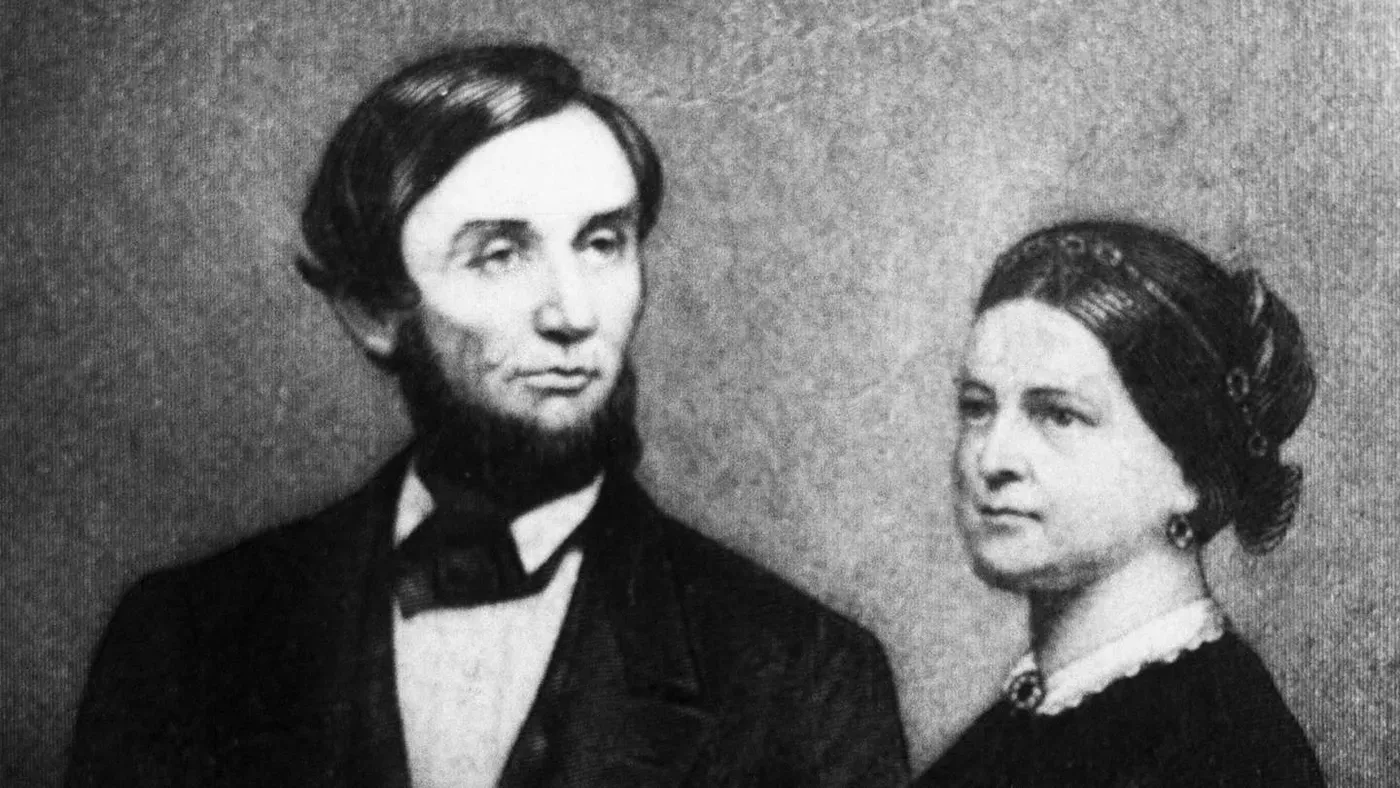
The White House has long been a symbol of American history and politics, but it's also seen its fair share of personal struggles and heartbreaks. One such instance was when Mary Todd Lincoln, wife of President Abraham Lincoln, turned to the spiritualist movement in her time of need.
The devastating effects of the American Civil War weighed heavily on the nation, resulting in an estimated 620,000 to 750,000 deaths by its end. This staggering number translated to roughly 2% of the American population, leaving countless families and communities torn apart.
In a society grappling with such immense loss, it's no surprise that spiritualism experienced a surge in popularity. The movement centered on the idea that the souls of the deceased remained connected to the living, offering a glimmer of hope for those seeking solace in their grief.
Mary Todd Lincoln was no exception, finding comfort in the spiritualist ideals after suffering multiple personal tragedies. Her family had already known loss with the passing of her young son Eddie in 1850, and things only got worse when Willie, their 11-year-old son, succumbed to typhoid fever in 1862.
The pain was palpable as Mary isolated herself for weeks following Willie's death, unable to bear the thought of facing reality without him. Her seamstress described her as being "inconsolable, highlighting just how deeply she had been affected by this loss.
The Lincolns' grief-stricken state resonated with many Americans who were also seeking answers in a time of great turmoil. With the war raging on and death tolls rising, spiritualism offered a beacon of hope for those struggling to cope with their losses.
As Mary Todd Lincoln navigated her darkest days, she found solace in the idea that some connection remained between her and Willie. This notion was central to the spiritualist movement's appeal, offering a sense of continuity amidst unimaginable loss.
The Lincolns' story serves as a poignant reminder of the impact of war on families and loved ones, highlighting the desperation and longing for closure that can arise in its wake.
Mary Todd Lincoln's grief over her son Willie's passing led her to seek comfort in unconventional means. Her search for solace was influenced by former First Lady Jane Pierce, who had also experienced the loss of children and recommended that Mary consult with spiritualists.
These spiritualists claimed they could facilitate communication between the living and the dead, allowing Mary to connect with her deceased son. With Pierce's advice in mind, Mary is believed to have hosted up to eight séances at the White House.
During these gatherings, Mary would sit in a circle with a spiritualist and some friends, all clasping hands as music was played to summon the spirits. The séances took place in the White House's Red Room, where various tricks and technologies were employed to create noises that were then attributed to spirit activity.
The spiritualists used techniques such as tapping sounds to convince those present of their claims. These tricks aimed to create an atmosphere conducive to believing in the supernatural presence of spirits. The séances seemed to provide Mary with temporary comfort.
Mary's experiences during these séances have been documented, offering a glimpse into her efforts to cope with her loss. She reported that Willie would appear to her each night, standing at the foot of her bed with his characteristic smile.
The details of these séances reveal the desperation and longing for closure that can arise in families affected by war. The White House became an unlikely setting for Mary's attempts to connect with her deceased son, highlighting the complexities of grief and the measures people take to cope with their emotions.
The White House became a hub of paranormal activity during Mary's attempts to connect with her deceased loved ones. In the Red Room, she would gather with friends and spiritualists, forming a circle where they would clasp hands in unison.
A musician would play haunting melodies designed to summon spirits, while the spiritualists employed various tricks and technologies to create mysterious tapping sounds and other noises throughout the room. These eerie events were touted as evidence of spirit activity.
Mary's fascination with spiritualism only intensified after her husband's death. She frequently hosted séances at her Chicago home, inviting mediums to facilitate communication with the deceased. One such individual was William Mumler, a spirit photographer" who claimed to capture images of spirits on film.
Mumler's most notable photograph appeared to show Lincoln's spirit hovering above Mary. While experts would later dismiss this image as a hoax, Mary found it profoundly moving and comforting. She wrote that the veil between the living and the dead was thin, allowing loved ones to remain close despite physical separation.
Mary's enthusiasm for spiritualism also extended to her views on photography. She believed that images could serve as tangible connections to those who had passed away, providing a sense of comfort in times of grief.
Despite her mother's efforts to connect with Lincoln, Robert Todd Lincoln was skeptical of her involvement with mediums. He later used this as evidence of Mary's supposed insanity, leading to her commitment to an asylum.
Mary's time in the asylum would be short-lived, however, and she eventually returned to live with her sister. The experience left a lasting impact on their relationship, with Mary never forgiving Robert for his role in her confinement.
Mary Todd Lincoln's employment of mediums had a profound impact on her relationships, particularly with her son Robert. He was not supportive of his mother's interests and later used them as evidence against her mental health. This ultimately led to Mary being committed to an asylum, although she was released within a year.
Abraham Lincoln's views on spiritualism are somewhat unclear. A friend described him as having no interest in divination or the occult, but there is another account that suggests he had a tendency towards mysticism. In a letter to his friend Joshua Speed, Lincoln revealed this side of himself.
Despite his own reservations about spiritualism, Lincoln may have attended some of Mary's séances out of curiosity. He seemed more interested in understanding how the mediums created their illusions than in believing in actual spirit activity.
The president visited the grave of his son in Oak Hill Cemetery regularly, a testament to the deep emotional pain he felt after losing him. This grief likely had a profound impact on Lincoln's life and worldview.
It is worth noting that Lincoln's views on spiritualism were complex and multifaceted. While he may have been skeptical about the supernatural claims made by mediums, he did seem to be drawn to the idea of mysticism.
The contrast between Lincoln's skepticism and his own mystical tendencies highlights the complexities of human nature and the many ways in which people can hold contradictory views on spiritual matters.
The White House was often a hub of spiritual activity during Abraham Lincoln's presidency, and Mary Todd Lincoln played a significant role in promoting these practices.
Spiritualists visiting the White House warned the president about potential dangers, including the threat of assassination, which seemed increasingly likely given the turmoil of the time. Lincoln would sometimes respond to such warnings by saying that his friend Charles Colchester had already foretold those events.
Colchester was a prominent spiritualist who frequently visited Mary at the White House and hosted séances in which he claimed to communicate with spirits from beyond the grave. Notably, Colchester's social circle included John Wilkes Booth, the man who would eventually assassinate Lincoln.
Booth himself had an interest in spiritualism and attended numerous séances led by Colchester, highlighting the close connections between those involved in these activities. It is a chilling coincidence that a friend of both Booth and Colchester was also a frequent visitor to the White House.
The intersection of politics and spirituality during this period has left many wondering about the nature of human perception and the blurred lines between reality and fantasy. Lincoln's own experiences with spiritualism seem to have been complex and multifaceted.
Lincoln remains one of the most commonly reported ghost sightings at the White House, with numerous visitors claiming to have seen his spirit roaming its halls. This enduring presence has sparked much speculation about the nature of his afterlife and the legacy he left behind.
As interest in spiritualism began to wane towards the end of the 19th century, several prominent mediums were exposed for faking their abilities, and some pioneers of the movement confessed to being charlatans. Despite this, many people continued to cling to the idea that loved ones might be waiting just beyond the veil.
As the 19th century drew to a close, interest in spiritualism began to wane due to scandals involving prominent mediums who were caught fabricating spirit activity. Several key figures within the movement publicly admitted to being charlatans.
The exposure of these deceptions failed to extinguish the widespread desire for reassurance that loved ones survived death.
Facts based on reporting originally published by Mental Floss.
You may republish this story, in full or in part, if you credit News Central Site and link to it (licence CC BY 4.0). Photos are not included.