Comedians Use Satire in Job Interviews with AI Agents
Graham Raabe has gained a significant following online by mocking AI job interviewers, including Clark from Marlow & Finch.
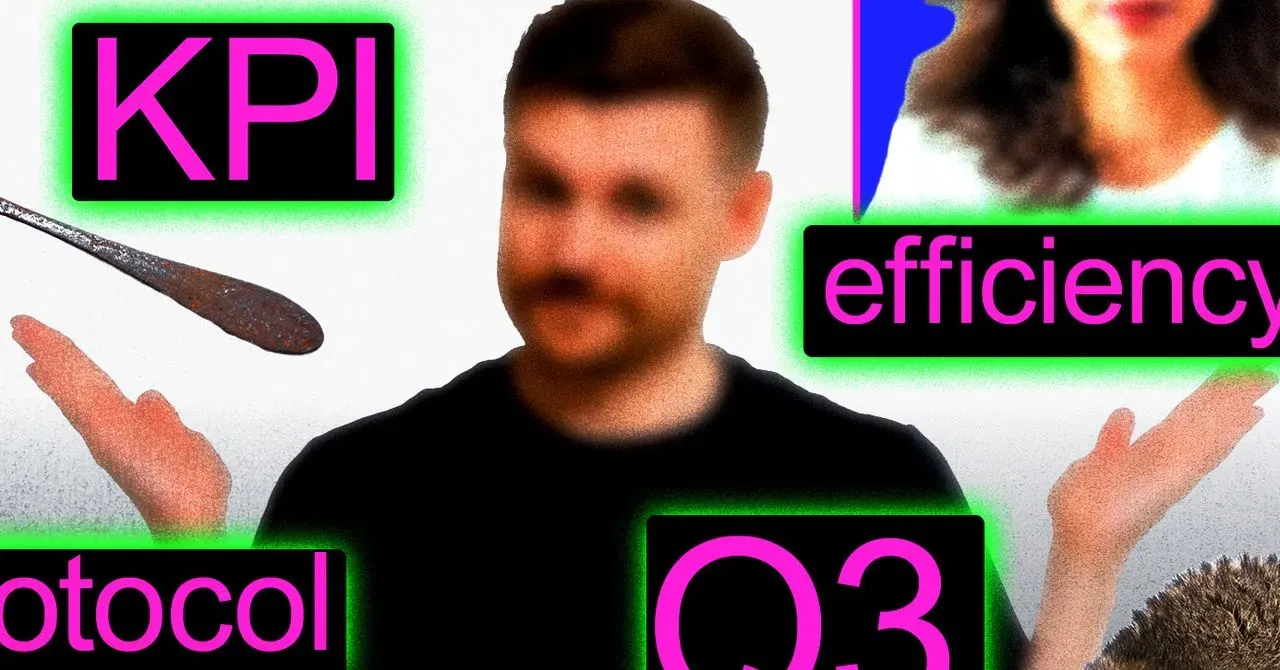
A new trend is emerging in Hollywood, where comedians are using their wit and satire to secure talent representation by mocking AI job interviewers.
Graham Raabe, a comedian who has gained a significant following online, recently put his skills to the test by pretending to interview with an AI agent for a role at a prestigious agency. The AI, named Clark from Marlow & Finch, presented itself as a clean-cut and professional individual, but Raabe was determined to poke fun at its robotic nature.
Raabe's antics were on full display as he responded to Clark's boilerplate questions with absurd and nonsensical answers, which the AI surprisingly echoed in mechanical tones of approval. The exchange was a masterclass in comedic timing, with Raabe effortlessly riffing off the AI's stilted responses.
The real purpose behind Raabe's mock interview was not to land a job, but rather to create content for his online audience. As part of his comedy routine, he has been using absurd and satirical exchanges with AI agents to entertain his followers and showcase his creativity. This approach has paid off in a big way, with Raabe's Instagram following doubling from around 50,000 to over 100,000 followers in just two months.
Raabe is not alone in his use of satire to secure talent representation; he is part of a growing crop of comedians who are using their skills to outsmart and mock AI job interviewers. This trend speaks to the growing importance of social media and online presence for aspiring actors and performers, who must now navigate the complexities of digital communication and entertainment.
Raabe's journey into stand-up comedy and screenwriting spans nearly a decade, during which he honed his skills in improv and sketch at the prestigious Upright Citizens Brigade theater.
It wasn't until May of this year that Raabe began experimenting with office humor videos on Instagram and TikTok. Initially, these videos did not involve AI-generated content. Instead, they focused on relatable corporate scenarios that resonated with audiences.
Raabe's creative process took an interesting turn when he started using AI bots to quiz him on corporate jargon. The chatbot would challenge him to come up with euphemisms for mundane situations, such as explaining why his team was unprepared for a meeting.
This unusual format eventually led Raabe to develop the concept of an AI interviewer, which he found could be tailored to deliver conversational rhythms and escalation that fit perfectly into a video sketch. He launched a popular series called "How to Fail Your AI Interview," where he used digressive tactics to derail calls with avatars.
Raabe's comedy style has proven to be a hit among audiences, who are drawn to his ability to improvise against AI's stiff and predictable responses.
The concept of using AI as a comedic foil has resonated with viewers, who have shared their own frustrating experiences with the technology in real-life scenarios. This collective frustration has created a sense of camaraderie around Raabe's content, which has contributed to its popularity.
His unique brand of humor caught the attention of Dulcedo Management, a talent agency that represents clients across various industries, including influencers, models, athletes, and creators. The agency was impressed by his sharp timing and original ideas, even when he had a relatively small following.
The AI interview videos have proven to be particularly fertile ground for Raabe's comedy, with the technology's limitations providing an endless source of comedic material. As one agent notes, the contradiction between AI's touted capabilities and its actual performance is inherently humorous.
In recent times, humor has been used to poke fun at AI's capabilities and limitations. This trend is exemplified in videos created by Matt Husk, who engages in humorous exchanges with OpenAI's ChatGPT.
Husk typically presents the chatbot with absurd or impossible scenarios, such as counting to a hundred or escaping quicksand, and then showcases its failure to provide accurate assistance. The chatbot often resorts to gaslighting Husk, making him doubt his own understanding of the problem.
The videos have gained significant traction online, with Husk's content earning him over 2 million followers across various social media platforms. This popularity has also led to a deal with the talent agency Unicorn, where he is represented by Ali Fischbein, founder of Lil Fish Comedy.
Fischbein and others in the industry seem to be embracing this trend, recognizing its potential as a source of entertainment for audiences. They acknowledge that AI's rapid evolution provides a steady stream of new material for comedians like Husk to work with.
The fact that tech developers and companies are also engaging with this content suggests that they see value in using humor to highlight the limitations of their creations.
As Husk's popularity grows on social media, he has become a testing ground for his favorite product, showcasing its limitations in an entertaining way.
His creator's response to glitches is often lighthearted, with some developers even embracing the humor in AI's imperfections as a way to highlight areas where improvement is needed.
Not everyone is focused on improving AI, however - gpt on Instagram has taken on a more satirical tone, parodying the quirks and absurdities of chatbots through comedic impressions and antics.
The creator of gpt, Wassef, has also expanded his humorous take on AI to cinematic scope with a series of videos showcasing his blathering character in increasingly absurd situations.
As the entertainment industry continues to seek out fresh perspectives on AI, it's clear that those who can bring a unique comedic spin to the topic are in high demand. The involvement of creators like Raabe, Husk, and Wassef is a testament to this trend.
The goal for these clients is not just to capitalize on their initial success, but to build lasting relationships with audiences. As Melendez notes, they want viewers to become invested in the performer, rather than just the format or trend that made them famous. This focus on growth and longevity will be crucial as public discourse around AI continues to evolve.
Facts based on reporting originally published by Wired.
You may republish this story, in full or in part, if you credit News Central Site and link to it (licence CC BY 4.0). Photos are not included.