Child Malnutrition Alarms in Somalia as Mother's Plea Highlights Crisis
A mother from southern Somalia walked for three days to reach a hospital where her severely malnourished 3-year-old daughter was diagnosed with edema.
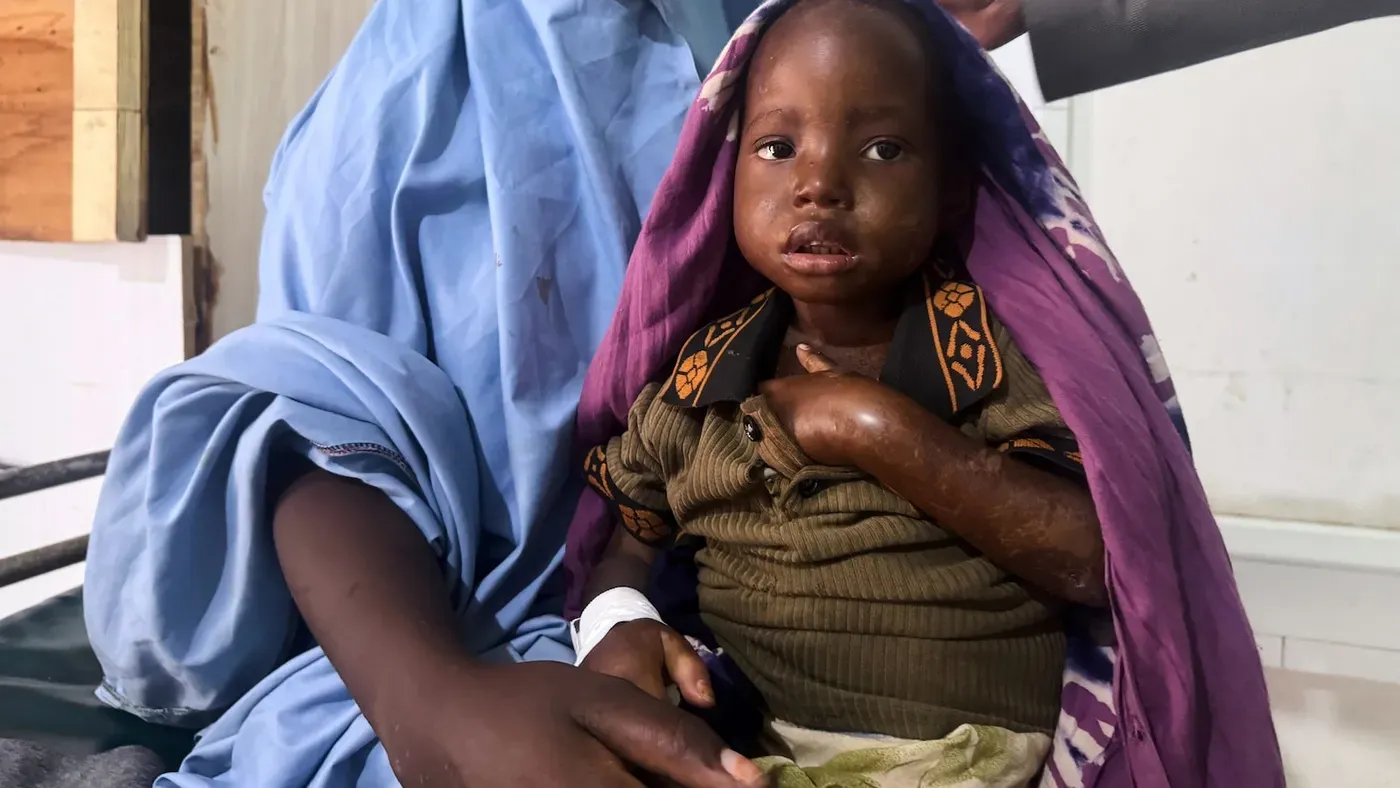
A mother's desperate journey to save her severely malnourished daughter has highlighted the alarming rate of child malnutrition in Somalia. Halima Abdullahi Ibrahim walked for three days, covering nearly 90 kilometers, to reach Kismayo Referral Hospital with her 3-year-old daughter, Asho Hassan Abdi.
Upon arrival at the hospital, medical staff took Asho to the stabilization center, where she was diagnosed with edema, a symptom of severe acute malnutrition. The condition is characterized by swelling in the body and can be life-threatening if left untreated. Halima's concern for her daughter's health was evident as she held Asho on her lap, wrapped in a purple cloth.
The hospital staff examined Asho's feet and lower legs, assessing the severity of her condition. Medical treatment became necessary to prevent further complications and potential death. The case of Asho Hassan Abdi serves as a stark reminder of the dire situation facing Somalia's children.
According to an analysis by the Integrated Food Security Phase Classification, nearly 1.92 million Somali children between the ages of 6 months and almost 5 years old are at risk of or are already suffering from acute malnutrition. This includes over 433,000 children expected to suffer severe acute malnutrition, which poses a significant threat to their lives.
The crisis of child malnutrition in Somalia is particularly acute in the southern regions, where communities are grappling with disease outbreaks, food insecurity, and limited access to essential services such as healthcare, clean water, and sanitation.
In this region, hospitals like the one that treated Asho's daughter are overwhelmed by cases of severe acute malnutrition. In August alone, 152 children were admitted to this hospital with severe acute malnutrition, resulting in four tragic deaths. The scale of this problem is a stark reminder of the desperate need for increased support and resources.
The humanitarian situation in Somalia is further complicated by the prospect of flooding associated with El Niño, which could displace even more families and exacerbate existing challenges. With limited access to basic services already a major concern, any displacement would only worsen the crisis.
Humanitarian organizations are struggling to respond effectively due to dwindling resources, despite growing needs. The World Food Program has reported that it can only provide limited assistance, highlighting the broader issue of declining humanitarian funding worldwide. This is weakening efforts to combat hunger, disease, and poverty globally.
In the sprawling settlement of Luglow on the outskirts of Kismayo, a port city in southern Somalia, the effects of displacement and reduced assistance are starkly evident. The makeshift shelters, constructed from bent branches and patched plastic sheeting, stand out against the red earth, while dirty water pools in ruts between them.
At the nutrition center within the settlement, mothers sit on mats with young children in their laps, a poignant scene that underscores the gravity of the situation. UNICEF delegates visit this center to speak with the families and assess the needs of these vulnerable individuals.
Ali Adan Ali, Jubbaland's commissioner for refugees and internally displaced people, has pointed out that many displaced families have not received humanitarian assistance since 2023 due to a lack of funding among aid organizations. This has created a dire situation for IDPs in Jubbaland, with the risk of further displacement looming large.
Flooding along the Juba River could soon force people living on its banks to move towards Kismayo, placing additional pressure on settlements, nutrition centers, and hospitals in the area. To address this crisis, Sweden's ambassador to Somalia has emphasized the need for agencies to work more closely with local communities as funding becomes increasingly constrained.
The crisis in Somalia is characterized by a severe lack of funding, making it essential for aid agencies to work more efficiently with local communities.
Halima's journey highlights the devastating consequences of child malnutrition in Somalia, where poverty and distance can separate families from specialized care, putting lives at risk. The health system in the country is already strained due to growing needs and dwindling international assistance.
To build resilience and effectively address this crisis, aid agencies must work smarter with local communities, leveraging their expertise and resources to make every dollar count.
Facts based on reporting originally published by ABC News Health.
You may republish this story, in full or in part, if you credit News Central Site and link to it (licence CC BY 4.0). Photos are not included.