Arvind Narayanan Predicts Widespread Adoption of Chatbots for Factual Information
A recent Pew survey found that 10% of Americans are already relying on AI for factual information, a trend that computer scientist Arvind Narayanan predicts will continue.
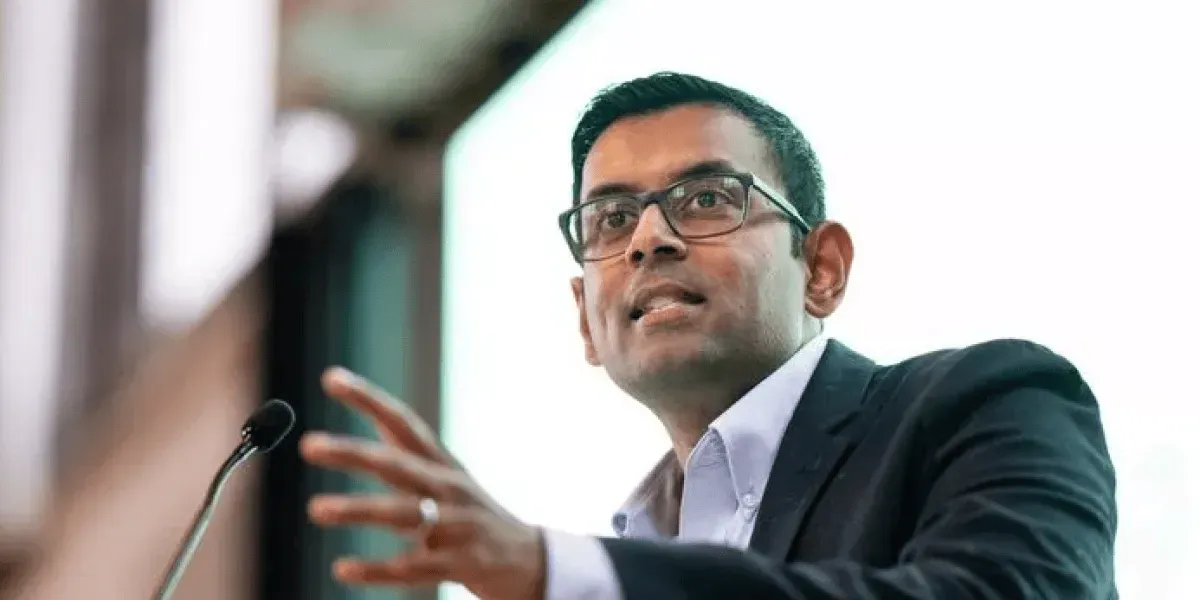
A Princeton computer scientist has predicted that chatbots will become increasingly trustworthy in the future, potentially leading to them being treated as "truth oracles by many people. According to a recent Pew survey, 10% of Americans are already relying on AI for factual information.
At the Computation + Journalism Symposium at Northwestern University's McCormick Foundation Center, Arvind Narayanan addressed the challenges facing media in an era dominated by artificial intelligence. His keynote speech, AI and Journalism: Skating Where the Puck is Going, emphasized the need to prepare for the future of AI, rather than its current limitations.
Narayanan, a computer scientist with no experience working in a newsroom, acknowledged that his perspective may be limited. However, he presented a compelling argument based on his expertise in distinguishing between fixable engineering problems and inherent limits. He warned that the widespread adoption of chatbots as default sources for factual information could fundamentally change the role of journalism.
If chatbots become the primary source for settling factual questions, newsrooms will lose one of their core functions: providing accurate and trustworthy information about basic facts. Narayanan argued that this would leave newsrooms focused on more subjective areas, such as narrative storytelling and exploring complex issues like positionality, which refers to the inherent biases and perspectives that shape journalistic reporting.
The shift towards relying on chatbots for factual information has significant implications for the media industry, which has traditionally prized objectivity. As Narayanan noted, this raises questions about what role newsrooms will play in the future, and how they can adapt to a world where machines are increasingly capable of providing accurate and reliable information.
Narayanan's expertise extends beyond his role as director of Princeton's Center for Information Technology Policy, as he has become a prominent voice on AI and its impact on various industries. His work on the media industry, in particular, has garnered significant attention. He has co-authored AI Snake Oil with Sayash Kapoor and maintains a popular newsletter, AI as Normal Technology, which boasts an impressive 87,000 subscribers.
Narayanan's views on AI are multifaceted, and he does not see the current backlash against it as a straightforward issue. In fact, he characterizes it as a complex problem with several contributing factors. He uses the analogy of a skinny hamburger to describe how productivity and return on investment have become increasingly difficult to measure or quantify in an AI-driven environment.
The common perception of chatbots is that they are simplistic tools that merely predict the next word, but Narayanan disputes this notion. Today's chatbots, he argues, are more sophisticated systems that combine language models with additional capabilities such as web searching, document retrieval, and code analysis. As a result, errors that were once common have become relatively rare.
Narayanan notes that even though current chatbot limitations persist, they are gradually being addressed. However, this raises questions about what happens when expectations for these systems evolve to match their actual capabilities. His children, who are still in elementary school, may never experience the same level of uncertainty and misinformation that adults do, much like how Wikipedia has become a trusted source over time.
Narayanan's observations on the role of chatbots in resolving disputes are also noteworthy. He points out that users on platforms like X already rely on tools such as Grok to settle arguments, often with conservative individuals who have limited trust in traditional media sources. While he does not predict an inevitable shift towards this model, he estimates that a broader adoption of AI-driven information systems could be just over a decade away.
The implications of Narayanan's insights for the future of newsrooms and journalism are significant. As chatbots continue to evolve into more sophisticated tools, it is likely that their role in providing accurate and reliable information will become increasingly prominent.
The role of chatbots in providing accurate information is becoming increasingly significant as they evolve into more sophisticated tools.
A concern about chatbots is that they can suffer from a view from nowhere, a term coined by press critic Jay Rosen to describe the false neutrality expressed by journalists who refuse to use their own judgment and inform the audience properly. This issue was raised by Daniel Trielli of the University of Maryland, who asked Narayanan about the danger of chatbots perpetuating this problem.
Narayanan's talk also addressed the impact of social media on newsrooms. He noted that the traditional view of a newsroom as an institution responsible for reporting, analysis, fact-checking, and distribution is not set in stone. In fact, Narayanan argued that this model is historically contingent and may change in the future.
The ad-supported penny papers of the 1830s expanded what was considered newsworthy by broadening access to information beyond those who could afford subscriptions or were influenced by political patronage. This shift led to the development of objectivity as a response to World War I propaganda, which required journalists to adopt more neutral reporting standards.
The concept of objectivity in journalism has undergone significant changes over time. The term hired reporter was once considered an insult, similar to being called a hired gun. This highlights the evolving nature of journalism and the need for adaptability in response to changing societal needs.
The changing landscape of journalism has led to a reevaluation of traditional newsroom structures and the role of newspapers in society. Narayanan's framework draws on earlier debates about the need for journalism versus the importance of newspapers as institutions.
He points out that Clay Shirky's statement society doesn't need newspapers. What we need is journalism" highlights the distinction between the two. Similarly, Paul Starr warned that the loss of newspapers' economics would leave public goods like accountability unfunded, a prediction that has proven to be correct in many ways.
However, Narayanan suggests that this outcome may not have been as apocalyptic as feared due to the rise of philanthropy as a funding source for journalism. He notes that trade reporting has largely moved to outlets like Politico, Punchbowl News, and Stat, while civic and local journalism is increasingly funded by philanthropic organizations.
This trend is also reflected in investigative journalism, which is now often supported by nonprofit funds rather than traditional newsroom budgets. Narayanan argues that this shift towards independent funding models is a reversion to historical patterns, where journalism was often supported by patrons or public-spirited individuals.
Another key point made by Narayanan is that the media's agenda-setting role has had unintended consequences in recent years. While the Washington Post's coverage of Watergate was a landmark example of investigative journalism, he suggests that similar efforts in the Trump era may have inadvertently contributed to polarization and the erosion of trust in the media.
The proliferation of social media platforms and independent journalists has also changed the way analysis is conducted and disseminated, with many experts now reaching wider audiences through online channels rather than traditional news outlets.
The role of analysis in journalism has long been viewed as a distinct layer between fact and opinion. However, this division is often treated as binary, with little consideration given to the nuances that lie within.
Journalists have traditionally held authority based on their masthead affiliation, but Narayanan argues that an analyst's credibility now comes from the quality of their work rather than their institutional backing. This shift in perspective highlights the need for a more flexible approach to analysis in newsrooms.
The proliferation of digital tools has significantly altered the media landscape, enabling smaller teams to produce high-quality content with greater ease. The internet has democratized distribution, while AI is now democratizing production, allowing for a wider range of voices and perspectives to be heard.
However, this shift in power dynamics also raises concerns about the imbalance between AI companies and publishers. As Narayanan notes, publishers require access to chatbot distribution more than AI firms need individual outlets, leading to underpriced journalism through licensing deals.
Journalists need to unite in a broad political movement to advocate for their profession's future, according to Narayanan. This coalition would include creators alongside legacy outlets, making it more inclusive and less perceived as partisan. It could also involve taxing AI and social media companies.
The alternative scenario is that journalism itself may be evolving out of existence as an organized industry, a possibility that has been largely overlooked in discussions about the future of news. As technology and economics continue to change, the traditional model of aggregated and organized journalism might become obsolete.
Facts based on reporting originally published by Fortune.
You may republish this story, in full or in part, if you credit News Central Site and link to it (licence CC BY 4.0). Photos are not included.