Arctic Winter Sea Ice Loss May Be Underestimated by 1 Million Square Kilometers
A new study suggests that climate models may be underestimating the loss of winter sea ice in the Arctic by as much as 1 million square kilometers.
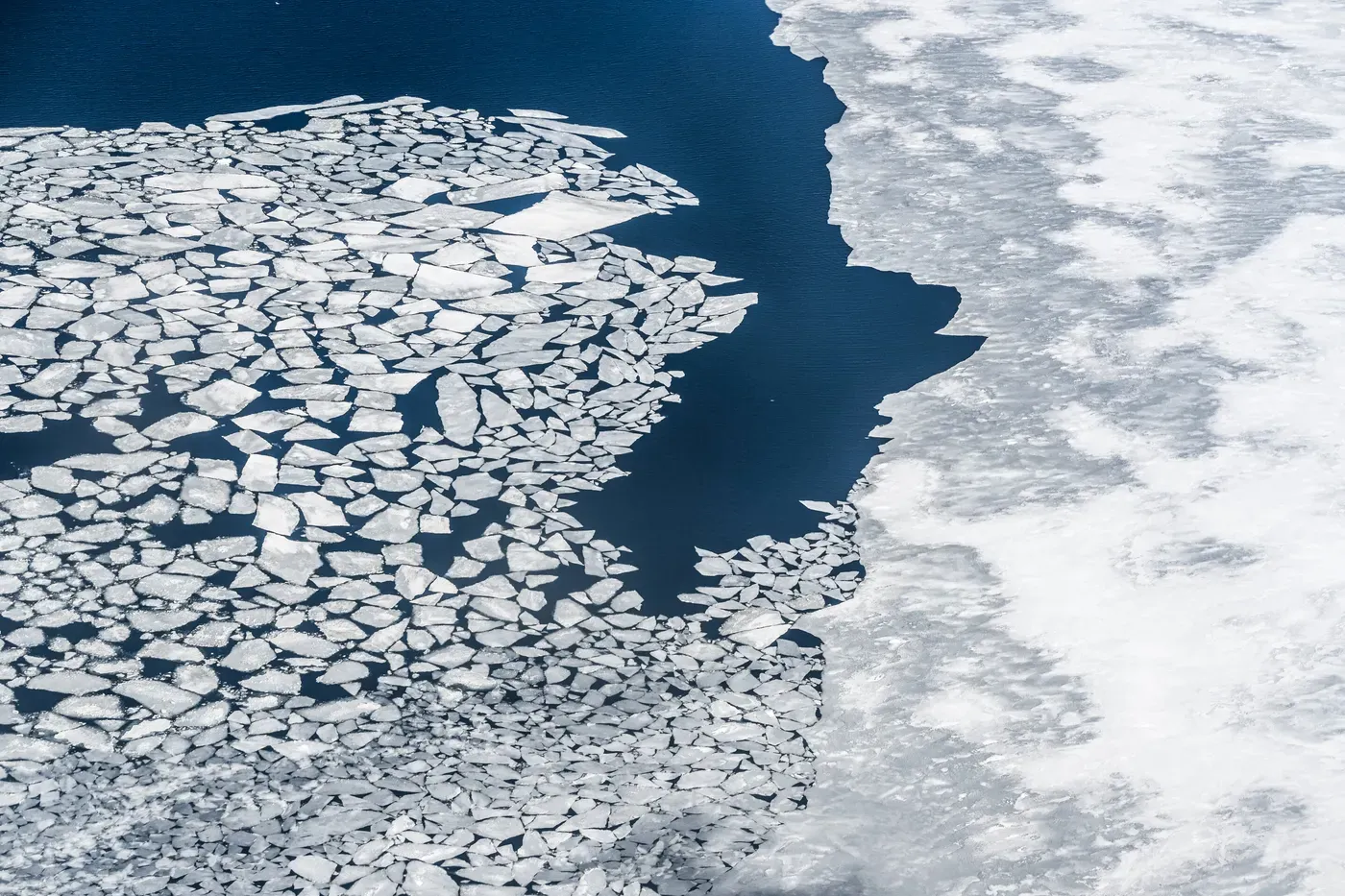
Research suggests that climate models may be underestimating the loss of winter sea ice in the Arctic by as much as 1 million square kilometers. This discrepancy could have significant implications for regional weather patterns and ecosystems.
The study used historical data from a period 6,000 years ago to inform its findings. During this time, the Arctic was significantly warmer than it is today, with far less sea ice present.
While summer sea ice loss has been extensively documented, the decline of winter sea ice has received relatively little attention until now. This oversight is surprising given that climate models tend to disagree most during the winter months.
The role of winter sea ice in regulating heat and moisture release into the atmosphere cannot be overstated. Its disappearance has been linked to colder winters and heavier snowfall in northern Europe and North America, with far-reaching consequences for local ecosystems and populations.
A team of researchers has developed a massive database of a key biomarker produced by algae living in sea ice to improve predictions for winter sea ice coverage.
The biomarker, known as IP₂₅, is found in ocean sediment cores dating back to the mid-Holocene period, when subtle changes in Earth's orbit led to warmer conditions and reduced sea ice cover in the Arctic. By studying these ancient samples, scientists can gain insights into how the region might respond to future warming.
The researchers measured levels of IP₂₅ alongside other biomarkers from organisms that live in open water, allowing them to estimate the extent of sea ice coverage thousands of years ago. This information was then compared to simulations from 27 climate models of the same period.
These comparisons were made using Bayesian weighting, a type of statistical analysis that gives different weights to models based on how well they reproduce ancient sea ice conditions. By applying these model weights to historical and future simulations, scientists can refine their predictions for winter sea ice coverage.
The results show that current climate models overestimate the amount of winter sea ice that should exist, with projections being lower than previous estimates by around a million square kilometers.
Researchers studying past climate patterns have made significant strides in improving their ability to predict future sea ice loss in the Arctic. By linking historical data to current projections, they've been able to narrow down the range of uncertainty in their models.
The team's approach has yielded more reliable maps of where winter sea ice is likely to disappear in the coming decades. This clearer picture is a result of combining past climate records with updated projection methods. The end result is a more accurate representation of what the Arctic might look like in the near future.
Despite differences in the causes of warming between the mid-Holocene and present day, scientists agree that sea ice will respond similarly to rising temperatures. Whether due to natural fluctuations or human activity, melting sea ice is an inevitable consequence of warming.
The study's findings suggest that knock-on effects could be more pronounced than initially thought. Projections based on revised climate model weights indicate that snowfall over southeast Greenland and rainfall in the Mediterranean may also be underestimated. This has implications for the stability of the Greenland ice sheet and potential flood risks in southern Europe.
Recent studies suggest that winter sea ice loss may be more significant than previously thought, with new evidence pointing to a warmer Arctic in the past.
Ancient sediment cores from the Norwegian Sea reveal that during a period of global warming 6,000 years ago, the Arctic experienced extreme warmth, leading to a substantial decline in winter sea ice cover. This has implications for the stability of the Greenland ice sheet and potential flood risks in southern Europe. The findings indicate that current projections may need to be revised upwards, taking into account the possibility of more extensive sea ice loss in the future.
Facts based on reporting originally published by Phys.org.
You may republish this story, in full or in part, if you credit News Central Site and link to it (licence CC BY 4.0). Photos are not included.