Ann Demeulemeester Runway Show Casting Process Underway
Casting director Ben Grimes and creative director Stefano Gallici evaluate models for Ann Demeulemeester's Paris Fashion Week show.
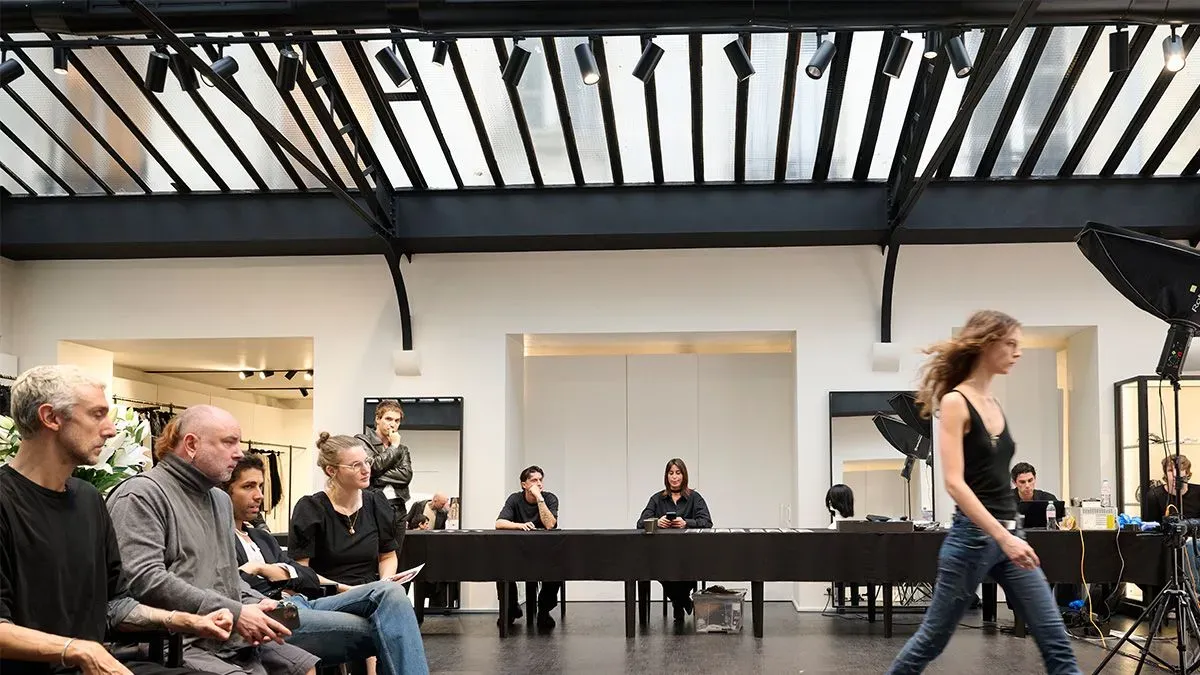
The selection process for top designers' runway shows has become a highly competitive and meticulous endeavor. In preparation for Paris Fashion Week, eager models gathered at Ann Demeulemeester's studio in the Marais district, waiting to showcase their potential.
Casting director Ben Grimes was on hand with creative director Stefano Gallici and his team, evaluating each model's suitability for the show. The process began with a brief introduction, followed by a short walk across the room, as models handed over their portfolio pictures.
Grimes' keen eye scanned the pool of hopefuls, some of whom displayed confidence while others appeared more reserved. As they exited, their images were placed into discreet piles labeled "yes," "no," or "maybe, awaiting further review by Grimes and Gallici.
In an effort to identify the perfect fit for Ann Demeulemeester's show, Grimes and his team considered both personal and analytical factors. According to Grimes, who worked on eight other high-profile shows this season, including Jil Sander, Victoria Beckham, and Missoni, a successful casting decision requires a delicate balance between intuition and practicality.
As the live casting process unfolded, it was clear that the selection of models for top designers' runway shows is a highly specialized and time-consuming task. In fact, Grimes worked on eight other shows this season alone, with each presentation requiring meticulous attention to detail.
Meanwhile, in Milan, another prominent casting director, Julia Lange, was preparing for her own slate of shows. With a team of 17 and a schedule that would keep even the most seasoned professional busy, Lange's agency had multiple teams working on various projects across four major fashion capitals: New York, London, Milan, and Paris.
Lange's eponymous casting agency has been a driving force in the industry since its launch in 2011. As she fielded questions between meetings with executives, it became clear that her team was spread thin across multiple shows, with five team leaders coordinating efforts to ensure seamless execution at each event.
Max Märzinger's workload has become increasingly demanding in recent years. He estimates that he often deals with two clients a day, and during Paris Fashion Week, his schedule can get even more hectic, with five clients to manage on some days.
To stay efficient, Märzinger relies on his ability to prioritize tasks and focus on the most urgent matters. This allows him to juggle multiple projects simultaneously while maintaining a high level of quality in his work.
The casting industry has undergone significant changes over the past decade. Ten years ago, brands typically handled their own model selections for runway shows and campaigns. However, with the rise of luxury brands staging numerous events throughout the year, the need for specialized casting services has grown exponentially.
Brands now require a high volume of projects to be executed quickly, which has led to an increased demand for skilled casting directors like Märzinger. This shift in the industry has transformed the role of casting into a much more complex and time-consuming job.
Lange's career as a casting director began when she was just 21 years old, working as the youngest bookings director at Vogue Germany. Since then, she has built an impressive client roster, including Fendi, Hermès, Versace, Phoebe Philo, and Alexander McQueen, in addition to newer labels like August Barron.
One of Lange's most notable achievements was casting Dario Vitale's critically acclaimed fashion show for Versace. The experience allowed her to work closely with a designer who had a clear vision, which made the casting process both challenging and rewarding.
Grimes' background as a model has given her a unique perspective on the casting industry. She began working in casting after launching her own agency in 2013 and believes that the subject is often misunderstood due to its sensitive nature.
Casting directors are now tasked with finding a mix of new faces, established models, and sometimes even celebrity cameos for brands looking to create visually appealing campaigns.
Brands' expectations have evolved over time, with many now seeking fresh talent that can capture their unique aesthetic.
According to Julia Lange, an experienced casting director, the industry has shifted significantly since she first started out. In the past, everyone wanted the same top models, making it challenging for newcomers like her to secure big names.
To overcome this obstacle, Lange looked beyond major agencies and began scouting for hidden gems in smaller agencies and even on social media platforms like Instagram.
Her agency's dedicated scouting team now travels extensively, searching for fresh faces that fit a client's specific brief. For instance, they scoured Italy and other locations to find the perfect models for Dario's Versace collection.
The casting process typically begins with a conversation between the director and the designer, where they discuss the inspiration behind the collection, the target audience, and the budget.
This initial discussion helps directors assess who is available, who needs to be discovered, and what kind of talent would best fit the brand's vision.
Casting directors must navigate complex web of relationships and negotiations to find the right models for their clients' needs.
This involves juggling multiple agents, each representing different models, who may have varying expectations about which brands or types of shoots they want to be involved in.
Getting a large number of models together at once is no easy task, as it requires coordinating schedules, travel arrangements, and other logistical details.
Politics play a significant role in the process, with models and their agents often holding out for bigger clients or specific brand opportunities that align with their career goals.
Directors must find ways to keep these negotiations from affecting the client's experience, ensuring they receive the best possible selection of models without getting bogged down in the behind-the-scenes drama.
A typical day for a casting director like Matell can be overwhelming, involving simultaneous conversations with dozens of agents and multiple rounds of negotiation before making final selections.
In some cases, even after all the negotiations are complete, last-minute issues can arise due to factors such as model availability or logistical challenges.
Troubleshooting is a crucial part of being a casting director in 2026. Grimes shares her experience with this process, highlighting that despite the challenges, disasters can be mitigated if addressed promptly.
To ensure a smooth operation, casting directors must be prepared to tackle last-minute issues, such as model availability or logistical challenges. These problems can arise unexpectedly and require swift solutions to avoid delays or disruptions.
At Paris Fashion Week, Matell is overseeing the Cecilie Bahnsen casting session. She has already selected several models, including Danish curve model Ronja Josephsen, who will be making her Paris debut. This milestone makes it an exciting experience for Matell.
In addition to established models, Matell also seeks out interesting faces from various fields, such as Elke Eisenbender and Sabrina Fuentes, the lead singer of Pretty Sick. These unique individuals bring a fresh perspective to the casting process.
To keep the casting session organized, Matell uses quick codes with her assistants in the foyer. For instance, FTG" stands for "free to go," indicating that the model is clear to proceed. This efficient system helps maintain a smooth and safe environment for all participants.
At Ann Demeulemeester's casting, Grimes takes steps to prevent overcrowding, which can lead to models waiting outside in the rain. She requests her team member to keep the flow of models moving, ensuring that everyone is treated with respect and dignity.
Casting directors like Matell emphasize the importance of treating models as individuals rather than mere commodities. With a high demand for new talent, it's easy to overlook the people behind the faces. However, by educating models about the casting process and its expectations, directors can minimize unnecessary stress or disappointment.
As a casting director, Paloma's new creative vision requires finding individuals who embody cultural relevance in various fields.
To achieve this goal, Schofer has built a community of creatives, including magazine editor Tish Weinstock and French singer-songwriter Santa (Samanta Cotta), whom she roped into walking for the brand.
Santa was not initially intended to walk, but her impromptu visit turned into a successful casting call, showcasing her natural charm on camera.
With over eight years of experience working with Cos, Schofer has seen significant changes in the brand's approach to casting, starting from its early days when it focused on real-life professionals.
Initially, the brand aimed to cast architects and chefs, but after conducting market research, they found that these individuals made up a small percentage of their customer base.
Facts based on reporting originally published by Vogue.
You may republish this story, in full or in part, if you credit News Central Site and link to it (licence CC BY 4.0). Photos are not included.