Aging Business Owners in Japan Put Companies Up for Sale Due to Succession Crisis
Many small Japanese businesses are being sold due to a lack of heirs and the country's aging population.
Aging business owners in Japan are putting their companies up for sale due to a looming succession crisis driven by the country's aging population and rural exodus.
As a result, many small businesses are being listed on succession platforms at low prices, with some owners having no heirs to inherit their legacies.
Kengo Ohama, 31, is one of the young entrepreneurs taking advantage of these opportunities. He recently took over Country Road, a café in Hiroshima, Japan, which he manages alongside his wife.
Ohama had been searching for a business to start from scratch, but found an established café listed on Relay, a Japanese business-succession platform. The owners' main concern was finding someone who would care for the shop and keep it vibrant.
The business's existing customer base and equipment were major selling points for Ohama, allowing him to hit the ground running with minimal startup costs.
As the previous owners of a Japanese café grew older, they began searching for a suitable successor to take over their legacy.
The terms of the takeover were straightforward: Kengo Ohama would keep the business operational but was free to redesign the interior as he saw fit, giving him creative freedom with the property.
Ohama now pays 50,000 yen in monthly rent for the building, a significant cost savings compared to starting from scratch.
This flexibility made the opportunity extremely appealing to Ohama, who values his independence and autonomy in running the business.
The existing customer base and equipment were major selling points for Ohama, allowing him to hit the ground running with minimal startup costs.
Relay, an online platform connecting business owners with potential buyers, has listed approximately 900 businesses to date, with around 350 active listings available for purchase.
The majority of these businesses are being sold by older entrepreneurs who are approaching retirement age, typically in their sixties and seventies. In contrast, the younger successors taking over these companies are often in their thirties and forties.
BATONZ, another platform that facilitates business acquisitions, has listed more than 42,000 businesses to date. As of March 2026, this company had successfully matched 3,421 buyer-seller pairs, indicating a high level of activity in the market for transitioning businesses.
For some business owners, online platforms like Relay and BATONZ can provide a vital lifeline when unexpected circumstances force them to confront succession planning earlier than anticipated. This was the case for Akitaka Mitsui, who had to temporarily close his guesthouse due to the pandemic and subsequently reduce operations after it reopened.
Akitaka Mitsui's experience is a common one among Japan's aging business owners, many of whom are struggling to stay afloat due to the pandemic.
The financial strain has forced some entrepreneurs to reconsider their legacy and consider selling their businesses at discounted prices to younger, more agile entrepreneurs who are eager to take on new challenges.
One such entrepreneur is Kota Fujisawa, a 29-year-old from Nagano who had been looking for ways to revitalize his home region. He was introduced to Akitaka Mitsui's guesthouse through BATONZ, an organization that connects aging business owners with potential successors.
Fujisawa and two childhood friends took over the guesthouse in May 2024, renaming it Local Knot Backpackers. They paid less than 10 million Japanese yen for the business, which came with its website, booking systems, and staff.
The drastic change from his stable office job has given Fujisawa more freedom to shape the entire operation and decide where to take it next, allowing him to interact with guests from all over Japan and the world.
Kota Fujisawa's new role as owner of a guesthouse has brought him closer to tourists and given him more freedom to shape the operation, but it also comes with a delicate balance between preserving what's worked in the past and introducing changes for the future.
Fujisawa must decide which aspects of the business to retain and which to modify, ensuring that any significant changes don't fundamentally alter the guesthouse's identity. This balancing act is crucial to maintaining the trust and loyalty of regular customers while also adapting to changing market conditions.
In making his decisions, Fujisawa aims to honor the preferences of long-time guests while implementing necessary updates to ensure the guesthouse remains competitive and attractive to new visitors. By striking this balance, he hopes to preserve the essence of what made the guesthouse successful in the first place.
For entrepreneurs like Fujisawa, finding a suitable business model is only half the challenge, they must also navigate the complexities of infrastructure and resources required to bring their vision to life.
Aspiring entrepreneurs are increasingly turning to succession platforms as a means of accessing the necessary infrastructure to launch their ventures, rather than inheriting an entire established business.
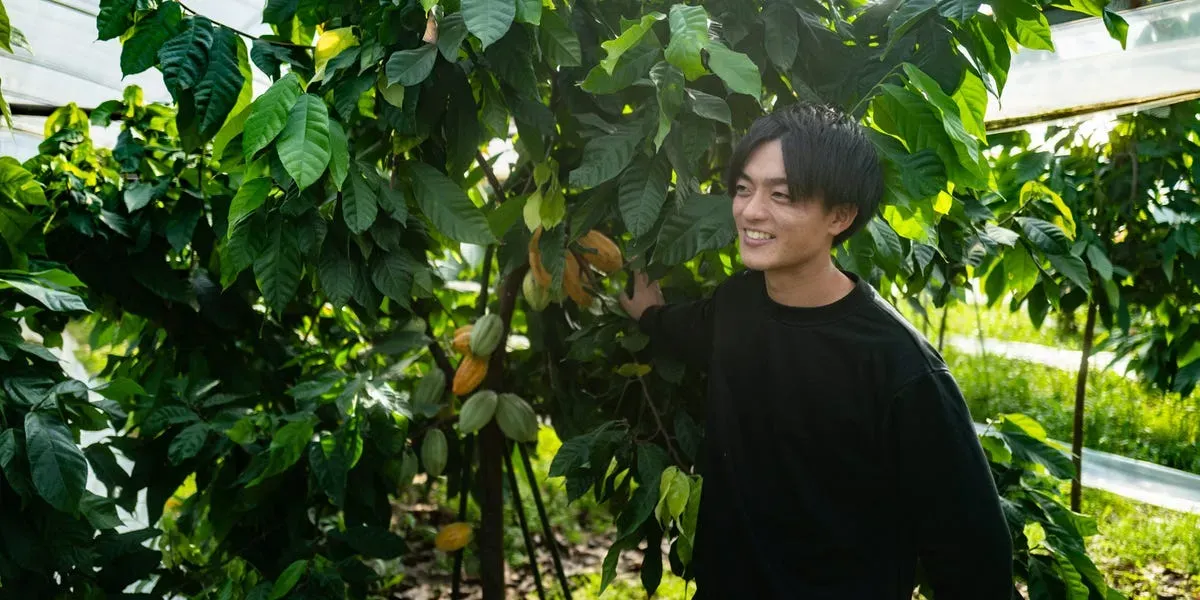
Takayuki Otawara's journey to becoming a farmer began with a search for a greenhouse and farmland to start his own venture. As he struggled to find suitable facilities through local farmers, he turned to Relay, a platform that connects buyers with sellers of businesses or business assets.
Through Relay, Otawara found a listing from a strawberry-farming family looking to scale back their operations as they grew older. Under a business succession agreement, Otawara purchased the greenhouse and irrigation equipment for 3 million Japanese yen. This enabled him to start his own farm, where he now grows a diverse range of crops including cacao, strawberries, bananas, and rice.
Unlike taking over an existing business, Otawara used the facilities provided by Relay to launch his own venture from scratch. This approach has allowed him to tailor his farm's operations to his specific needs and goals, rather than being tied to the legacy of a previous owner.
As a result of this new venture, Otawara reports that he now experiences a sense of satisfaction in his work that he never found as a civil servant. His efforts are directly reflected in the success of his farm, giving him a clear understanding of what he achieves through hard work.
Facts based on reporting originally published by Business Insider.
You may republish this story, in full or in part, if you credit News Central Site and link to it (licence CC BY 4.0). Photos are not included.