African National Congress Suffers Worst Election Results Ever
South Africa's African National Congress (ANC) received around 30% of the vote in local government elections with 99% of ballots counted.
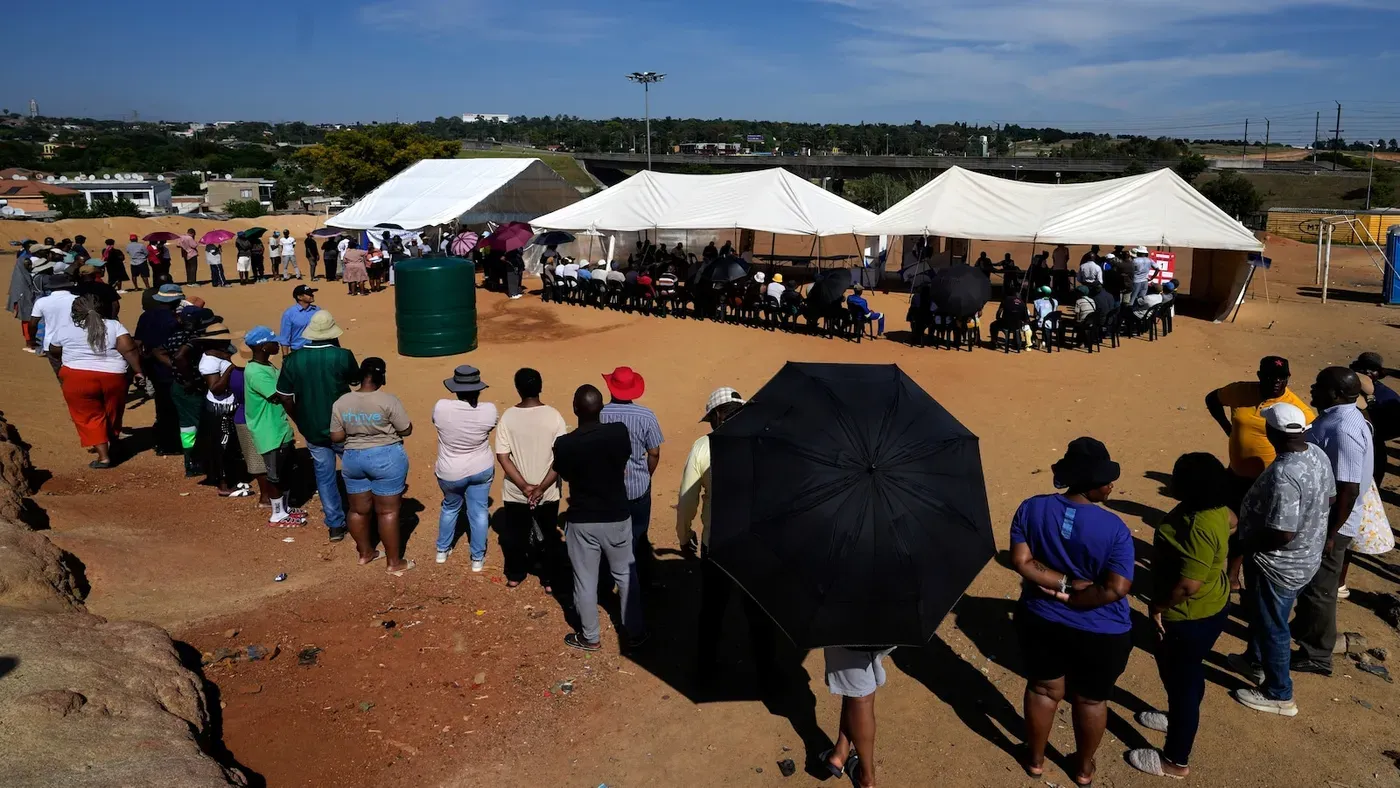
South Africa's African National Congress (ANC) has suffered its worst election results ever, marking a new low in its declining popularity among voters.
The ANC, once the dominant party that led South Africa out of apartheid and delivered freedom under Nelson Mandela's leadership in 1994, received around 30% of the vote in Wednesday's local government elections with 99% of ballots counted. The final results were expected to be announced late on Sunday by the Independent Electoral Commission.
The ANC still remains the largest party overall in an election involving hundreds of parties, but its main opposition, the Democratic Alliance, has gained significant ground and received around 25% of votes in the near-complete count. This development brings closer to reality a scenario that was previously unimaginable: the ANC might one day not be South Africa's biggest party.
The ANC's decline is attributed to its failure to provide basic services such as water and electricity in towns and cities, leading to widespread discontent among voters who have been rebuking the party at the polls.
The ANC's dismal performance at the polls has continued unabated as it faces an unprecedented drop in support.
Preliminary results indicate that the party is on track to lose around 15 percentage points from its last local election showing, with approximately one-third of its 2021 voter base now deserting ship. This significant decline suggests that the ANC's woes are far from over, and its leadership will need to take drastic measures to stem the tide.
ANC Secretary-General Fikile Mbalula acknowledged the party's catastrophic loss, urging his colleagues to be humble in the face of defeat and listen to the people's grievances. He stressed the importance of regaining voter trust through tangible actions rather than empty slogans, a stark admission that the ANC has failed to deliver on its promises.
DA leader Geordin Hill-Lewis seized the opportunity to claim victory for his party, declaring that they had made significant strides towards becoming South Africa's largest political force.
The decline of the ANC's popularity has been a gradual process in South Africa, but the latest local elections have brought this trend into sharp focus.
A total of 30% of the vote was shared among seven major parties, reflecting the fragmentation of the electoral landscape in the country. This dispersal of votes has made it difficult for any single party to emerge as a clear winner, with the ANC facing stiff competition from various other contenders.
The MK Party, led by former President Jacob Zuma, secured around 10% of the vote, making it the third-largest share among all parties contesting the election. This significant showing is notable given Zuma's tumultuous relationship with the ANC, which he broke away from and was subsequently expelled by.
Local government failures have been a pressing concern for South African voters in recent years, with many cities and towns struggling to provide basic services such as water and electricity. The impact of these shortcomings has been felt across the country, with regular outages and maintenance issues contributing to widespread frustration among citizens.
The ANC's struggles are also being driven by long-held anger over corruption scandals connected to the party, which have further eroded its support base. As a result, the party is facing a tough battle to retain its position as the largest political force in South Africa, particularly in key cities such as Johannesburg and Pretoria.
The Democratic Alliance (DA), South Africa's main opposition party, has made significant gains in the country's municipal elections, particularly in key cities like Johannesburg and Pretoria.
In Johannesburg, DA leader Helen Zille, a 75-year-old former premier of Western Cape province, ran for mayor on a platform highlighting the ANC's failures to provide basic services. Her campaign included unconventional stunts, such as snorkeling in a trench filled with water on one of the city's main roads. The move aimed to draw attention to the ANC's shortcomings.
The election results have left many councils without a clear majority winner, forcing potential governing coalitions to be formed through complex negotiations between parties.
Facts based on reporting originally published by ABC News International.
You may republish this story, in full or in part, if you credit News Central Site and link to it (licence CC BY 4.0). Photos are not included.