Wall Street Retreats from AI Sector Amid Concerns Over Cost
The demand for compute in the AI sector is flat and highly sensitive to price changes, according to Torsten Slok.
A top economist has sounded a warning about the AI boom as Wall Street retreats from the sector. Torsten Slok, Chief Economist at Apollo, has been vocal in his concerns, pointing out that the demand for compute is flat and highly sensitive to price changes.
The slowdown in token spending growth is a key concern, according to Slok, who argues that most companies investing in AI have yet to see significant productivity returns. In fact, he suggests that AI is now more of a cost center than a driver of growth, with many firms struggling to justify the expense.
Slok's analysis highlights a fundamental flaw in the AI boom narrative: the marginal cost of producing compute far exceeds its marginal benefit for users. This raises questions about claims of unlimited demand for data centers and suggests that companies are reluctant to pay for AI services unless they see clear returns on investment.
The key determinant in data-center construction models is not physical capacity or power, but rather the price users are willing to pay for compute. Slok's warning comes as Wall Street retreats from the sector, sparking concerns about the sustainability of the AI boom.
The enthusiasm surrounding artificial intelligence (AI) has led many investors to believe that companies will pay top dollar for its adoption. However, this optimism is based on flawed assumptions about AI's potential to drive revenue growth and profits.
Slok warns that unless AI translates into tangible financial benefits, companies are unlikely to justify the high costs associated with it. At present, there is little evidence to suggest that AI is delivering substantial returns at scale.
The circularity of token spending in the AI sector has raised concerns about its sustainability. Companies are accused of financing deals where they provide funding or guarantee debt for other businesses, which are also major customers. This creates a web of interconnected relationships that blur the lines between investment and revenue generation.
A closer look at the venture capital landscape reveals that 80% of the top 1% of AI spenders are backed by venture capitalists. This raises questions about whether startups are using venture capital to cover their compute costs, rather than generating profits from organic earnings.
The lack of financial payoff from AI adoption is most pronounced outside of the hyperscaler companies. While these firms have seen rising profit margins and revenue per worker, the rest of the S&P 500 has not experienced similar improvements.
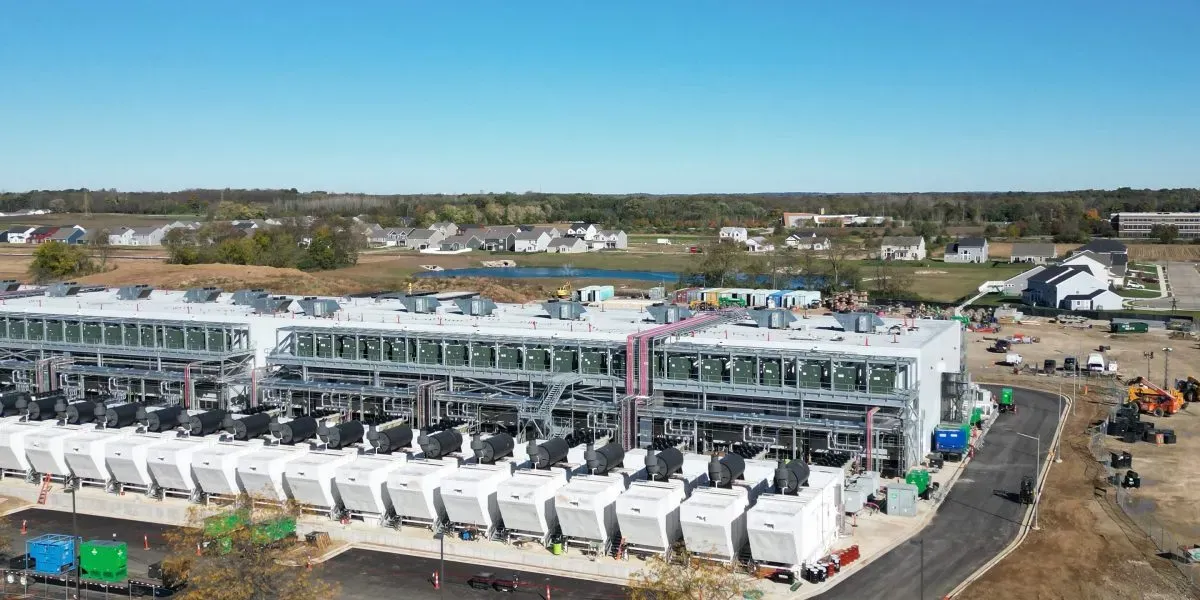
The AI industry's reliance on capital expenditure has been a key driver of growth in recent years, but this trend is starting to show signs of strain. The hyperscalers, which are leading the charge in AI development, plan to spend an estimated $800 billion this year, with capex next year expected to reach $1 trillion.
However, the ability of these companies to raise capital may be limited by their own financial metrics. For instance, Meta's plans to spend $135 billion-$145 billion this year have led to a significant increase in the cost of insuring its debt against default. The five-year credit default swaps for Meta touched an all-time high on Thursday, widening 7.6 basis points to 114.79 basis points.
The social media giant's financial situation is not unique, as many AI companies are struggling to justify their valuations and secure further funding. This has led some investors to doubt the sustainability of the current capital expenditure cycle, particularly in the chip sector where prices have been driven up by demand for AI-related technologies.
Meanwhile, Meta's decision to issue a new class of shares this week, partly to help CEO Mark Zuckerberg pay for a possible wealth tax in California, is another indication that the company may be facing financial headwinds. The move has added to concerns about the social media giant's ability to raise capital and meet its spending commitments.
The turmoil in the AI sector has spread to smaller companies, with CoreWeave's stock plummeting by over 30% this month and its five-year credit default swaps skyrocketing to 1,145 basis points.
This trend highlights concerns about interconnected financing structures between major players in the field, known as hyperscalers, and their data center projects or partnerships with smaller AI companies. These complex relationships can create hidden liabilities that are not always disclosed.
The opacity of these financial arrangements has raised questions about the accuracy of publicly available information, making it difficult to assess the true extent of debt within the sector.
Facts based on reporting originally published by Fortune.
You may republish this story, in full or in part, if you credit News Central Site and link to it (licence CC BY 4.0). Photos are not included.