Viking River Ship Viking Osiris Docks Along Nile Near Qena
The Viking river ship Viking Osiris has just docked along the Nile near Qena, marking the beginning of an 11-night tour that promises to take passengers on a journey through one of the world's most ancient and fascinating civilizations.
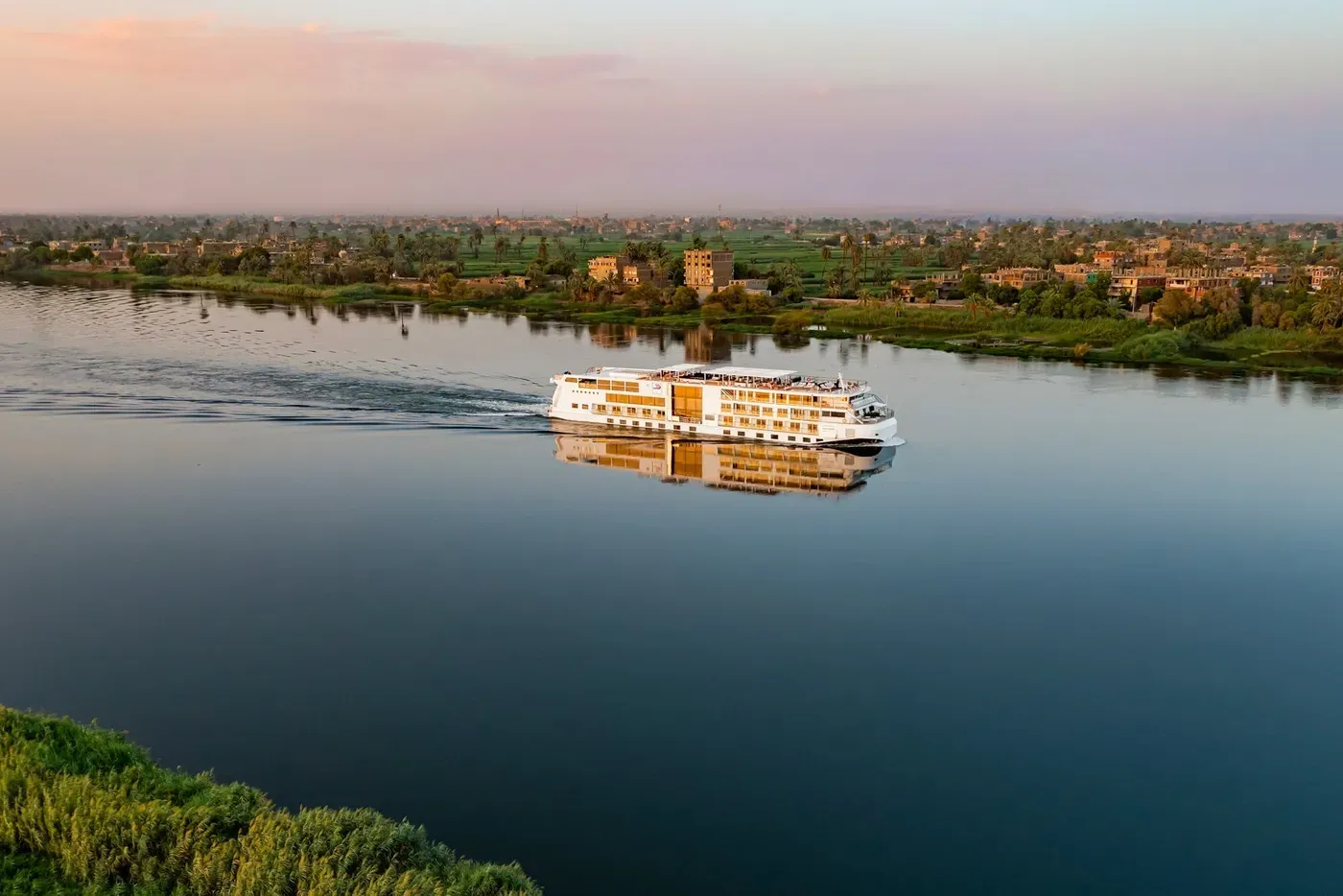
The Viking river ship Viking Osiris has just docked along the Nile near Qena, marking the beginning of an 11-night tour that promises to take passengers on a journey through one of the world's most ancient and fascinating civilizations.
Onboard is Karim Zohny, a local Egyptologist who will guide the group through some of the country's most impressive temples, tombs, and monuments. The first stop is the Temple of Hathor, an ancient temple that stands out from its peers due to its unique motifs, which include intricate celestial maps and giant images of Egyptian royalty.
The temple's walls are adorned with colorful reliefs that tell stories of a bygone era, while Zohny shares insights into the significance of each image. The group is small, consisting of just two dozen passengers, which makes for an intimate and immersive experience.
It's not often that visitors to the Nile make it this far north on their journeys, with most vessels sticking to the 130-mile stretch between Luxor and Aswan. But Viking's river ships have access to areas that are off-limits to other tour operators.
Karim Zohny is leading the group through the temple, pointing out details and sharing stories about the people who built it thousands of years ago. His expertise is invaluable in understanding the historical context of these ancient structures.
The Temple of Hathor is just one of many incredible sites that will be visited on this tour, which offers a comprehensive and in-depth look at Egypt's rich history. Viking's "Pharaohs and Pyramids trips pair seven nights of Nile sailing with four nights of land-based travel for an unforgettable experience.
One of the reasons Viking stands out from other tour operators is its commitment to providing a seamless and all-inclusive experience. From lodging and meals to expert-led guided tours, every element is included in the fare, making it easy for passengers to focus on enjoying their journey.
The 11-night tour aims to transport passengers back in time to one of ancient Egypt's greatest eras: The Old Kingdom. With its rich history and stunning monuments, this region offers a unique glimpse into a bygone era that will leave even the most seasoned travelers in awe.
The Step Pyramid of Djoser, located in Saqqara just outside Cairo, stands as a testament to the ingenuity and craftsmanship of ancient Egyptians. This monumental structure was built about 100 years before the Pyramids of Giza, marking an important milestone in the history of pyramid construction.
As one of the largest stone structures ever built by humans at that time, its sheer scale is awe-inspiring. The Step Pyramid's unique design, with six mastabas rising to form a square base, was a groundbreaking innovation that paved the way for later pyramid builders.
Visiting the Step Pyramid is an immersive experience, offering a glimpse into the lives of ancient Egyptians who built these towering structures. The pyramid's construction was a remarkable achievement, considering the limited technology and resources available at the time.
As we explore the Step Pyramid, its historical significance becomes apparent. This structure not only showcases the advanced engineering skills of ancient Egyptians but also highlights their artistic and cultural achievements.
The next day, our expert guide Zohny brings us to the Pyramids of Giza, one of the most iconic landmarks in Egypt. These massive structures, built about a century after the Step Pyramid, mark the peak of pyramid building in Egypt and are truly breathtaking sights.
The largest of the three pyramids rises an impressive 500 feet into the sky, its sheer scale dominating the surrounding landscape. The Giza pyramids have stood the test of time, their grandeur and beauty inspiring wonder in all who visit.
In between visiting these ancient structures, we spend a morning exploring the Grand Egyptian Museum, which is home to an incredible collection of treasures recovered from pharaoh Tutankhamun's tomb just over a century ago. The museum's stunning exhibits showcase the opulence and extravagance of ancient Egyptian royalty.
The Grand Egyptian Museum is a treasure trove of ancient artifacts, with gilded treasures and priceless relics on display. We marvel at the intricate hieroglyphics, ornate jewelry, and other precious items that reveal the splendor of pharaonic life.
The journey begins in Luxor, a city hundreds of miles south of Cairo, where the Viking Osiris is based. This vessel, one of several on the river, offers a unique way to tour Egypt's ancient sites.
Flying from Cairo to Luxor was our next step, as we joined the ship for its week-long itineraries. These routes take passengers through some of Egypt's most famous destinations, each with its own rich history and iconic landmarks.
The Nile River cruise is akin to a greatest hits tour of nearly 2,000 years of Egyptian structures. The ship visits Luxor, Qena, Kom Ombo, and Edfu, all of which are steeped in history and culture.
Our first stop was the Temple of Karnak in Luxor, an impressive site with colossal sandstone columns arranged in neat rows. This temple is one of Egypt's most famous landmarks, and its sheer size is awe-inspiring.
The Temple of Hathor in Qena is another highlight of the ship's itinerary. Part of the Dendera Temple Complex, this impressive structure is a must-see for anyone interested in ancient Egyptian history.
In Kom Ombo, we visited the temple bearing the same name, which was built during the Greco-Roman period. Its reliefs feature Roman emperors Tiberius and Domitian, adding to its historical significance.
The Temple of Horus in Edfu is one of the ship's final destinations, and it's a truly remarkable sight. Lost for centuries under a layer of desert sand, this temple was only rediscovered 166 years ago by a French archeologist.
The fact that the Temple of Horus remains almost completely intact is a testament to its preservation over the centuries. Its hypostyle halls and inner sanctuary are remarkably well-preserved, giving passengers a glimpse into ancient Egyptian life.
Egypt's rich history is on full display as the Viking Osiris navigates the Nile River, stopping at some of the country's most iconic sites along the way.
The Viking Osiris has been making its way down the Nile River, stopping at some of Egypt's most iconic sites, and Luxor is our base for an excursion to the nearby Valley of the Kings.
This pharaonic burial ground is a highlight of any Egypt tour, and we're lucky enough to have access to five of the more than 60 tombs found in the valley so far, two more than many tours typically get to visit.
One of these tombs belongs to the infamous Pharaoh Tutankhamun, also known as King Tut, who remains inside his tomb in mummified form. Viking has paid extra for this exclusive access, making our experience truly unique.
The Valley of the Kings is an awe-inspiring place, with intricate hieroglyphics and grand architecture that's a testament to the ingenuity and skill of ancient Egyptian craftsmen.
From there, we visited the Temple of Luxor, marveling at its impressive columns and statues, as well as the nearby Mortuary Temple of Hatshepsut, a masterpiece of ancient architecture that showcases the pharaoh's grand vision.
The temple's terraced structure and imposing stone carvings are a sight to behold, offering a glimpse into the lives of Egypt's ancient rulers.
As we explored Luxor, some passengers took to the skies in hot air balloons for breathtaking views of the Mortuary Temple, Valley of the Kings, and other area sites from above, an unforgettable experience that added another layer of depth to our tour.
The scenery along the Nile River is a major part of the trip's charm, with rural stretches offering a glimpse into everyday life on the river.
The Nile River's fertile banks are a striking contrast to the vast expanse of desert that surrounds it. In some areas, the land fed by the Nile's waters stretches just a few hundred feet inland before giving way to harsh desert terrain.
The river's life-giving waters support a narrow band of abundance along its banks, creating a unique and fascinating landscape. This is particularly evident as you sail along the Nile, where the scenery unfolds like a ribbon of green in an otherwise arid environment.
As the sun begins to set over the west bank of the Nile, the sky is painted with hues of pink and orange, adding to the beauty of this already stunning scene. It's moments like these that make Egypt such a captivating destination for travelers.
Egypt's unique geography has been described as a gift by the Greek historian Herodotus, who recognized the importance of the Nile in sustaining life in this desert region. This concept is still relevant today, and it's something that becomes increasingly clear as you experience the country firsthand.
Traveling at a leisurely pace allows for a more in-depth exploration of Egypt's ancient sites, which are some of its most famous attractions. Viking sailings on the Nile offer just such an experience, with seven nights spent cruising between Luxor and Aswan.
This relaxed pace is particularly appealing to older travelers, who may not have the time or energy for faster-paced itineraries. Many Viking customers fall into this demographic, and they appreciate the opportunity to explore the world in comfort" as their journey unfolds.
During our sailing on the Nile, we found that some days were spent exploring ancient sites in the morning, while afternoons were devoted to relaxation onboard as the vessel glided along the river. This gentle rhythm allowed us to take in the beauty of the surroundings without feeling rushed or hurried.
The laid-back atmosphere of Viking sailings is a key part of their appeal, offering travelers a chance to unwind and appreciate the simple pleasures of life on the Nile. As we settled into our daily routine, it became clear that this was an experience unlike any other, one that would stay with us long after our journey came to an end.
As we settled into our daily routine on board, it became clear that this was an experience unlike any other, one that would stay with us long after our journey came to an end.
Egyptologist Karim Zohny took center stage during onboard lectures, where he delved into topics such as medicine in ancient Egypt and Egyptian hieroglyphics. Meanwhile, passengers could also learn about cooking traditional Egyptian dishes or pick up basic Arabic phrases.
The itinerary allowed for a mix of relaxation and exploration, with afternoons spent lounging on the sun deck or engaging in activities like haggling for local textiles at the markets of Esna. This lesser-visited town offered a unique glimpse into Egypt's rich history, with its Roman-era Temple of Khnum being just one of the attractions.
In addition to exploring ancient sites, passengers had the opportunity to experience more of Egyptian culture on land. A highlight was the shopping time in Esna, where many took advantage of the chance to purchase traditional galabeyas, loose-fitting robes worn by men and women across Egypt, for an upcoming special dinner event.
As part of the Taste of Egypt & Galabeya Evening, passengers were encouraged to wear their new galabeyas, along with the crew, who also donned local attire. The evening featured a menu of all-local cuisine, accompanied by traditional music and entertainment.
The final days of our journey took us as far south as river ships on these itineraries could go, Aswan, where we immersed ourselves in a variety of activities, from touring the Temple of Philae to sailing in a wind-powered felucca.
Facts based on reporting originally published by The Points Guy.
You may republish this story, in full or in part, if you credit News Central Site and link to it (licence CC BY 4.0). Photos are not included.