Verizon CEO Dan Schulman Tackles Bureaucracy and Competition Challenges
Dan Schulman's first companywide meeting as Verizon CEO revealed struggles with market competition and internal bureaucracy.

Dan Schulman's first companywide meeting as CEO of Verizon was unlike anything employees had experienced before. He delivered a blunt message without notes or slides, revealing that the telecommunications giant was struggling to compete in the market. Verizon was losing ground to AT&T, T-Mobile, and lower-cost providers, with its sprawling bureaucracy contributing to the problem.
Schulman's intervention marked a new era for Verizon, as he took on the challenge of reviving the company. He had been watching from the sidelines, serving on the board until recently. Schulman is 67 years old, but his decision to return to the helm was driven by a sense of responsibility to customers, shareholders, and employees.
Before accepting the top job, Schulman had reservations about taking on the role. He turned down the offer twice, but ultimately felt compelled to act. His wife's persuasion played a significant part in his change of heart, with Schulman now expressing enthusiasm for the challenge.
Schulman has made it clear that dismantling Verizon's bureaucracy is a top priority. The company had become bogged down by a complex decision-making process, requiring up to 35 signatures in some cases. This level of red tape had hindered even simple decisions, making it difficult for the organization to move quickly and adapt to changing circumstances.
Verizon's struggles are not limited to its internal workings. In 2024, T-Mobile made significant gains by adding a net 3.1 million postpaid phone lines, while AT&T added over 1.65 million. Verizon, in contrast, gained less than 900,000 new customers that year.
The first three quarters of 2025 saw Verizon's consumer business suffer further losses, with a net 414,000 postpaid phone lines lost. This included a staggering 356,000 lost in the first quarter alone. Despite these setbacks, Verizon remains the largest U.S. wireless carrier, generating substantial profits.
Despite its financial success, Verizon faces increased competition from rivals that are narrowing the gap in network quality. As a result, the advantage that once allowed Verizon to command a premium is becoming an expected standard for major wireless carriers.
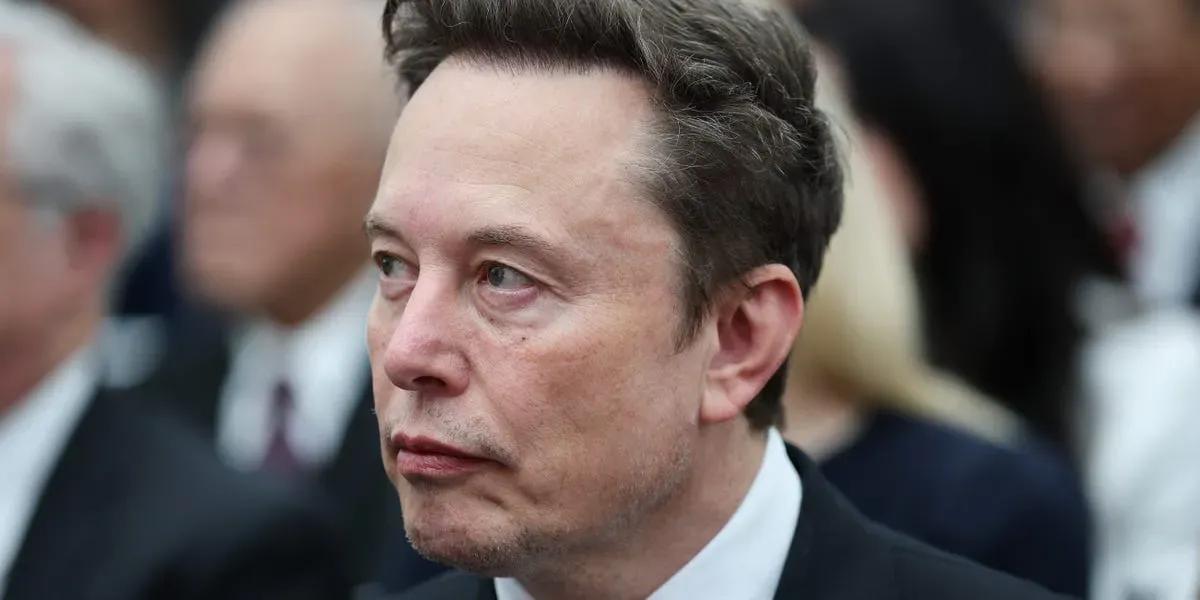
The acquisition of an $8 billion portfolio of low-band cellular spectrum licenses by Elon Musk's SpaceX in October has significantly altered the competitive landscape for traditional wireless carriers.
This move lays the groundwork for SpaceX to directly compete with major wireless giants, adding another player to the already crowded market and further eroding Verizon's advantage in network coverage.
Verizon had long relied on its reputation for reliable network service as a key selling point, but over time this has become less of a differentiator as consumers increasingly judge carriers based on factors beyond just network quality.
As a result, Verizon is shifting its focus from solely emphasizing the strength of its network to providing a more comprehensive customer experience that includes affordable pricing and attractive deals for new phone purchases.
Verizon's chief commercial officer for sales and service, Kevin Zavaglia, notes that customers no longer prioritize paying for a great network, as this has become an expected standard rather than a unique selling point.
In the third quarter of last year, Verizon reported its strongest showing in five years, with a net gain of 406,000 phone lines and 137,000 customer accounts added, despite slashing spending on promotional offers by 41%.
Schulman's efforts to transform Verizon are not limited to improving subscriber growth; he is also working to fundamentally change the company's culture and operations, pushing employees to be more agile and take calculated risks in a rapidly changing industry.
Verizon's management practices have been criticized for prioritizing meeting targets over actual performance. In one instance, a manager presented a plan to raise sales closing rates from 15% to 25%, which Schulman pointed out would still result in a significant number of lost sales.
Schulman is pushing executives to set more ambitious goals, even if it means missing some targets, rather than consistently meeting easy ones. This approach acknowledges that the pace of external change often exceeds internal progress, leaving companies behind.
Verizon's pricing strategy has become a costly cycle, where raising prices leads to customer defections and subsequent heavy promotions to win them back. This vicious cycle has been repeated over the years, with predictable consequences.
A Verizon director recalls watching the company finish third among major wireless carriers for 20 consecutive quarters, losing customers and market share while management prioritized network infrastructure over changing customer needs. The lack of a playbook update for five years only exacerbated the problem.
The task of turning around Verizon is likened to an ocean liner needing to change course at incredible speed. Given the complexity of telecommunications, Schulman must navigate this transformation with precision and urgency.
Schulman's efforts are not limited to changing management practices; he also aims to fundamentally alter the company's culture and operations. This includes pushing employees to be more agile and take calculated risks to drive growth and innovation.
After stepping down as CEO of PayPal in 2023, Dan Schulman had seemingly found a peaceful life on his Montana ranch, where he spent his days riding horses and helping to manage the family's cattle.
However, Schulman's retirement was short-lived, and he soon found himself back on an executive's grueling schedule at Verizon. With a renewed sense of purpose, he made it clear that every hour would count in this new chapter.
As part of Verizon's transformation under Schulman's leadership, the company is prioritizing customer needs above all else. This means making tough decisions, such as canceling a planned price increase and competing more aggressively for customers with innovative deals like Simplicity.
Verizon has introduced a range of incentives to reduce churn, including offering discounts on bundled services that combine cell phone plans with home internet packages, like its Fios service. These moves are designed to rebuild customer trust and create a more loyal client base.
To drive change at Verizon, Schulman made a bold move by cutting roughly 13,000 jobs, about 13% of the workforce, just a month after taking over as CEO. This was a deliberate signal that the company was undergoing a significant transformation under his leadership.
Schulman's decision to make such a substantial cut was motivated by a desire to show that this time, the changes would be more profound than previous efforts. He wanted to demonstrate his commitment to Verizon's renewal and growth.
Dan Schulman's leadership style is characterized by high expectations and demanding behavior towards his employees. He pushes managers to be experts in their respective areas of business, requiring them to be able to answer questions on the spot during meetings.
This approach has led some executives to suggest taking discussions offline, but Schulman counters by asking why they would do so when everyone is already present. He acknowledges that not all employees will thrive under his leadership style and is willing to lose talent if it means having a team that shares his vision.
The company's growing focus on artificial intelligence presents new opportunities for Verizon, particularly in the area of high-capacity fiber networks connecting data centers. Schulman highlights the significant agreements signed with major tech players such as Google and Amazon Web Services.
The integration of AI is also driving improvements within Verizon's internal systems, including tools that enable customer service representatives to quickly access information about plans, products, and policies. This has resulted in a notable reduction of six minutes from the phone buying process in-store.
Schulman takes Elon Musk's threat to challenge the incumbents in the mobile business seriously but believes it would be an enormous undertaking for SpaceX to build a network that could rival Verizon's. He estimates that such a project would require four to six years and an investment of around $300 billion.
The entrepreneur also points out that SpaceX has other competing priorities, including various businesses vying for resources and attention. Even if Musk were to commit the necessary funds, Schulman argues that he might end up with a network similar to Verizon's without gaining a significant cost advantage.
Schulman's confidence stems from his company's existing infrastructure and customer base, which he believes will give it a significant advantage over Verizon once it enters the market.
The old telecom giant's entry into the payments space has been met with enthusiasm by consumers who are eager to have more options for mobile transactions. By competing directly against Verizon, Schulman is confident that his company can gain a substantial share of the market and establish itself as a major player in this emerging field.
Facts based on reporting originally published by Fortune.
You may republish this story, in full or in part, if you credit News Central Site and link to it (licence CC BY 4.0). Photos are not included.