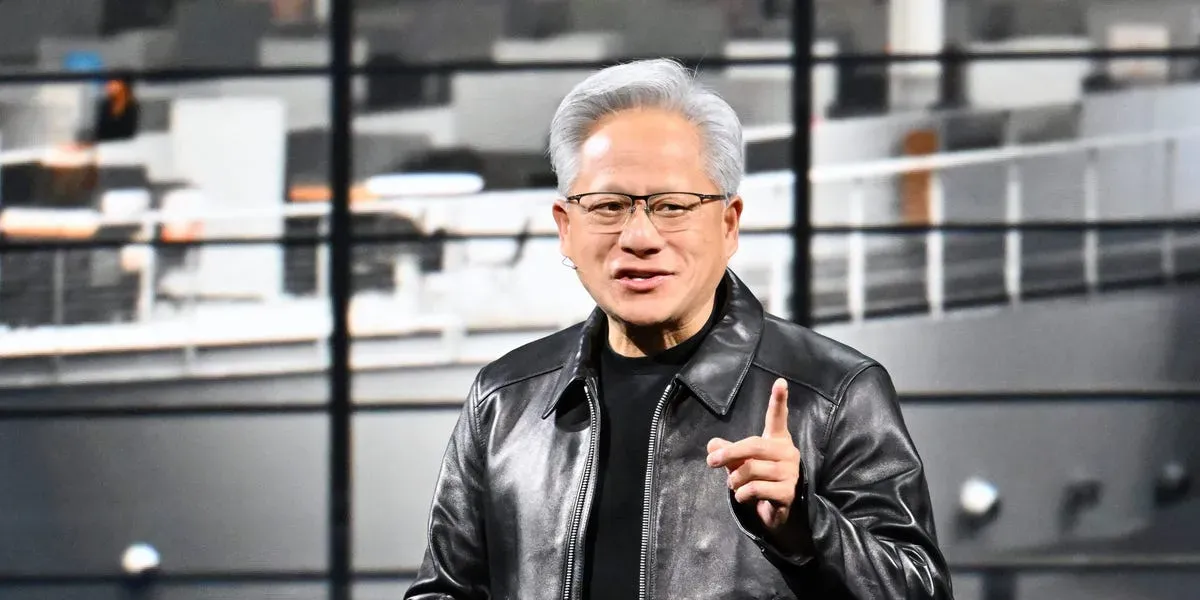
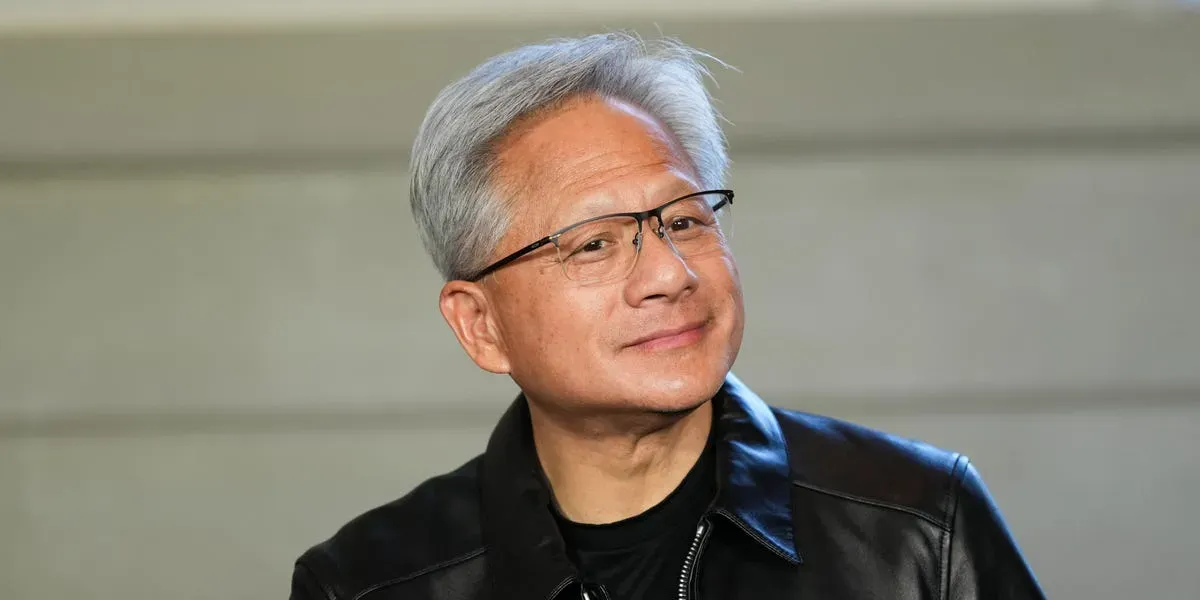
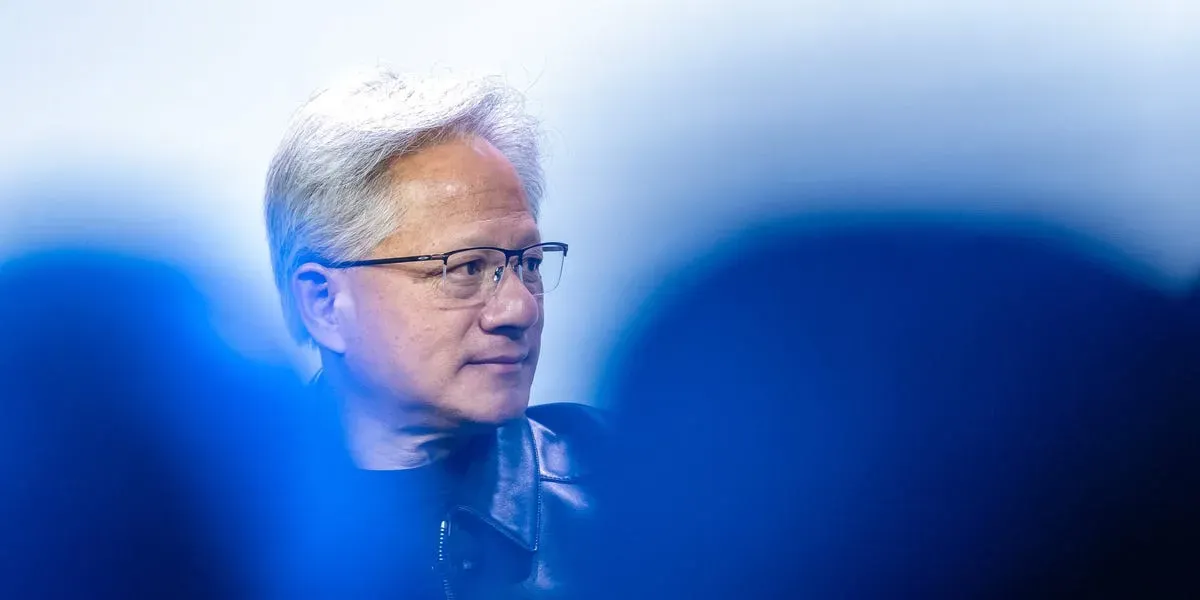
Jensen Huang faces no immediate action from Nvidia's board despite personal scandal allegations
The company's shares plummeted 8.8% on Monday, wiping off $190 billion in market value.
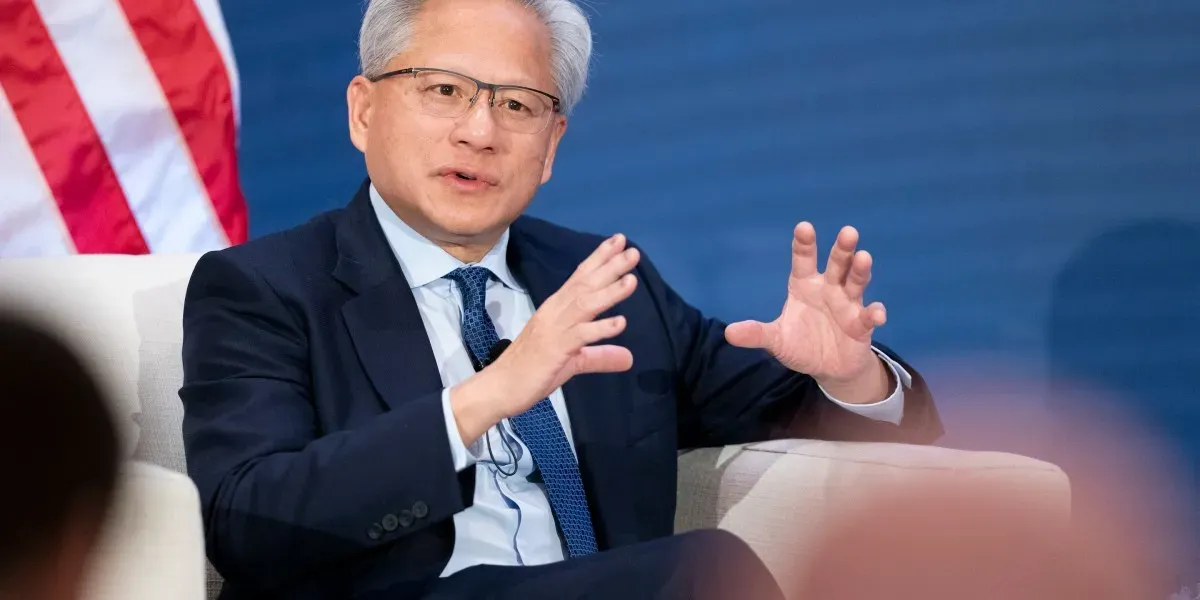
Nvidia's board has announced its confidence in CEO Jensen Huang despite allegations surrounding a personal affair and ties to a former executive suspected of being a Chinese spy.
The news came as Nvidia shares plummeted by 8.8% on Monday, wiping off approximately $190 billion from the company's market value, which had ranked it as the most valuable entity on the Fortune 500 list in 2026.
Typically, CEOs facing such scandals would either resign or be placed on leave while investigations unfold and decisions are made regarding their future with the company. However, Nvidia's situation is more complex due to its unique circumstances.
The company's board may struggle to remove Huang, who has been instrumental in its growth and development, making him a valuable asset despite the controversy surrounding his personal life. Moreover, identifying a suitable replacement for Huang could prove challenging given his significant role within the organization.
The departure of Huang would not be a straightforward decision due to the complexity of Nvidia's internal dynamics and the lack of an obvious successor, leading some experts to speculate that the board may opt for a more nuanced approach rather than a definitive "stay or go" decision.
The unique organizational structure at Nvidia has contributed to the challenges facing the board as they consider Jensen Huang's future. The company's flat management structure, where dozens of direct reports answer directly to the CEO, has kept Huang at the center of the organization since its founding in 1993.
This setup, while effective for a small organization, has become a hindrance as Nvidia has grown. According to expert Pozner, it has suppressed the emergence of potential successors and diminished conflict within the company, leading to the concentration of power in Huang's hands.
The lack of clear succession planning at Nvidia is a concern, particularly given the risks associated with promoting an insider. Investors, regulators, and business partners would be looking for credibility and stability, making this option potentially unattractive.
Nvidia has not publicly identified a successor, leaving the board to consider other options, including bringing in an outsider. However, this approach also carries its own set of risks, highlighting the complexities involved in addressing the company's leadership dynamics.
The appointment of a clear second-in-command and increased communication about succession planning are among the measures that could be taken to address these concerns, allowing Huang to remain CEO but under closer supervision.
Nvidia's leadership structure has raised questions about whether the company's board would be willing to remove CEO Jensen Huang if they wanted to.
The absence of a traditional board chair is notable in this context. Instead, lead independent director Stephen Neal plays a key role in setting agendas for board meetings and overseeing management, while Huang works closely with him on these matters.
A significant portion of Nvidia's board has been in place for decades, which may impact their willingness to hold Huang accountable. Three directors have served continuously since the company's founding in 1993, and another joined in 1997.
Critics argue that the longstanding relationships between these directors and Huang could compromise their ability to act as independent overseers. They point out that these individuals have benefited financially from their association with Nvidia and may be hesitant to challenge the CEO.
The board has stated that a committee of independent directors will oversee an investigation, but some question whether this arrangement can truly ensure accountability given the close relationships between Huang and certain members of the board.
The Nvidia board's response to the controversy surrounding Jensen Huang has been met with skepticism from some quarters.
Critics argue that the close relationship between Huang and the board members may hinder their ability to hold him accountable for any wrongdoing.
This concern is reflected in a joint statement issued by Sen. Elizabeth Warren (D., Mass.) and Sen. Jim Banks (R., Ind.), who are calling for greater transparency and stricter controls on advanced AI chip exports to China.
The controversy has also led to a proposed shareholder class action lawsuit against Nvidia, alleging that the company misled investors about Huang's ties to Alice Huang.
Nvidia is standing firm behind its CEO, with a spokesperson stating that Huang remains committed to his role without interruption.
The controversy surrounding Nvidia's CEO has brought to light the importance of transparency and trust between executives and board members.
A lack of candor on Huang's part could still lead to his removal as CEO, despite efforts by the company to maintain stability.
If Jensen Huang were to leave, concerns have been raised about the current board's ability to select a suitable replacement.
Facts based on reporting originally published by Fortune.
You may republish this story, in full or in part, if you credit News Central Site and link to it (licence CC BY 4.0). Photos are not included.