US Federal Magistrate Judge Denies Bail to OpenAI Engineer Abdulrahman Alfozan
The US federal magistrate judge has ruled that Abdulrahman Alfozan, an OpenAI engineer, must remain in custody until further notice due to concerns about his potential flight risk and alleged ties to the Saudi government.
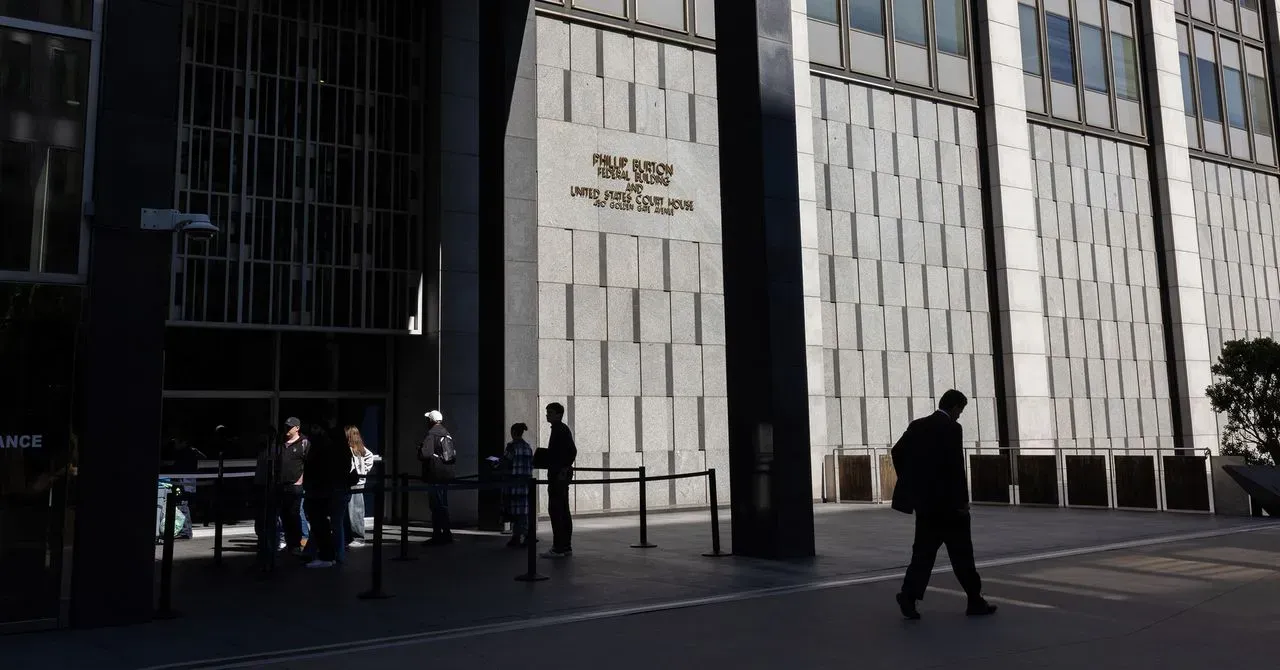
A US federal magistrate judge has ruled that Abdulrahman Alfozan, an OpenAI engineer accused of spying on executives, must remain in custody until further notice. The judge's decision comes after prosecutors claimed that the Saudi Arabian government had offered to support Alfozan with no strings attached, effectively making him a flight risk.
In court documents, it was revealed that the Saudi consulate had reached out to a bail bonds firm to help fund Alfozan's release, raising concerns about the potential for undue influence. The judge questioned whether Alfozan was indeed an "asset" for the kingdom and how a government-backed bond could ensure his presence in the country.
Alfozan's attorney, William Pernik, argued that the flight risk allegations were unfounded, but failed to persuade the judge that his client was committed to staying in the US. The judge expressed concerns that once Alfozan left the case, it would likely be closed.
The courtroom was packed with journalists, students on a field trip, and approximately 20 supporters of Alfozan, who appeared in an orange prison uniform and a medical face mask due to health protocols. Employee attempts to steal confidential company information are not uncommon in Silicon Valley.
Alfozan's case has piqued international interest due to its alleged amateurish nature and geopolitical undertones.
His professional background has been scrutinized by authorities, who note that Alfozan worked for a Saudi venture capital firm, provided consulting services to Saudi companies, and maintains connections with high-ranking officials in the Saudi government.
Pernik, Alfozan's lawyer, denies any involvement of espionage or covert activities on behalf of Saudi Arabia. He emphasizes that there is no evidence suggesting Alfozan was engaging in clandestine operations.
Prosecutors have revealed that Alfozan maintained frequent communication via WhatsApp with a member of the Saudi royal family throughout 2025 and 2026, who allegedly sought to recruit him for an AI initiative in the country.
A recent court filing has revealed that a Saudi national accused of spying on executives at OpenAI had been in communication with a member of the royal family as recently as May this year.
The Saudi government allegedly facilitated Alfozan's wife and infant son's return to their home country by purchasing them tickets, just days after his arrest. However, they ended up leaving earlier on another flight booked by her sister's husband, who works for the Saudi navy. This development has raised further questions about the extent of the Saudi government's involvement.
Alfozan's wife is not currently facing any charges and the FBI declined to comment last week on whether she would be charged in relation to this matter. OpenAI had employed Alfozan for approximately a year before discovering a covert audio recording device hidden behind a TV in an executive conference room used for confidential meetings.
The discovery of the listening device, which was connected to Alfozan and found in late September, led to his termination from OpenAI earlier this month. His arrest by the FBI soon followed, with prosecutors now seeking to have him held in custody pending trial on charges that could carry a five-year prison sentence.
A photo taken by authorities shows OpenAI engineer Alfozan looking behind a TV after the company had removed a recorder he allegedly installed.
The recorder's data was encrypted, making it impossible to determine what, if anything, was recorded, according to investigators.
Components for additional recording devices were found at Alfozan's home, along with photos of other OpenAI monitors and conference rooms on his phone.
These discoveries add to the evidence already recovered by OpenAI, including a second listening device discovered in a bag left unattended in the office.
Further details have emerged about the OpenAI engineer accused of spying on executives, shedding light on his personal life and travel plans. Alfozan had planned to accompany his wife on a trip to Riyadh before being arrested, indicating that he may have been preparing for an extended stay in Saudi Arabia.
Court documents reveal that Alfozan's wife needed to leave the US to renew her American student visa, which would require her to depart from the country temporarily. Her flight was booked by her sister's husband, not as part of any official work-related travel. This suggests that Alfozan's wife had a separate reason for traveling to Saudi Arabia.
Alfozan is scheduled to appear in court again on November 6, but his current status as an inmate remains unchanged. The ongoing investigation into the alleged spying incident continues, with more evidence expected to be uncovered in the coming weeks.
Facts based on reporting originally published by Wired.
You may republish this story, in full or in part, if you credit News Central Site and link to it (licence CC BY 4.0). Photos are not included.