United Airlines CEO Scott Kirby advocates for higher taxes on the rich
Scott Kirby has expressed concerns about wealth inequality in America and advocated for a national wealth tax.
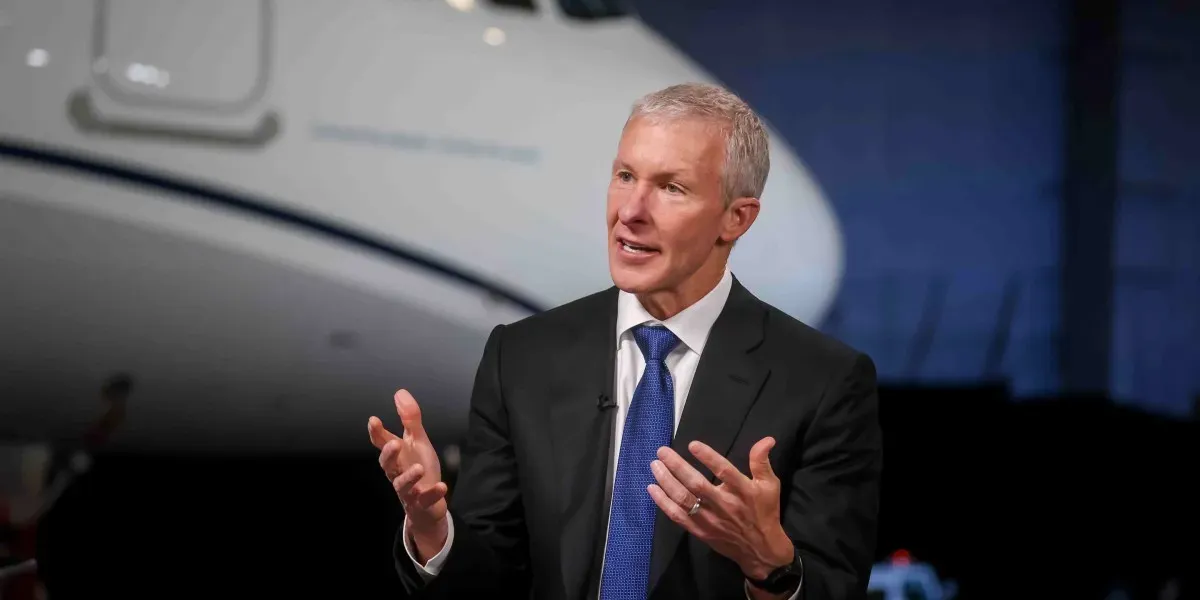
United Airlines CEO Scott Kirby has joined the growing list of wealthy business leaders calling for higher taxes on the rich. In an interview published over the weekend, Kirby expressed his concerns about wealth inequality in America and advocated for a national wealth tax.
Kirby's comments come as he himself earned $32.3 million last year, a staggering sum that highlights the vast pay disparity between CEOs and their employees. According to United Airlines' proxy statement, Kirby's total compensation package included base salary, stock awards, non-equity incentive compensation, and other benefits amounting to over $32 million.
The contrast with his company's median employee is striking: while Kirby took home an eye-watering sum, the typical worker received just $96,670 in total compensation. This gap mirrors a broader trend: CEO pay has been rising rapidly, increasing by 11% last year alone, whereas worker pay has stagnated at a mere 0.5%.
Kirby's views on taxation are notable given his own financial situation. He believes that a national wealth tax would be more effective than state-by-state measures, as individuals could simply relocate to avoid paying their fair share.
The wealth gap in America continues to grow, with the richest 1% of households holding an increasingly large share of the nation's total net worth. According to Federal Reserve data, this elite group now holds 32.5% of the country's net worth, up from 31.1% just a year ago.
This widening wealth gap has sparked growing resentment among many Americans, with some viewing billionaires as symbols of inequality and excess. A survey found that one in five people believe it is morally wrong to be a billionaire, highlighting the deep-seated concerns about the concentration of wealth at the top.
Some top executives have begun to acknowledge this backlash, including JPMorgan Chase CEO Jamie Dimon, who expressed understanding for the anti-rich sentiment in some communities. However, not everyone has welcomed calls for greater wealth redistribution.
In response to United Airlines CEO's comments on a national wealth tax and inheritance tax, Louisiana Governor Jeff Landry suggested that he simply cut a check to address his concerns about inequality.
A national wealth tax and a near-100% inheritance tax are among the measures proposed by United Airlines' CEO to address income inequality in the US. However, specific details on the thresholds for these taxes remain unclear, as Kirby did not provide any information on this matter.
The absence of a federal inheritance tax is notable, with only a handful of states imposing such levies. In contrast, the federal estate tax has a top marginal rate of 40% and features a $15 million basic exclusion amount for individuals who pass away in 2026, as per the IRS.
Kirby's stance on wealth inequality may be seen as ironic given his own high earnings - he reportedly made $32 million last year. His proposals have sparked debate, with some questioning whether they would effectively address income disparities.
Facts based on reporting originally published by Fortune.
You may republish this story, in full or in part, if you credit News Central Site and link to it (licence CC BY 4.0). Photos are not included.