UK Privy Council Rules Against Trinidad and Tobago's Anti-Gay Laws
The UK Privy Council has ruled in favor of Jason Jones, a gay man born in Trinidad and Tobago, allowing his appeal against the country's Sexual Offences Act.
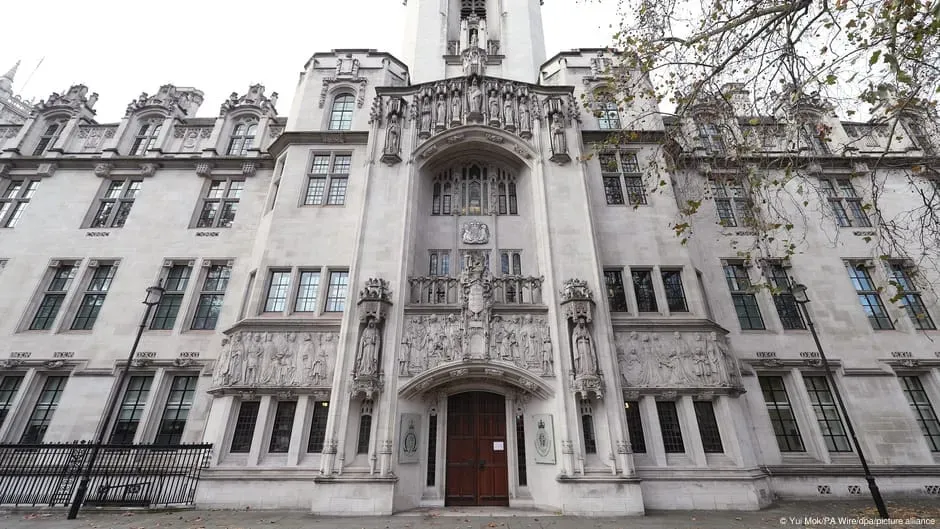
A decade-long legal battle has come to an end for Jason Jones, a gay man born in Trinidad and Tobago, after the UK Privy Council ruled in his favor. The council's decision marks a significant victory for Jones, who had been fighting against the country's Sexual Offences Act that prohibits consensual sex between adult males.
Jones initially won his case at the High Court of Trinidad and Tobago but was later partially overturned by the government and religious organizations. Undeterred, he took his case to the Privy Council in London, which is the final court of appeal for some Commonwealth countries, including Trinidad and Tobago. This decision had been contentious among certain groups before Tuesday's ruling.
The Privy Council's unanimous decision allowed Jones' appeal, dismissing a counter-appeal from Trinidad and Tobago's Attorney General. In response to the judgment, Jason Jones expressed his relief, stating that it was "ridiculous for anyone to be discriminated against simply because of their sexual orientation. His words reflect the significance of this ruling in challenging discriminatory laws.
The implications of this decision are far-reaching, as Trinidad and Tobago's laws governing gay sex will likely undergo significant changes. However, the exact extent of these changes remains unclear until further action is taken by the government or relevant authorities.
The UK Privy Council's decision has significant implications for Trinidad and Tobago's laws on same-sex relationships. The court ruled that two sections of the Sexual Offenses Act 1986 are unconstitutional because they violate the fundamental rights to private and family life set out in the country's constitution.
The ruling highlights the importance of personal relationships, with the court stating that forming intimate connections with others is a core aspect of human identity. This understanding has evolved over time, with laws that criminalize same-sex activities no longer seen as justifiable.
Critics argue that even though these anti-gay laws have not been enforced in recent years, their presence still sends a chilling message to the LGBTQ+ community. The laws carry penalties of up to five years in prison, perpetuating a culture of fear and intimidation.
Trinidadian authorities had argued that the 1986 laws, which date back to colonial times, should be considered existing law and take precedence over individual constitutional rights. However, this argument was rejected by the court as it sought to uphold the fundamental human right to respect for private and family life.
The Privy Council judges in London have reviewed the law on gay sex in Trinidad and Tobago and found it wanting.
In their ruling, the judges pointed out that the proviso allowing for this special status had not been met - a condition stating that the Act must be reasonably justifiable in a society respecting individual rights.
A key argument against this position was made by Anand Ramlogan, a former attorney general of Trinidad and Tobago and lawyer for Jason Jones.
Ramlogan emphasized the importance of constitutional rights in protecting citizens from majorities' changing opinions - ensuring dignity and equality are upheld regardless of public sentiment.
Jason Jones' personal experiences played a significant role in his decision to challenge Trinidad and Tobago's gay sex law. He was inspired by his friends who lost their lives to HIV/AIDS and a chance encounter with American singer-songwriter Nina Simone during her 1984 tour of the island nation.
Simone's visit left an indelible mark on Jones, who was just 19 at the time. According to him, she encouraged him to broaden his horizons by saying Jason, get off this rock and go see the world." This encounter had a profound impact on Jones' life.
The case against Trinidad and Tobago's gay sex law has been ongoing since 2017, when it was initially appealed. The country's government, as well as its Council of Evangelical Churches and Sanatan Dharm Maha Sabha, the largest Hindu organization, have all contested the ruling at various stages of the court process.
The case has drawn attention from activists across the Caribbean region, with several countries having similar laws in place. The Bahamas stands out as an exception, having decriminalized homosexuality in 1991.
The trend towards decriminalizing homosexuality in former British colonies is gaining momentum, with several countries recently striking down laws prohibiting gay sex.
In recent years, judges in Barbados, Dominica, St. Lucia, and Antigua and Barbuda have ruled against similar laws, marking a significant shift in the region's stance on LGBTQ+ rights. This development follows the UK's own repeal of such laws in overseas territories like Anguilla, the British Virgin Islands, the Cayman Islands, Montserrat, and the Turks and Caicos Islands back in 2001.
Notably, however, several countries that were once under British rule continue to have laws prohibiting gay sex on their books, including Grenada, Jamaica, Trinidad and Tobago, and St. Vincent and the Grenadines.
Facts based on reporting originally published by DW English.
You may republish this story, in full or in part, if you credit News Central Site and link to it (licence CC BY 4.0). Photos are not included.