Tenzing Norgay Documentary Film Released
The new documentary film Tenzing has been making waves for its portrayal of Himalayan climber Tenzing Norgay's historic ascent of Everest alongside Sir Edmund Hillary.
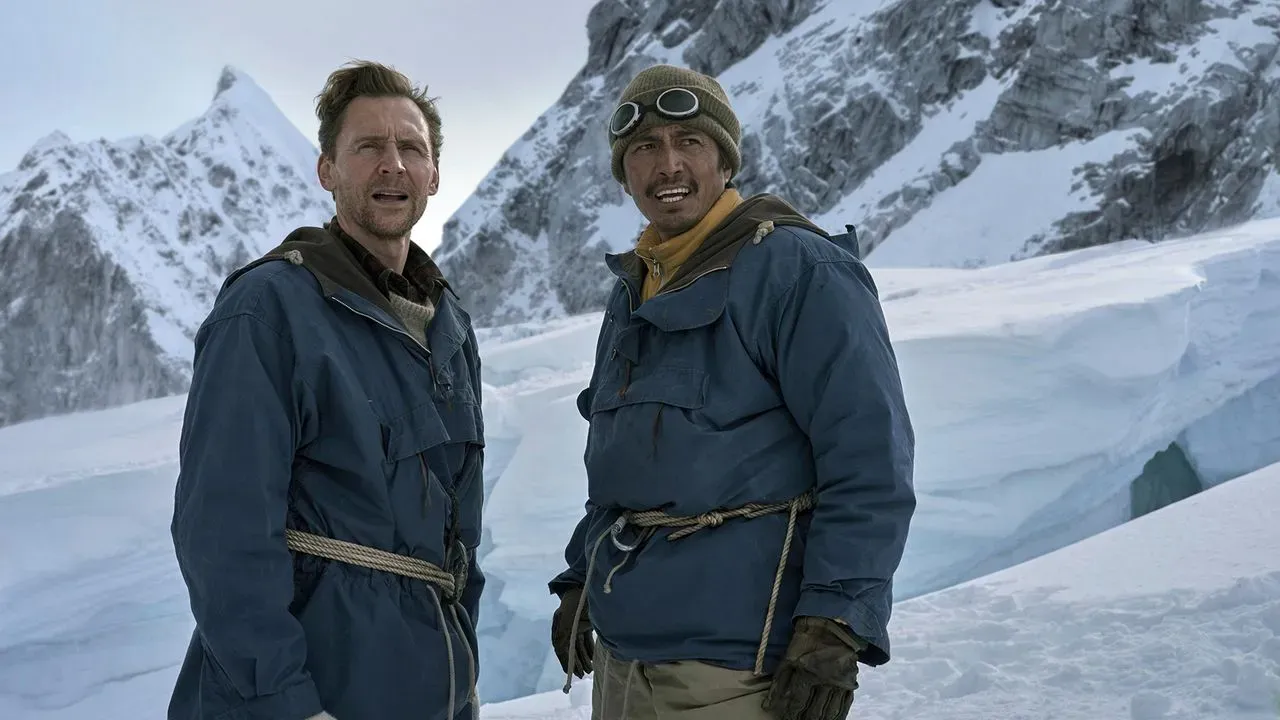
The new documentary film Tenzing has been making waves for its portrayal of Himalayan climber Tenzing Norgay's historic ascent of Everest alongside Sir Edmund Hillary. To recreate this iconic feat on screen, director Jennifer Peedom drew inspiration from her own experiences filming in the Himalayas over 20 years ago.
Peedom first traveled to the region as an aspiring filmmaker, accompanying a friend who was part of an Everest expedition. This experience sparked a deeper appreciation for the work and risks faced by Sherpas in facilitating foreign climbers' summit bids. "This so often ends up on the cutting room floor," Peedom notes.
Tenzing Norgay's story has long been overshadowed by that of his British climbing team, but Peedom sought to rectify this imbalance through her film. By focusing on Tenzing's remarkable achievement and relationships forged with local communities, she aimed to bring attention to the often-overlooked individuals who play a critical role in high-altitude expeditions.
The film stars Tibetan actor Genden Phuntsok as Tenzing Norgay, alongside Tom Hiddleston as Sir Edmund Hillary. According to Phuntsok, "Some of the most impactful people live in the dip of society," highlighting the importance of celebrating unsung heroes like Tenzing.
In an interview, Peedom, Phuntsok, and Hiddleston discussed the challenges of recreating Everest's summit on screen. Hiddleston reflected on the unlikely friendship between Tenzing and Hillary, noting that their bond offers valuable lessons about human fellowship and cooperation.
The trio also touched on the logistical hurdles involved in filming key sequences, including a nail-biting scene shot within a seemingly bottomless crevasse.
The team spent three months in Nepal during pre-production to lay the groundwork for filming, followed by six weeks of actual shooting before moving on to New Zealand.
To ensure that the early life scenes of Tenzing were accurately depicted, the filmmakers shot in Mustang, a region near the Tibetan border, where they could tap into local culture and authenticity.
Cultural accuracy was a top priority, with the team taking care to avoid any potential sensitivities or misrepresentations, given the complexities surrounding Tenzing's identity and heritage.
The filmmakers consulted extensively with friends of Tenzing's who shared stories about his childhood, including tales of his training sessions in Darjeeling, where he would carry rocks in his backpack up steep hills.
In researching Tenzing's life, the director also met with his grandson in Australia and sons in New Zealand, gathering valuable insights that were later woven into the narrative.
These personal connections helped to inform the storytelling and ensure that the film stayed true to its subject.
The film team's experience in New Zealand was vastly different from what they had encountered during pre-production and on location in other parts of the country. By the time they arrived in New Zealand, they had already completed rope and rock training, allowing them to focus on more complex stunts and ice climbing.
Peedom credits a skilled mountaineering team with helping her navigate the challenges of filming in such an unforgiving environment. The team's expertise was invaluable in ensuring that the film stayed true to its subject matter. Peedom emphasizes the importance of working closely with experienced professionals who understand the risks involved in high-altitude climbing.
Filming on Mount Cook, New Zealand's highest peak, presented a unique set of challenges. The summit scene was captured on a clear day, but the crew had to contend with changing weather conditions throughout the shoot. Peedom notes that rehearsing scenes on safe ground before moving to the mountain helped minimize risks and ensure a smoother production process.
The most physically demanding aspect of filming was undoubtedly the mountaineering elements. Hiddleston acknowledges the importance of logistics and safety considerations, particularly when shooting in remote villages with limited access to resources. The team's experience in New Zealand was distinct from other locations, offering a unique blend of rugged landscapes and challenging weather conditions.
A key scene in the film depicts Hillary falling into a crevasse and being saved by Tenzing. According to Hiddleston, this event actually occurred during their ascent of Everest. Phuntsok notes that Tenzing's quick decision to self-arrest was crucial in preventing a more serious accident.
The team found an ideal location for the crevasse scene on the Darwin Glacier in Arakiman Cook, New Zealand. The Southern Alps are notable for their similarities to the Himalayas, featuring similar terrain formations and crevasse fields. Hiddleston highlights the significance of this geographical feature in recreating the authentic experience of climbing Everest.
The team filming Tenzing had an advantage when it came to recreating the climb on location - they could shoot at 4000 meters lower than Mount Everest's summit. This allowed them to breathe easily while working on set.
Despite the lower altitude, the conditions were still harsh and unforgiving. The air was thin, making every step a challenge for the cast and crew. However, this also meant that they didn't have to worry about the extreme physical exertion required to climb Everest.
To capture the essence of the climb, the camera team used creative techniques such as suspending it on a wire jib. This allowed them to get close-up shots without putting anyone in harm's way. The production team also had to build their own ladders and steps because they couldn't simply film over ice.
When filming, the cast and crew were exposed to the full force of the elements. Snow and wind battered them relentlessly, making every take a battle against the conditions. Even when the sun was shining, the temperature could drop dramatically in an instant, catching everyone off guard.
The authenticity of the experience was not just about capturing the technical aspects of climbing Everest, but also about conveying the tensions between the climbers and their support teams. The relationships forged on that mountain became a key part of the film's narrative.
In the Khumbu Valley, where Tenzing met his wife Dawa, the team shot some scenes in Mustang instead of Nepal. However, they did send someone ahead to spend time with a legendary Sherpa leader who was instrumental in their documentary. This allowed them to capture the essence of the region and its people without having to shoot on location.
The trek up to Everest Base Camp is a challenging and scenic journey that offers breathtaking views of the surrounding landscape. The trail begins at Lukla Airport, where travelers must share the path with local donkeys and yaks.
As Hiddleston recounts, spending time in this stunning environment allowed him to connect with his character on a deeper level. He spent six days trekking from Lukla airport to Everest camp with Phuntsok, who had previously climbed the mountain 21 times.
The slow pace of their ascent was deliberate, as acclimatization is crucial at high altitudes. They never climbed more than 500 meters per day, allowing their bodies to adjust to the thinner air. This approach also gave them ample time to take in the breathtaking views and appreciate the majesty of the mountain.
Phuntsok's extensive knowledge of climbing was invaluable on this journey, and he shared his expertise with Hiddleston. The actor acknowledges that he learned a great deal from Phuntsok about the technical aspects of climbing, including crevasse rescue techniques.
To prepare physically for the role, Hiddleston engaged in rigorous training, which included running, strength exercises, and agility drills. This intense preparation allowed him to simulate the physical demands of climbing Everest, even if he couldn't actually ascend the mountain itself.
The pair's training also focused on mental preparation, as they studied the accounts of previous climbers, including Tenzing and Hillary. By immersing themselves in the story, they aimed to capture the essence of their characters' experiences and convey that sense of determination and sacrifice to audiences worldwide.
The filmmakers' approach to portraying Tenzing's story was rooted in respect for Sherpa culture and the mountain itself. They aimed to capture the essence of their characters' experiences by immersing themselves in the narrative.
In an effort to accurately convey the sense of determination and sacrifice, the team reframed their perspective on the climbing experience. This shift in approach allowed them to delve deeper into the emotional and philosophical aspects of embarking on such a monumental journey.
The film's themes revolve around self-discovery, pushing beyond personal limits, and finding awe-inspiring experiences that foster a sense of connection with nature. By exploring these ideas, the filmmakers aimed to convey the profound impact that encounters with wild environments can have on individuals.
Ultimately, "Tenzing" is a poignant exploration of what it means to be human in the face of natural magnificence, and how such experiences can leave an indelible mark on one's life.
Facts based on reporting originally published by Conde Nast Traveler.
You may republish this story, in full or in part, if you credit News Central Site and link to it (licence CC BY 4.0). Photos are not included.