St Nicholas of Platea Church in Scalea Italy Preserves Rich History
The Parish of St. Nicholas of Platea has been led by one dedicated priest for 30 years: Don Giacomo.
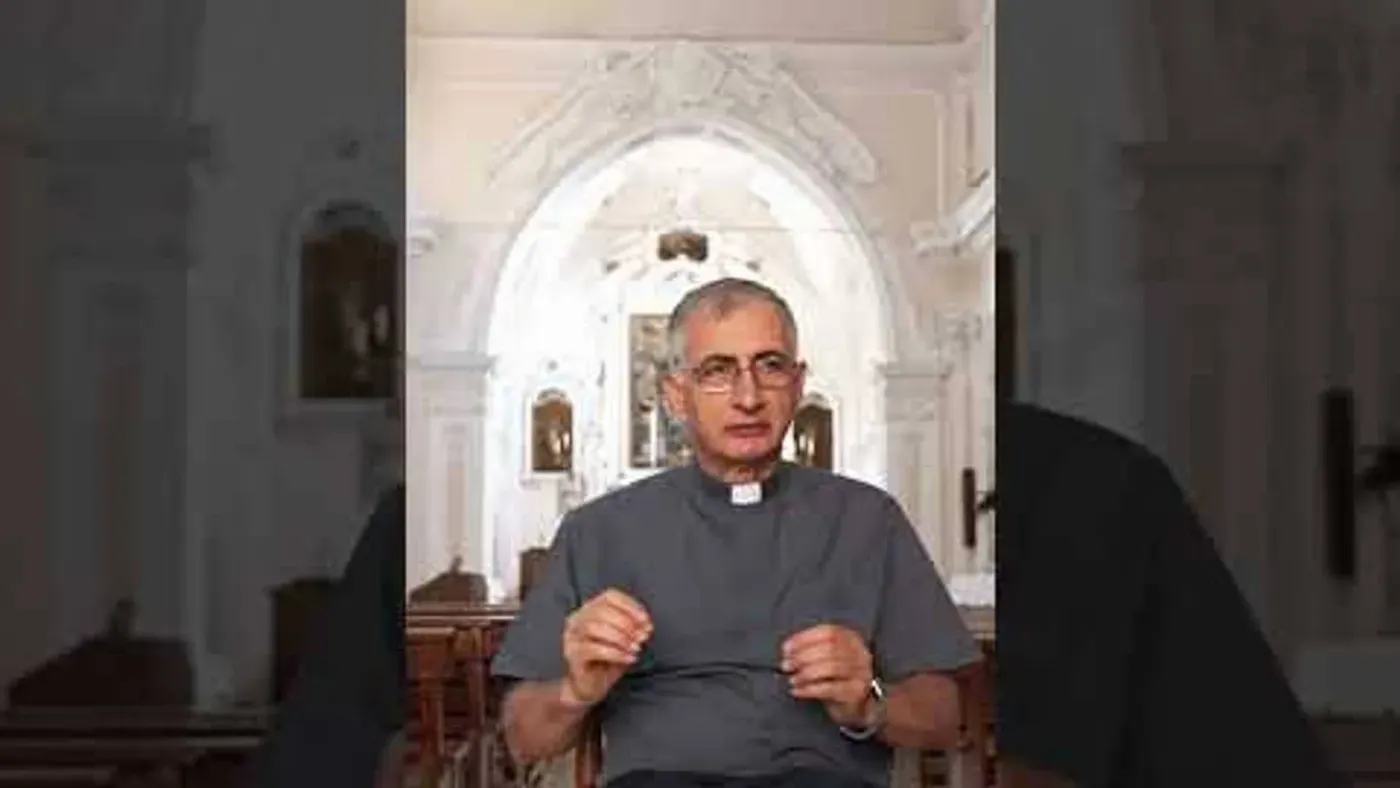
A hidden gem nestled in Southern Italy's Calabria region is the church of St. Nicholas of Platea in Scalea, a place where locals and visitors alike can find solace and connection to their faith.
The Parish of St. Nicholas of Platea has been led by one dedicated priest for 30 years: Don Giacomo. In Italian culture, 'Don' is a term used to address priests, short for the Latin word 'Dominus,' meaning lord or father.
Located in Scalea, in the Province of Cosenza, this sacred sanctuary is home to the Sanctuary of the Madonna del Lauro. The historic structure has a rich history, dating back to medieval times before 1100, with a crypt beneath the current church that houses columns from a Roman temple and frescoes from the 1400s.
The crypt is a testament to the region's rich past, showcasing remnants of ancient civilizations. In contrast, the church above is a beautifully designed place of worship, featuring a stunning dedication to Our Lady of Mount Carmel, painted by Azzolino in the 1700s.
Don Giacomo has been the priest at St. Nicholas of Platea for three decades, guiding his community through life's joys and challenges. His dedication to the parish is evident in the care he takes to preserve its history and traditions.
The church's architecture is a blend of styles, with the medieval crypt beneath the current structure adding an air of mystique to the overall design. The frescoes in the crypt are particularly noteworthy, dating back to the 1400s and providing a glimpse into the artistic tastes of the time.
Despite its historical significance, the Sanctuary of the Madonna del Lauro remains relatively unknown outside of Italy, making it a hidden gem waiting to be discovered by travelers seeking off-the-beaten-path experiences.
The Sanctuary of the Madonna del Lauro has a unique atmosphere that is both tranquil and vibrant, attracting visitors from far and wide.
While some come to admire the church's stunning artwork or capture its beauty through photographs and videos, Don Giacomo encourages everyone to pause and connect with the sacred space on a deeper level.
As a priest who regularly visits the sanctuary, he understands the importance of creating a sense of calm and spirituality for all who enter.
The humid climate and scorching summer heat may be challenging, but according to Don Giacomo, there is something special about being in this location that transcends physical comfort.
This different kind of well-being is not just about finding solace from the elements, but also about connecting with a sense of peace and tranquility that permeates the air.
To gain a deeper understanding of Don Giacomo's connection to the sanctuary, it is essential to explore his vocation as a priest, his daily rituals, and his mission to serve the community.
Don Giacomo lives out his calling by being an active presence in the town square, where he visits the sick, spends time with the elderly, and accompanies young people on their spiritual journey.
Don Giacomo's vocation as a priest has given him a unique perspective on life, one that is free from filters and prejudice. He believes this perspective is something that people could all benefit from practicing in their own lives.
As he reflects on his experiences, Don Giacomo acknowledges the importance of discernment when interacting with others. He notes that it's impossible to trust everyone, yet we often act as though we can. This approach can have both positive and negative consequences, but he accepts them all as part of life's journey.
The priest's views on trust and relationships are shaped by his understanding of the church as a community that operates at a loss in many ways. He's not referring to financial losses, but rather to the emotional and spiritual costs of serving others. Despite these challenges, Don Giacomo believes that the church always maintains a positive balance.
Don Giacomo's own journey into the priesthood has been shaped by a series of experiences that have prepared him for his current role. He describes this process as a series of callings, each one building on the last to lead him towards his vocation.
For Don Giacomo, it was not just one moment or event that drew him to the priesthood, but rather a combination of experiences that gave him clarity about his path. He sees each moment and experience as an opportunity for reflection and deeper understanding.
The priest's approach to life is centered on appreciation and gratitude. He believes that taking time to reflect on our experiences can help us gain a deeper understanding of ourselves and the world around us.
Ultimately, Don Giacomo's message is one of simplicity and humility. By embracing the complexities and challenges of life with an open heart and mind, he believes we can find greater meaning and purpose in our lives.
As one looks at the rituals and symbols that bring people closer to their faith, Don Giacomo has a special fondness for the Baptism ceremony. This sacred ritual not only marks the beginning of a child's spiritual journey but also serves as a poignant reminder of life's beauty.
The priest is particularly drawn to the moment when he presents the newly baptized child to the congregation, symbolizing the presence of God in their lives. He believes this gesture conveys a powerful message, one that encourages people to appreciate the beauty and wonder of life.
In addition to Baptism, Don Giacomo finds great significance in the ritual of welcoming the deceased into the community. This gesture acknowledges the passing of a loved one while also expressing hope for what lies beyond death. It's a reminder that even in loss, there is always a sense of continuity and connection.
The priest believes this ritual has profound meaning, as it speaks to the enduring power of life and the human spirit. Despite the physical absence of the deceased, their memory lives on through the love and affection of those who remain behind.
Every year, thousands gather for the feast of Madonna del Lauro on September 8th, a celebration that brings the entire city together. As part of this festive occasion, an evening procession takes place where the statue of the Madonna is carried out to sea on boats by the gathered crowd.
The event serves as a testament to the strong bond between the people and their faith, with many drawn into the festivities through the symbolism and ritual associated with it. It's a time for communal celebration and reflection, one that underscores the enduring power of faith in people's lives.
As the procession makes its way out to sea, the atmosphere is filled with music, prayer, and a deep sense of connection among those participating. The feast of Madonna del Lauro serves as a poignant reminder of the role faith plays in shaping community and individual lives.
As a key figure in the community, Don Giacomo emphasizes that faith involves more than just believing. It encompasses understanding and knowledge, which are essential for making informed decisions about one's values and actions.
According to Don Giacomo, priests have a crucial role in providing their parishioners with this deeper understanding of faith. This enables them to live out their convictions with conviction and purpose, rather than merely going through the motions.
The priest also stresses the importance of tradition in shaping community and individual lives. Scalea, Calabria is no exception, where both breathtaking views and less appealing areas coexist alongside its inhabitants.
Don Giacomo notes that people's experiences are influenced by their unique perspectives and encounters during visits to places like Scalea. The beauty of an experience often depends on the company one keeps, with some visitors bringing a wonderful spiritual richness to share moments of prayer.
By inviting travelers to participate in religious celebrations at the church and sanctuary, Don Giacomo aims to contribute to cherished memories that they can take home. These events are free for all to attend, making them accessible to everyone.
In Scalea, faith plays a vital role in shaping community life, with many residents actively participating in various activities throughout the year. The town's strong spiritual foundation is evident in its numerous festivals and celebrations.
The priest's efforts to promote a deeper understanding of faith are likely to have a lasting impact on those who visit Scalea. By sharing moments of prayer and fostering connections among people from different backgrounds, Don Giacomo is helping to build bridges between communities.
Visitors to the parish of St. Nicholas of Platea are treated to more than just a glimpse into Italy's rich history - they're also given the opportunity to connect with locals and experience the country's cherished traditions firsthand.
Don Giacomo's efforts to revitalize interest in the medieval sanctuary have not gone unnoticed, as he continues to work tirelessly behind the scenes to ensure that its beauty and significance are preserved for generations to come.
The sanctuary itself is a testament to Italy's rich cultural heritage, with its intricate stone carvings, stunning architecture, and serene atmosphere providing a tranquil escape from the hustle and bustle of modern life.
By sharing moments of prayer and fostering connections among people from different backgrounds, Don Giacomo is helping to build bridges between communities.
Don Giacomo's dedication to preserving Italy's cultural identity has earned him recognition as one of many culture creators at Vera Italia, a travel platform founded by Chiara Barbera that aims to keep Italian traditions alive and offer learning experiences through the sights and sounds of Calabria.
Through his work with Vera Italia, Don Giacomo is helping travelers from around the world discover the beauty and significance of Italy's living heritage, from medieval castles to family farms and olive groves.
Facts based on reporting originally published by Mental Floss.
You may republish this story, in full or in part, if you credit News Central Site and link to it (licence CC BY 4.0). Photos are not included.