Senate Race in Mississippi Remains Uncertain Following Absentee and Provisional Ballot Counting
The outcome of a closely contested Senate race in Mississippi hangs in the balance as election officials continue to count absentee and provisional ballots.
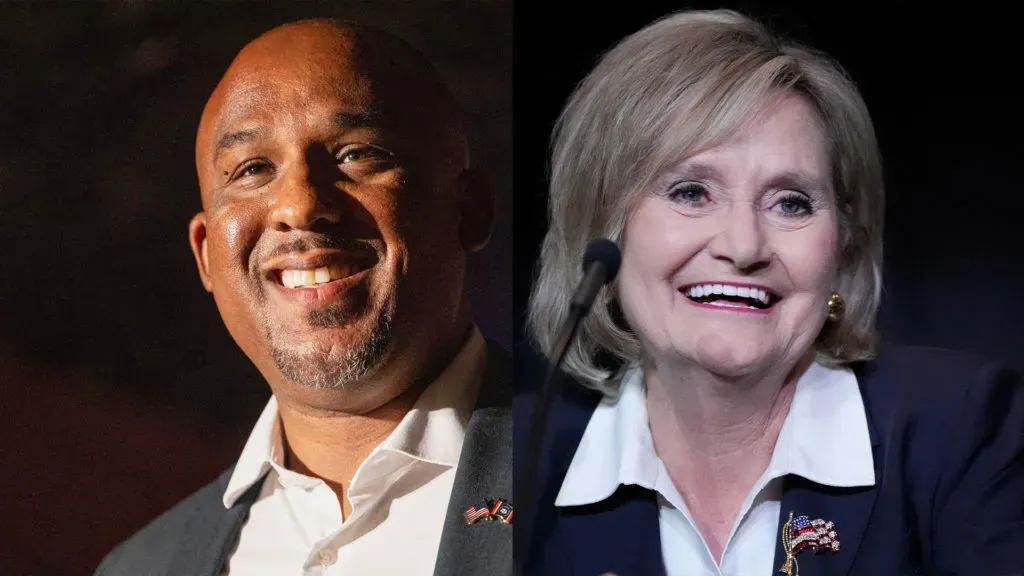
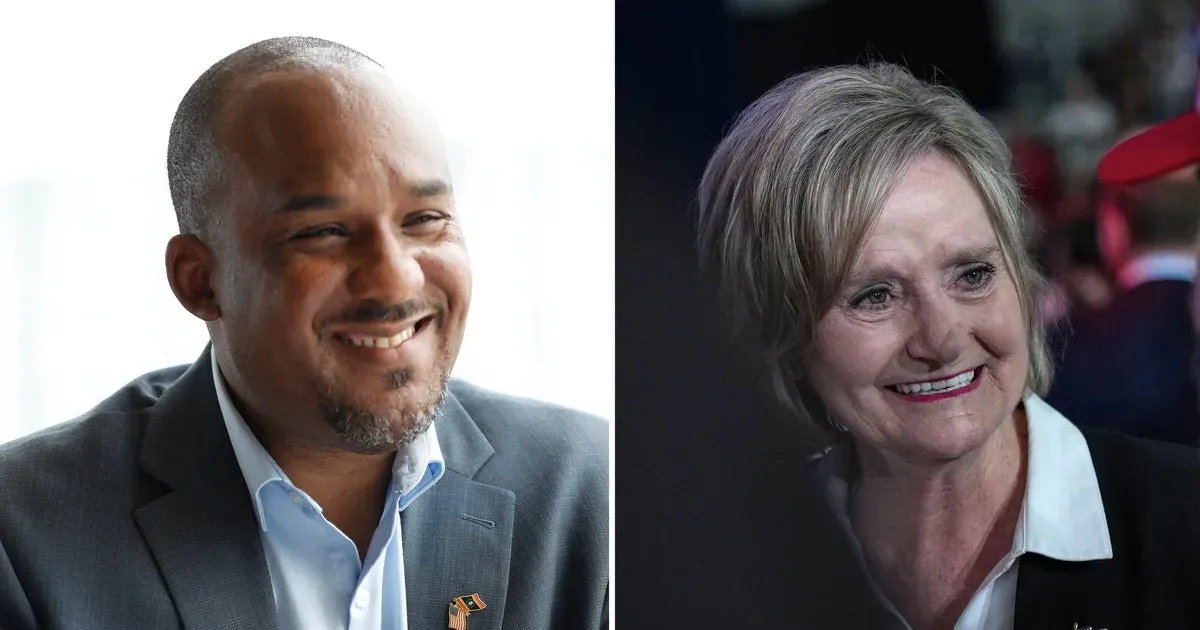
The outcome of a closely contested Senate race in Mississippi hangs in the balance as election officials continue to count absentee and provisional ballots. The state's reputation for decisive elections has been upended by this unusually tight contest between Democrat Scott Colom and Republican Senator Cindy Hyde-Smith.
In a historic moment, if Colom emerges victorious, he would become the first Black senator from Mississippi since Reconstruction. This milestone has been decades in the making, with many seeing it as a culmination of years of organizing and advocacy.
Community members and civil rights groups gathered at Tougaloo College in North Jackson to celebrate this momentous occasion. The atmosphere was electric, with chants and cheers filling the air as they acknowledged the significance of this election.
Cindy Ayers Elliot, a seventh-generation Mississippian, reflected on the impact of this moment, saying that "if it can be done in Mississippi, it can be done anywhere." Her words capture the essence of what this election represents for many, who see it as a testament to the power of collective effort and determination.
More than 100,000 voters in Mississippi submitted absentee ballots by mail, which must be received by election offices by today.
The fate of these votes hangs in the balance as local officials across the state's 82 counties scrutinize each ballot to ensure its validity.
Thousands more voters were unable to confirm their registration at polling stations and instead cast provisional ballots, also known as affidavit ballots. These ballots will only be counted once the eligibility of the voter is confirmed by election officials.
The Hinds County election office, one of the largest in the state and a Democratic stronghold, is still counting votes days after the election, with a record number of these provisional ballots yet to be processed.
Jessica Carter, who works for VoteRiders, a nonprofit focused on voter education efforts, expressed concerns that not all ballots will be counted. She cited confusion among voters regarding the need to cast affidavit ballots as one reason why some votes may be left out.
Voters in Mississippi are continuing to cast their affidavit ballots, which were required for those whose names were not on the regular voting rolls due to incorrect address lists provided by local officials.
At county clerks' offices across the state, voters are showing up to verify their identification or addresses, a process that is meant to cure any errors on their ballots. Some of these voters had been removed from the rolls without explanation, leaving them uncertain about their eligibility to vote.
One voter who experienced this issue was David Wilson, who has been voting in the same location since he started casting his ballots. When asked why he thought he had been mistakenly removed from the rolls, he shook his head and said "I have no idea."
Lynntina Liddell, another voter, attributed her removal to a simple mistake - her address was listed as being at an old location instead of her current one. She made sure to visit the county clerks' office to resolve the issue and ensure that her ballot would be counted.
Over 230,000 voters were designated inactive due to these inaccurate address lists, with some civil rights groups pointing out that this is a symptom of a larger problem - Mississippi's history of voter suppression efforts.
The unexpected surge in Black voter turnout across the Southern states has been attributed to several factors, including the redrawing of congressional maps that favor Republicans.
However, a more pressing concern for Mississippi voters was the high cost of living, which emerged as the top issue among those casting their ballots.
A recent viral ad from Scott Colom's campaign encapsulated this frustration, highlighting the desperation felt by many citizens who were eager to see change in their state's leadership.
According to experts, this economic anxiety played a significant role in swaying some white voters to shift their allegiance from red to blue this year, contributing to an unprecedented perfect storm for Democratic candidates.
Darrell Arnold, a voter in Mississippi, initially supported Cindy Hyde-Smith due to her conservative values but acknowledges that Scott Colom's campaign connected better with voters.
Colom's campaign focused on everyday issues affecting local communities, unlike Hyde-Smith's, which may have contributed to the Democratic candidate's success.
As the vote count continues, both sides are insisting on a thorough tally of all votes. Mike Hurst, Chair of the Mississippi Republican Party, stated that if election laws were not followed, they would take swift action and hold officials accountable.
Colom expressed confidence in his lead, claiming it is insurmountable for Hyde-Smith to catch up. He emphasized the importance of putting the people's interests above partisan politics, suggesting a willingness to put aside personal feelings.
The vote margin is currently at three percent, with no automatic recount rules in place in Mississippi, potentially paving the way for a court challenge if either candidate contests the results.
As the vote count continues in Mississippi's Senate race, both campaigns have a significant presence on the ground to ensure all votes are accurately counted. According to experts, there are two potential paths that could be taken if one of the candidates contests the results.
One option is for the candidate in second place to request a recount through the courts, a move that would require the court to consider the request and potentially grant it. This process could lead to further delays in declaring a winner.
The other option, although highly unusual, involves Congress itself judging the qualifications and elections of its own members, as per the Constitution. However, this path is not one that has been pursued in recent history, leaving many wondering what the outcome will be as the count continues and the vote margin remains at three percent.
Facts based on reporting originally published by PBS NewsHour Politics.
You may republish this story, in full or in part, if you credit News Central Site and link to it (licence CC BY 4.0). Photos are not included.