Scientists Leave US Due to Unpredictable Research Funding
Researchers are leaving the US due to concerns over delayed federal grants and unstable funding streams under the current administration.
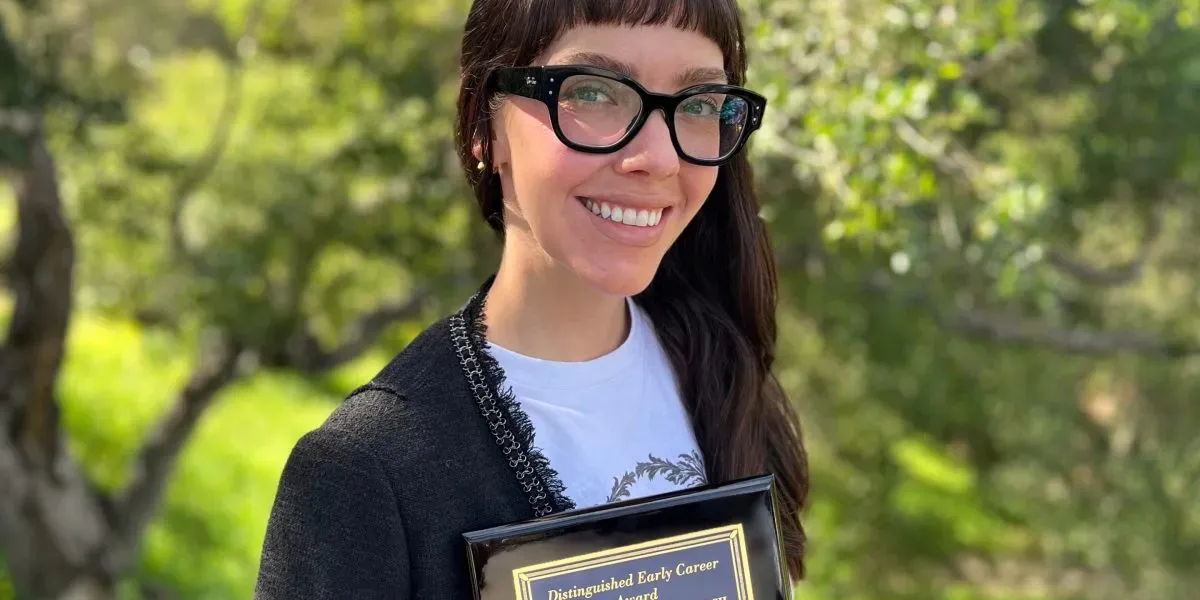
Scientists who have spent their careers studying in the United States are now packing up to leave as research funding becomes increasingly unpredictable under the current administration. For Halley Froehlich, a researcher who has roots in America dating back to the 1700s, this sudden change was unexpected.
Froehlich's decision to relocate to Finland was motivated by concerns over delayed federal grants and worries about her work's future. She is now continuing her research at the University of Helsinki on how climate change affects fish, shellfish, and seaweed consumed by humans. This move marks a significant shift for Froehlich, who had previously envisioned spending her entire scientific career in the US.
The Trump administration's overhaul of federal grant-giving has created an opportunity for foreign universities to lure American researchers abroad. These institutions have introduced programs that promise more stable funding streams and greater academic freedom. As a result, many scientists are taking advantage of these offers and leaving the US to continue their work elsewhere.
The US has lost significant talent to other countries as a result of Trump's research funding cuts. According to an April report by the Business for Federal Research Funding Coalition, more than half of American states have seen scientists leave their institutions to work abroad.
These recruitment programs are not limited to any one country, with Canada, France, Belgium, and Finland actively poaching US-based researchers. This trend is particularly striking given the US's reputation as a global leader in scientific innovation, having produced the most Nobel laureates in medicine, physics, and chemistry.
The brain drain has been exacerbated by Trump's commitment to "ending waste in government spending, which some see as code for cutting funding for research initiatives. As a result, many early-career biomedical scientists are now less likely to stay in the US, with a significant drop in their willingness to remain in the country compared to just six months prior.
Physics Ph.D. graduates from 2025 have also seen an unprecedented rate of departure from the US, with numbers not seen in over 30 years according to the American Institute of Physics.
The exodus of scientists from the US continues to gain momentum, with many citing the country's shift away from research as a major reason for their departure.
According to Dr. Stawitz, who left her job at the NOAA last year to join a UK-based research team, the upheaval in US science is a common topic of conversation among researchers. She notes that it's not just her colleagues who are leaving, but also those from other countries who have traditionally collaborated with American scientists.
The uncertainty surrounding federal funding for research grants has become a major concern for many scientists, including Dr. Froehlich, who left the University of California, Santa Barbara to join an initiative by the Research Council of Finland. She cites the cancellation and postponement of her colleagues' grants as one of the factors that led her to leave the US.
Dr. Froehlich's decision was not taken lightly, but she felt that it was necessary in order to secure a stable future for herself and her research team. With five years of guaranteed funding totaling about $3 million, she is now able to focus on her climate change research without worrying about the financial implications.
As Dr. Froehlich settles into her new life in Helsinki, she is taking Finnish lessons offered by the university and enjoying the scenic views of the Baltic Sea from her flat. Her decision to leave the US is a testament to the growing trend of scientists seeking opportunities abroad due to the changing research landscape at home.
The trend of international researchers seeking opportunities abroad has reached a critical mass, as more and more experts are leaving the US in search of more favorable research environments.
Married biologists James Letts and Maria Maldonado made the bold decision to leave their posts at the University of California, Davis, for Australia's Monash University. Both had earned their doctoral degrees in New York and spent over a decade conducting science in the US, but felt it was time to move on.
Uncertainty surrounding grant funding played a significant role in their decision, as they struggled with having to lay off a staff scientist while waiting for stalled funding. This experience left them feeling uncertain about the future of their research.
Letts reflected on his motivations for leaving, stating that he wants to do great science and make discoveries" but also see his work have meaning. He felt that this goal seemed increasingly difficult to achieve in the US.
Meanwhile, other notable scientists are following suit, including Omar Yaghi, a 2025 Nobel Prize winner for chemistry, who left his post at the University of California, Berkeley to direct an artificial intelligence lab at China's Tsinghua University.
The exodus of scientists from the US continues, but not everyone is leaving the country in search of better opportunities and funding for their research.
Many scientists are choosing to stay, either by finding new sources of funding or transitioning into industry jobs. However, this trend may not reverse the damage already done to the US scientific community. The Trump administration has made significant cuts to federal grants since its second term began, with up to $174 billion in funding slashed from research projects.
A proposed rule from the Office of Management and Budget could further erode the independence of scientists in their work. Under this proposal, political appointees would have more control over which projects receive funding, potentially leading to more politicized science. A resolution passed by Congress has delayed a final decision on the rule until December.
The impact of these changes is already being felt, with major research institutions reporting a significant decline in applications for doctoral programs. According to admissions data collected by the Association of American Universities, there was a 15% drop in applicants for fall 2026 doctoral programs compared to last year.
As scientists struggle to find funding for their research in the US, many are looking abroad for opportunities. Canada has emerged as a popular destination, with some experts advising young researchers to consider moving north of the border.
The trend is reflected in admissions data, which shows a 15% drop in applicants for fall 2026 doctoral programs compared to last year. This decline underscores the challenges facing US-based researchers and the need for alternative destinations like Canada.
Facts based on reporting originally published by Fortune.
You may republish this story, in full or in part, if you credit News Central Site and link to it (licence CC BY 4.0). Photos are not included.