Russia Expands Attacks on Kyiv as City Becomes Front-Line
Residents of Kyiv are struggling to find safe shelter with limited options available, with some using subway stations as makeshift dormitories.
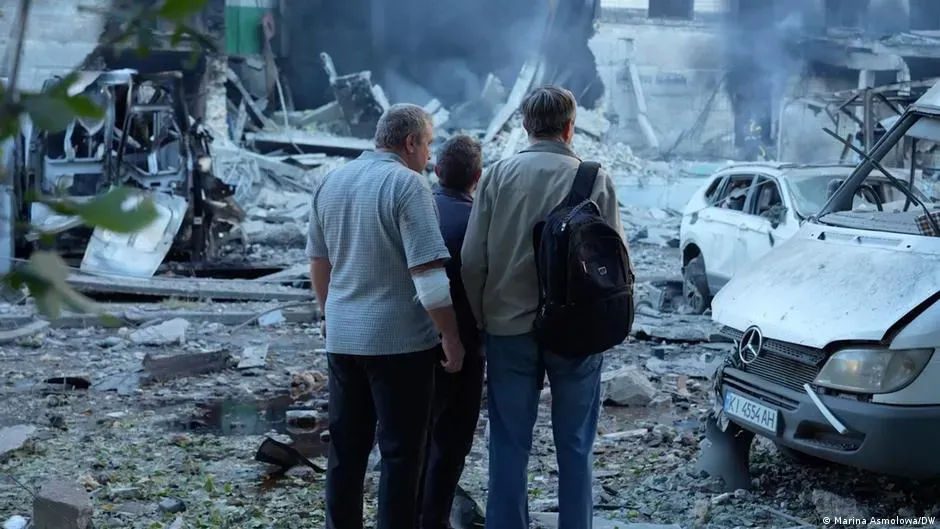
Life in Kyiv has taken a drastic turn for the worse as Russia expands its attacks on the Ukrainian capital. The city's residents are now facing increased danger, making it a front-line city alongside other areas near the war's battlefields.
The 4 million people living in Kyiv are struggling to find safe shelter with limited options available. To cope with this issue, some have resorted to using subway stations as makeshift dormitories. Every night around 10 pm, residents bring mattresses and small tents into the underground tunnels where they can take refuge from the danger above.
Halyna, a mother of a young boy, has become accustomed to taking her child to the nearest subway station each evening. Her apartment is located in an area that Russia has repeatedly targeted over the course of four years and eight months. She claims their good fortune has allowed them to stay alive so far.
A recent incident in September highlights the severity of the situation. A Russian drone struck an apartment building, claiming the life of 14-year-old Daniel Umanskyj. Vlad, a neighbor who was in the hallway with his daughter at the time, credits being late that day for saving their lives. He expressed outrage and sadness over the loss of young Daniel.
Flowers have been planted outside the damaged apartment building as a tribute to Daniel's memory. The incident serves as a grim reminder of the risks faced by civilians caught up in the conflict.
The ongoing conflict in Ukraine's capital, Kyiv, has led to an escalation of attacks by Russia, which are now targeting areas where civilians gather, including schools and other public places.
A recent incident at a school building in southwestern Kyiv serves as a stark reminder of the risks faced by children. Fortunately, pupils and teachers were already safely ensconced in shelters when a drone struck the building in early October.
According to Valentyna Chorna, the principal of the school, the shelter can accommodate over 500 students, allowing classes to continue uninterrupted for those in grades one through nine. The availability of these shelters has become a crucial factor in determining whether or not children can attend school on any given day.
The constant threat of air-raid alarms is taking a toll on parents and families, who are forced to weigh the risks of sending their children to school against the dangers of staying at home during an alarm. As one parent noted, even walking to school has become a perilous journey due to the unpredictable nature of air-raid sirens.
The unpredictability of these attacks is causing significant distress for children, with some reporting frightening experiences, such as witnessing massive explosions that can be heard from afar. Staying home may seem like a safer option, but it also brings its own set of risks and uncertainties, leaving parents with an impossible decision to make.
The sound of air raid sirens has become an unsettling routine for residents of Kyiv, leaving them to wonder who will be spared each time it goes off. A recent incident at a building in the city serves as a stark reminder that survival is often a matter of luck. When a Russian drone struck their apartment block in September, residents were shaken but fortunate to have avoided any damage.
The death toll in Kyiv has risen significantly this year, with 140 people killed in the capital during the first eight months of 2026. This is compared to 172 fatalities for all of last year, indicating a disturbing trend that could make 2026 the deadliest year since Russia's invasion began in 2022. The military administration in Kyiv has reported these grim statistics.
The ongoing conflict has led to severe shortages in supermarkets, reminiscent of the early months of the war. Attacks on warehouses have disrupted supply chains, causing residents to worry about their access to basic necessities. Moreover, emergency power outages have resumed in Kyiv, further exacerbating the difficulties faced by residents.
A recent Russian attack paralyzed the city's subway system, leaving commuters stranded and frustrated. The strikes on energy infrastructure have raised concerns about the reliability of heat, electricity, and water supplies during the upcoming winter months. As temperatures drop, residents are bracing themselves for a potentially harsh season.
Despite Russia's efforts to render Kyiv uninhabitable, a significant majority of residents remain determined to stay in their city. According to a recent survey by the Kyiv International Institute of Sociology, 72% of respondents expressed a willingness to endure the war for as long as necessary. The authorities are working to maintain some semblance of normal life in the city, with the curfew shortened to 1 a.m. to 5 a.m.
The situation in Kyiv has become increasingly dire as Russia's attacks intensify. People are being forced to seek shelter immediately during "red alerts, which can signal a massive combined attack or ballistic missiles.
Facilities that were previously allowed to continue operating under yellow" alerts are now facing disruptions, adding to the chaos. The threat of cruise missiles is also looming large over the city. The situation remains precarious as Ukraine's capital struggles to cope with the escalating violence.
Facts based on reporting originally published by DW English.
You may republish this story, in full or in part, if you credit News Central Site and link to it (licence CC BY 4.0). Photos are not included.