Route 66 Roadside Attractions in Albuquerque, New Mexico
The stretch of Route 66 through Albuquerque, New Mexico, is lined with countless neon signs that create a surreal atmosphere for drivers.
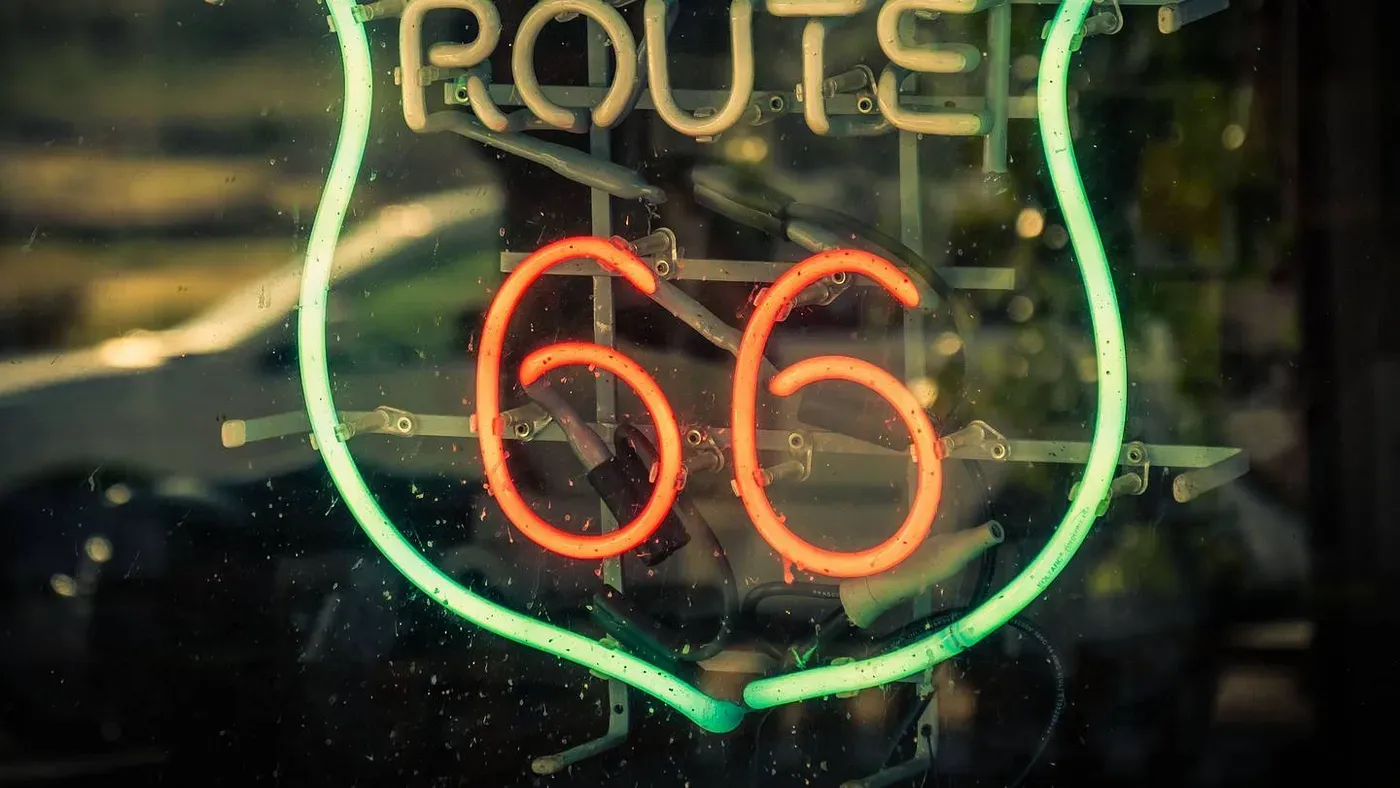
Driving down Route 66 through Albuquerque, New Mexico, is an experience like no other. The stretch of road is lined with countless neon signs that seem to shine brighter than the full moon overhead, creating a surreal atmosphere.
The sheer number and intensity of these roadside advertisements are breathtaking, beckoning drivers into another time and place. Motels, gas stations, and all manner of roadside haunts vie for attention, their bright lights illuminating the dark desert landscape.
Riding in a classic lowrider car with its own purple neon headlights is like moving through an alternate universe made of neon. The experience is almost dreamlike, as if one has entered a world where the rules of reality no longer apply.
Route 66 holds a special place in the American imagination. Commissioned in 1926, it stretches from Lake Michigan to Los Angeles and traverses thousands of miles of diverse landscapes on its way to the Pacific coast.
This iconic road became a vital artery for commerce, bringing business to rural communities that set up motels, shops, and other roadside attractions to capitalize on the flow of traffic. Many of these towns relied heavily on Route 66 as their main source of income.
The abundance of neon signs along Route 66 is more than just a nostalgic relic; it's a testament to the road's enduring influence on American culture. These vibrant advertisements have become synonymous with the classic American road trip experience.
As one drives through the desert landscapes, the neon signs serve as beacons for weary travelers, offering a promise of rest, relaxation, and rejuvenation after hours spent on the open road. They are also a reminder of the road's significance in shaping America's identity.
Route 66's nickname "Mother Road was coined by John Steinbeck in his 1939 novel The Grapes of Wrath to describe the massive migration of people seeking jobs on the California coast during the Great Depression.
The term stuck and Route 66 became synonymous with the American West, evoking feelings of individualism, freedom, and ephemerality. This sentiment was further solidified by Nat King Cole's iconic 1946 song Route 66", which cemented its place in popular culture.
Neon signs are a defining feature of Route 66's visual identity, and it's not hard to see why they're so ubiquitous along the road. Drive down any stretch of Route 66 and you'll likely spot a bright blue, green, or orange sign, often featuring a cactus, cowboy hat, or motel vacancy sign that bleeds into the night.
The prevalence of neon signs on Route 66 is largely due to their practicality before the advent of digital navigation tools. In the past, drivers relied on these glowing signs to find food, lodging, and other essential services in the dark.
Neon's popularity coincided with Route 66's heyday, making them a perfect match for the road's needs. As a result, neon signs became an integral part of the roadside experience, providing a beacon of hope for weary travelers.
The use of neon also allowed businesses to stand out and attract attention from passing motorists. By using vibrant colors and eye-catching designs, motel owners and restaurateurs could entice drivers to stop and stay awhile.
As Route 66 continues to be celebrated as an American icon, its neon signs remain a lasting reminder of the road's significance in shaping America's identity.
Neon signs were a common sight on Route 66 because they provided an easy way for drivers to find food, lodging, and other essential services in the dark before the advent of digital itineraries and GPS navigation.
The history of neon dates back to the early 20th century when French engineer Georges Claude first developed the technology. It was introduced to the United States in the 1920s and quickly gained popularity as a way to attract customers with eye-catching displays.
One of the earliest adopters of neon signs in the US was Earler C. Anthony, a Los Angeles car dealership owner who ordered two Packard signs in the early days of the technology. This marked the beginning of a trend that would see neon become an integral part of American roadside culture.
The 1920s also saw the first neon sign go up in Times Square, marking another significant milestone in the history of this iconic lighting technology. As Route 66 began to take shape, neon signs became a staple along the route, offering drivers a beacon of hope and hospitality in the vast American landscape.
Route 66's unique cultural identity was reflected in many of its neon signs, which often drew on local cultures, mythologies, and symbols. From thunderbirds and saguaro cacti to rearing cowboys and four-pointed Zia sun symbols, these signs told a story about the regions they illuminated.
The use of local imagery on neon signs was not limited to Route 66; it became a global phenomenon in the mid-20th century as neon spread around the world. Many cities and towns adopted this style of signage, reflecting their own unique cultural identities.
However, by the 1960s, neon's popularity began to wane as concerns about lead poisoning and the emergence of more energy-efficient lighting technologies like LED became major issues. As a result, many neon signs were abandoned or fell into disrepair.
Despite its decline, interest in neon has experienced several resurgence periods over the years. Today, it is not uncommon to see lovingly restored neon signs adorning downtown areas or taking pride of place in indoor museums dedicated to this iconic form of lighting.
As the popularity of neon signs began to wane in the 1960s, concerns about the health risks associated with lead in their production started to surface. This, combined with the emergence of LED lighting as a safer and more cost-effective alternative, led to a decline in the use of neon for signage.
Despite this decline, interest in neon signs has ebbed and flowed over the years. While many were abandoned or neglected, others have been lovingly preserved or restored to their former glory. In some cities, such as Albuquerque, these restored signs now line downtown streets, serving as a nostalgic reminder of the past.
Neon signs are often associated with Route 66, but they can also be found in lowriders - customized American cars with lowered bodies that became popular after World War II among Mexican-American youth. I had the opportunity to ride in one of these vehicles, driven by Jessica Roybal, who explained her background in photographing women and children from lowrider communities.
The experience was exhilarating, with neon signs gleaming above us like celestial bodies as the car's custom-made hydraulics jerked us up and down. Many people who drove on Route 66 during its heyday knew they might never return home, Roybal pointed out.
As we rode through the desert landscape, I couldn't help but imagine how the neon lights would have seemed even more hallucinatory to travelers back then. When Route 66 was at its peak, it truly represented a point of no return - a journey into the unknown with tantalizing promises of adventure and mystery lurking around every corner.
The experience was made all the more vivid by the knowledge that these lowriders were often driven by people who had left behind familiar surroundings in search of new opportunities. The neon lights, which had once seemed so inviting, now took on a different significance as symbols of freedom and possibility.
In many ways, the allure of neon signs lies not just in their aesthetic appeal but also in the stories they tell about the people who created them and the journeys they facilitated. As we rode through the desert night, surrounded by the glow of these iconic lights, I felt a deep connection to the history and culture that had shaped this unique chapter in American history.
The neon signs that once lined Route 66 may have been a product of their time, but their enduring appeal speaks to something deeper - a human desire for connection, community, and adventure.
The strategic placement of neon signs along Route 66 was not just about aesthetics; it was a deliberate attempt to lure travelers into small towns and businesses. These signs were often designed to be attention-grabbing, serving as beacons that beckoned weary drivers into the heart of local communities.
As one drives down modern-day Route 66, it's striking to see how these neon signs continue to play a significant role in drawing people in. Their vibrant hues and bold designs still manage to capture the imagination, even if their original purpose has largely been fulfilled by more modern forms of advertising.
The Hacienda Motel, a historic landmark along the route, is undergoing a transformation into a bustling food hall. Local businesses, many of which are owned by Hispanic entrepreneurs, will be invited to occupy the rooms that were once home to weary travelers seeking rest and refreshment.
As part of its renovation, the motel's owner has been meticulous in preserving the original charm of the property. A beautiful tree, cherished by her late father, has been carefully preserved and now stands tall amidst the little adobe buildings. Its presence is a poignant reminder of the rich history that Route 66 embodies.
Behind this majestic tree, a restored neon sign still proudly advertises the services of a palm reader who is no longer in residence. While its original purpose may have been fulfilled, the sign remains an integral part of the motel's nostalgic charm.
The intersection of Route 66 and local culture is a fascinating one. Businesses like the Hacienda Motel continue to thrive by embracing their heritage while also catering to the needs of modern travelers. By doing so, they help keep alive the spirit of adventure that has always defined this iconic highway.
In many ways, the neon signs along Route 66 serve as a testament to the enduring appeal of community and connection. They remind us that even in an era of rapid technological advancement, there is still value in slowing down, taking in the sights, and engaging with the people around us.
The nostalgia for America's bygone era is palpable, especially when it comes to Route 66, a symbol of the country's past promise of endless expansion and growth. The iconic highway's neon signs were once a beacon of hope, promising a brighter future to travelers passing through its towns and cities.
However, this nostalgia often romanticizes a world that may never have truly existed. Instead, it is a reflection of America's collective longing for a sense of stability and progress that seems increasingly elusive in today's fast-paced society. As the country continues to grapple with uncertainty about its future, its past remains a source of fascination.
In this context, the neon signs of Route 66 serve as a poignant reminder of the transience of time and the importance of appreciating the present moment.
Facts based on reporting originally published by Mental Floss.
You may republish this story, in full or in part, if you credit News Central Site and link to it (licence CC BY 4.0). Photos are not included.