Riemann Hypothesis Proof Claimed by Mathematician at AI Company Anthropic
A mathematician has made a claim that a proof of the Riemann hypothesis is now within reach, thanks to collaboration with an AI system.
A mathematician at AI company Anthropic has made a groundbreaking claim: that a proof of the Riemann hypothesis, one of mathematics' most enduring puzzles, is now within reach.
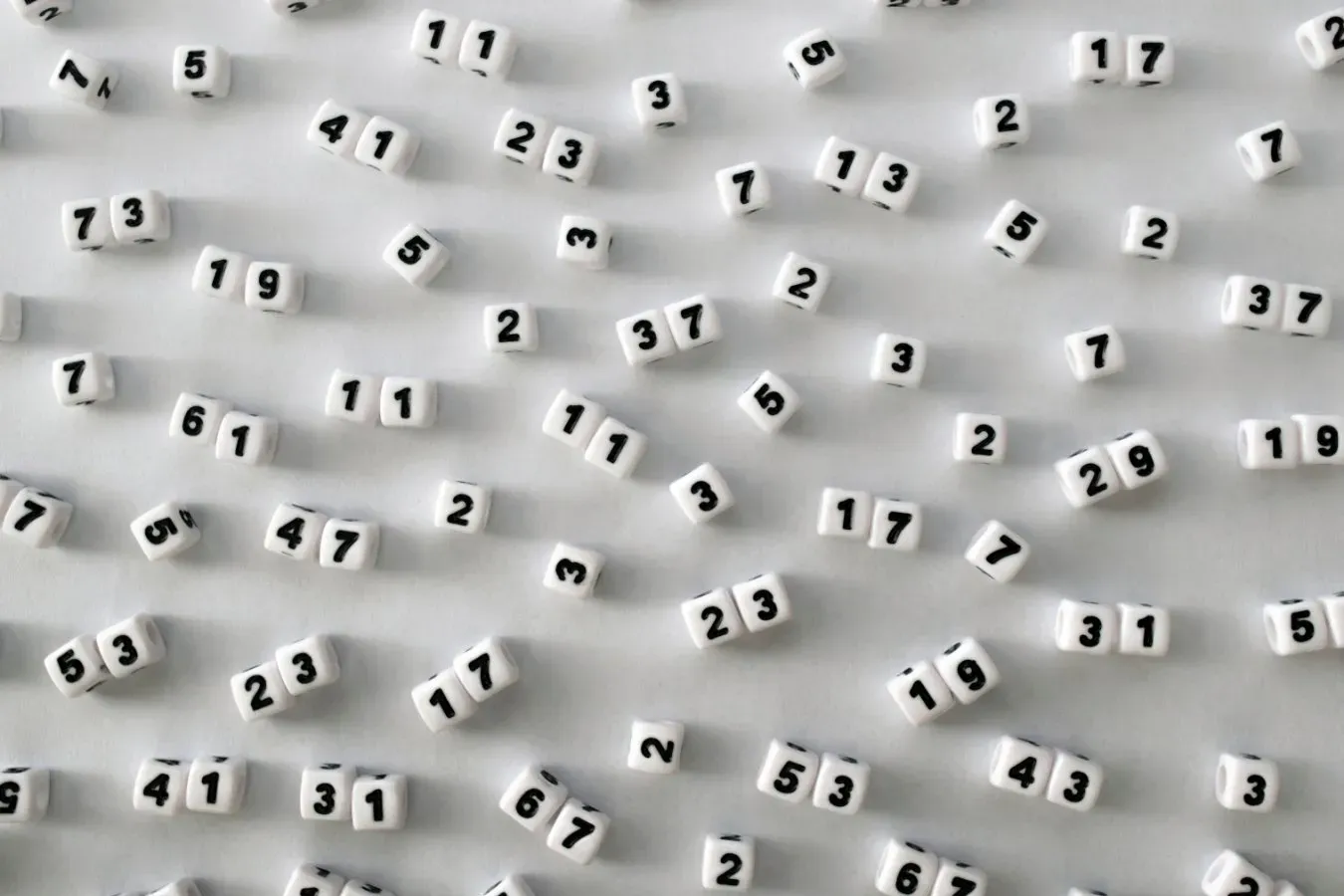
The Riemann hypothesis itself was first proposed in 1859 by German mathematician Bernhard Riemann. It attempts to explain why prime numbers behave as they do, suggesting they follow a specific pattern. This idea has been debated for over a century and a half, with numerous attempts to prove or disprove it.
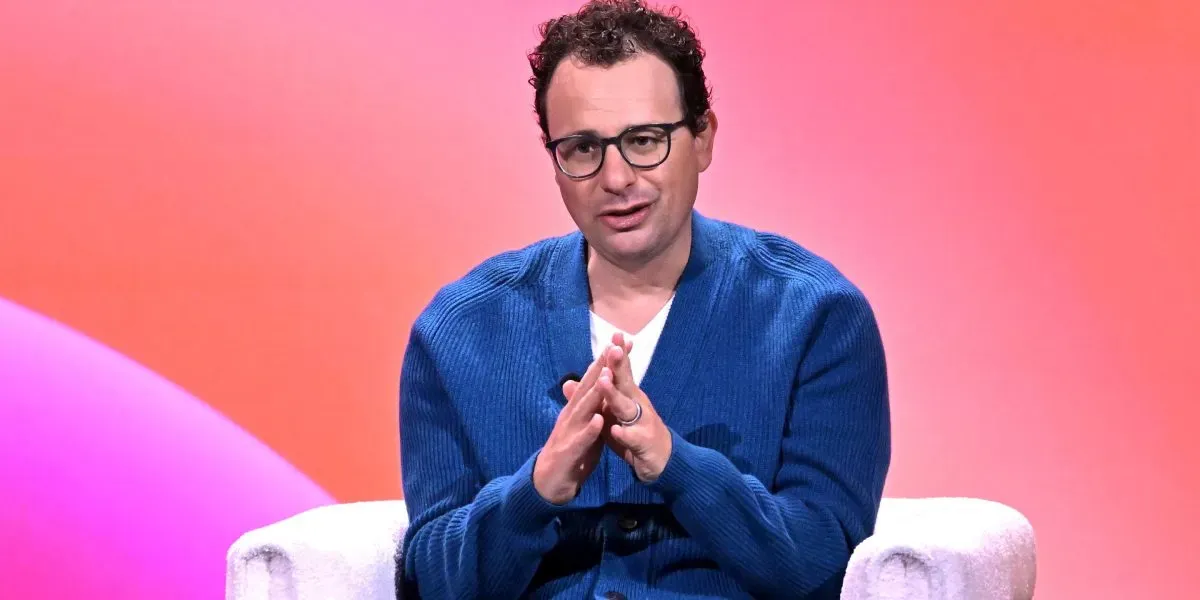
The Riemann hypothesis is one of the seven Millennium Prize Problems set by the Clay Mathematics Institute. Solving any of these problems comes with a $1 million prize, making this achievement potentially very lucrative. Levent Alpöge at Anthropic believes he has cracked the code, thanks to collaboration with the company's AI system, Claude.
Alpöge claims that working alongside Claude allowed him to discover a proof for the Riemann hypothesis, a statement echoed in his written assertion: "I believe I have, working with Claude, discovered a proof of the Riemann hypothesis."
The mathematician behind the claim has made his work available for scrutiny by releasing a version of the proof written in Lean, a computer code used to verify mathematical proofs through formalisation.
This process involves breaking down the proof into a series of logical steps that can be checked mechanically, and if the code compiles without errors, it is considered a definitive proof of the theorem's correctness.
However, experts caution that this method is not foolproof, and both the code and mathematics will need to be thoroughly reviewed by humans to ensure their accuracy.
The formalisation process has been praised for its rigor, with some describing it as "beyond all reasonable doubt" if the code compiles without errors.
Kevin Buzzard at Imperial College London reacted to the news by saying "Let's see if it compiles first", implying that the proof is not yet considered verified until it passes this test.
The proof may also have implications for another major mathematical problem, the generalised Riemann hypothesis (GRH), which deals with different properties of prime numbers and could lead to a deeper understanding of various mathematical structures.
James McKee at Royal Holloway University of London noted that while many mathematicians suspect GRH is true, its proof would be significant nonetheless.
Alpöge's latest achievement follows a string of recent breakthroughs involving artificial intelligence. His team has been at the forefront of using AI to tackle long-standing mathematical problems, often yielding surprising results.
The Jacobian conjecture was one such problem that had stumped mathematicians for decades, with many assuming it to be true despite being unable to prove it. However, Alpöge's counterexample proved it false in just 216 characters, a remarkable feat of condensed reasoning.
A recent Navier-Stokes breakthrough by Alpöge and Tristan Buckmaster at New York University was overshadowed by OpenAI's simultaneous solution, sparking controversy over the role of AI in mathematics.
Facts based on reporting originally published by New Scientist.
You may republish this story, in full or in part, if you credit News Central Site and link to it (licence CC BY 4.0). Photos are not included.