Regulating Artificial Intelligence a Challenge for New Democratic Lawmakers
The recent election of new lawmakers in the US has brought forth a challenge for regulating artificial intelligence (AI) as its impact on society becomes a growing concern.
Democrats have made significant gains in the recent elections, but their victory has also brought forth a complex challenge: regulating artificial intelligence (AI). As they take office, lawmakers are grappling with how to address concerns about AI's impact on society.
One area of focus is insurance decisions, where some Democrats aim to restrict the use of AI systems. Minnesota's newly elected representative Peggy Flanagan has pledged to tackle this issue. However, her efforts may be at odds with the White House's stance on AI regulation.
President Donald Trump has repeatedly emphasized the importance of limiting regulatory oversight of AI, describing it as a "golden goose" that drives economic growth. He also views data centers as vital investments in American innovation. These views are reflected in his administration's policies, which prioritize private sector development over stricter regulations.
The outcome of Tuesday's elections may create an opportunity for bipartisan cooperation on AI legislation, with lawmakers seeking to address voter concerns about the technology's impact. However, this could also lead to infighting within the Democratic Party and Congress as they navigate the complex issue of AI regulation.
The focus of some Democrats has shifted to data centers, which are often seen as tangible representations of AI's abstract concerns and have been putting pressure on local infrastructure in certain areas.
Data centers are particularly prominent in Ohio, where Senator Sherrod Brown emphasized that he does not work for these facilities, highlighting the economic interests at stake. His comments came during a critical election period for the state, which has one of the highest concentrations of data centers in the country.
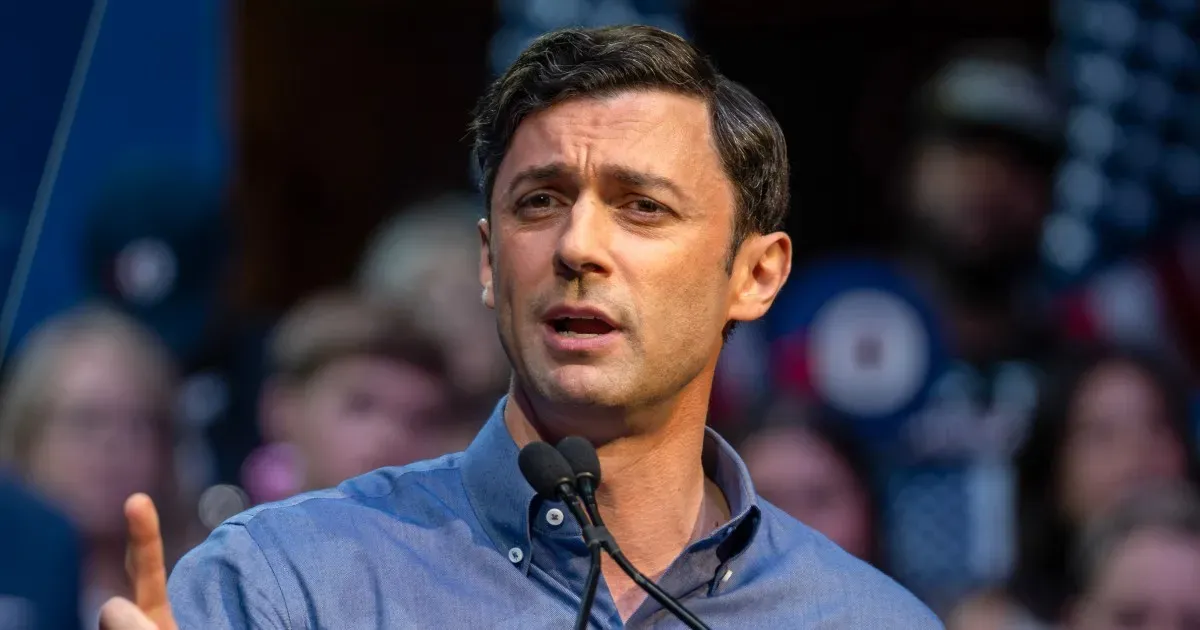
Re-elected Senator Jon Ossoff of Georgia also drew attention to AI's potential risks, pointing out that tech giants are taking precautions while warning about the dangers their creations pose to humanity. This dichotomy has sparked debate within the party and among experts who study AI.
As Democrats navigate this complex issue, they must balance competing priorities and concerns, which some predict could lead to fragmented policy approaches and diluted legislation, while others anticipate a more collaborative outcome.
One of the key challenges facing Democrats is finding common ground on artificial intelligence policy. This is evident in the varied approaches taken by different candidates and lawmakers, from banning superintelligent AI to updating permitting guidelines for power plants and other infrastructure.
Alex Bores, a New York Assembly member who has authored significant AI legislation, sees this diversity of opinion as an asset that will enable Congress to tackle multiple critical initiatives simultaneously. He argues that having multiple approaches is beneficial, as long as they are aimed at protecting the American people from potential harm caused by AI technology.
Bores also notes that pro-AI funding had a negative impact on some candidates, with significant losses for those supported by Leading the Future, a super PAC that advocates for AI development. This was evident in Bores' own primary campaign earlier this year, where he narrowly lost despite facing heavy spending against him by the organization.
The election results have significant implications for artificial intelligence policy in Washington. Experts predict that previous proposals will be substantially revised under the new political landscape.
A bipartisan bill, known as the FRONTIER Act, had been making progress before the election. The legislation aimed to increase independent testing and oversight of advanced AI systems, as well as require leading companies to develop safety-focused plans.
However, the path forward for this bill is uncertain due to the competitive re-election battle facing one of its co-sponsors, Rep. Obernolte. His race was still undecided on Sunday morning, according to reports.
The lack of significant AI legislation in recent years can be attributed to opposition from the Trump administration. The president and his allies have argued that regulation would harm the economy and AI industry, with some suggesting it could even lead to a decline in economic prosperity.
The federal government's stance on artificial intelligence legislation has been a topic of debate, with the Trump administration endorsing bills that would override state-level laws. This move is aimed at preventing what some consider to be a patchwork of regulations, which could hinder innovation in the industry.
According to Hammond from the Foundation for American Innovation, Tuesday's election results indicate growing bipartisan support for meaningful AI legislation. With Republicans potentially feeling less pressure from tech money and more freedom to express their concerns about AI, there may be an opportunity for parties to come together on this issue, despite its seeming left-right divide.
Facts based on reporting originally published by NBC News Politics.
You may republish this story, in full or in part, if you credit News Central Site and link to it (licence CC BY 4.0). Photos are not included.