Oppo Releases Find X10 Pro Max Flagship Phone
The Oppo Find X10 Pro Max is a flagship phone released by Oppo for markets in Europe, Asia, and other territories.
Oppo has released its latest flagship phone, the Find X10 Pro Max, which is set to hit markets in Europe, Asia, and other territories. This new device replaces last year's Find X9 Pro and sits below the Find X9 Ultra in Oppo's lineup. Unfortunately for US-based customers, it seems they will once again face difficulties in getting their hands on this latest offering from Oppo.
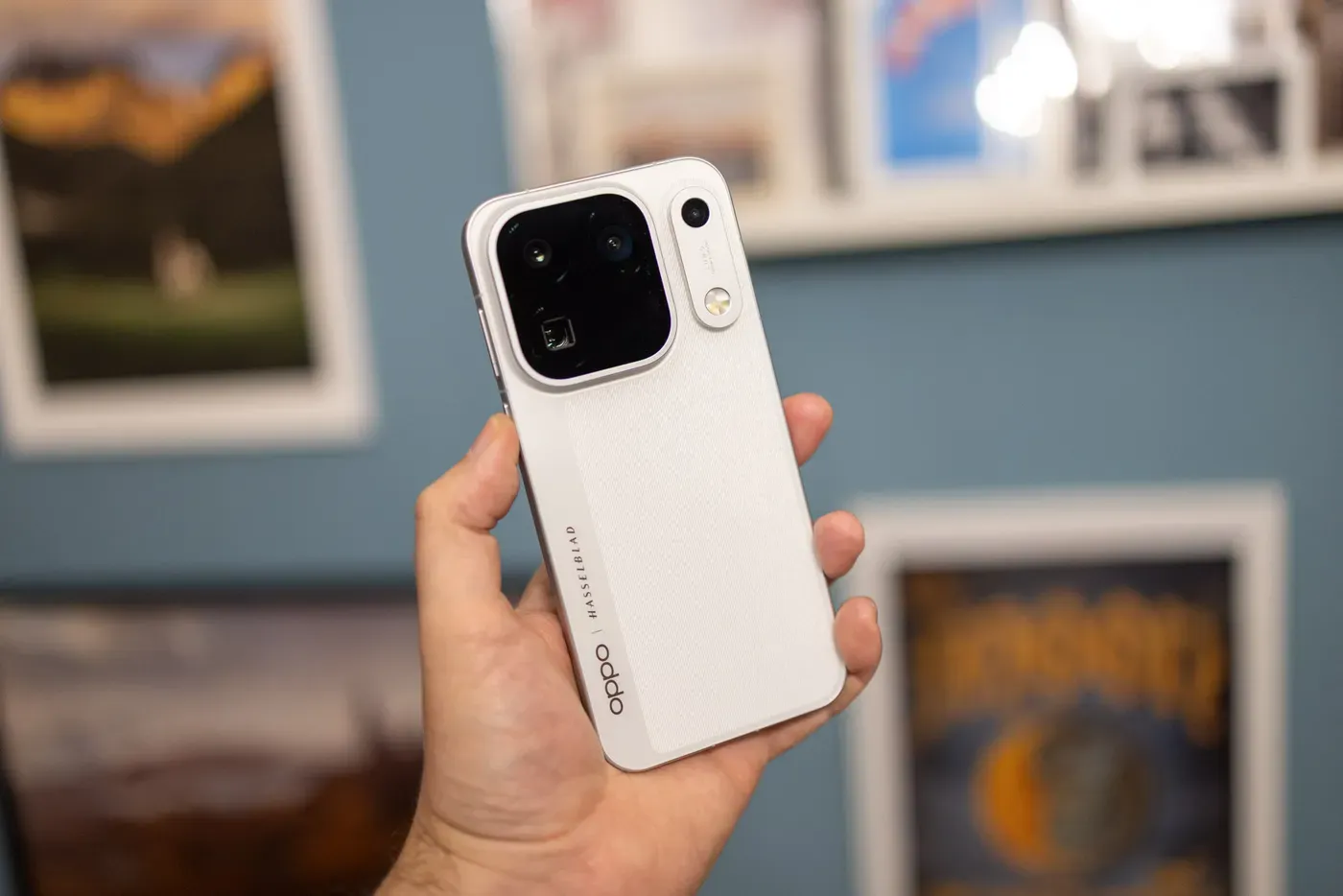
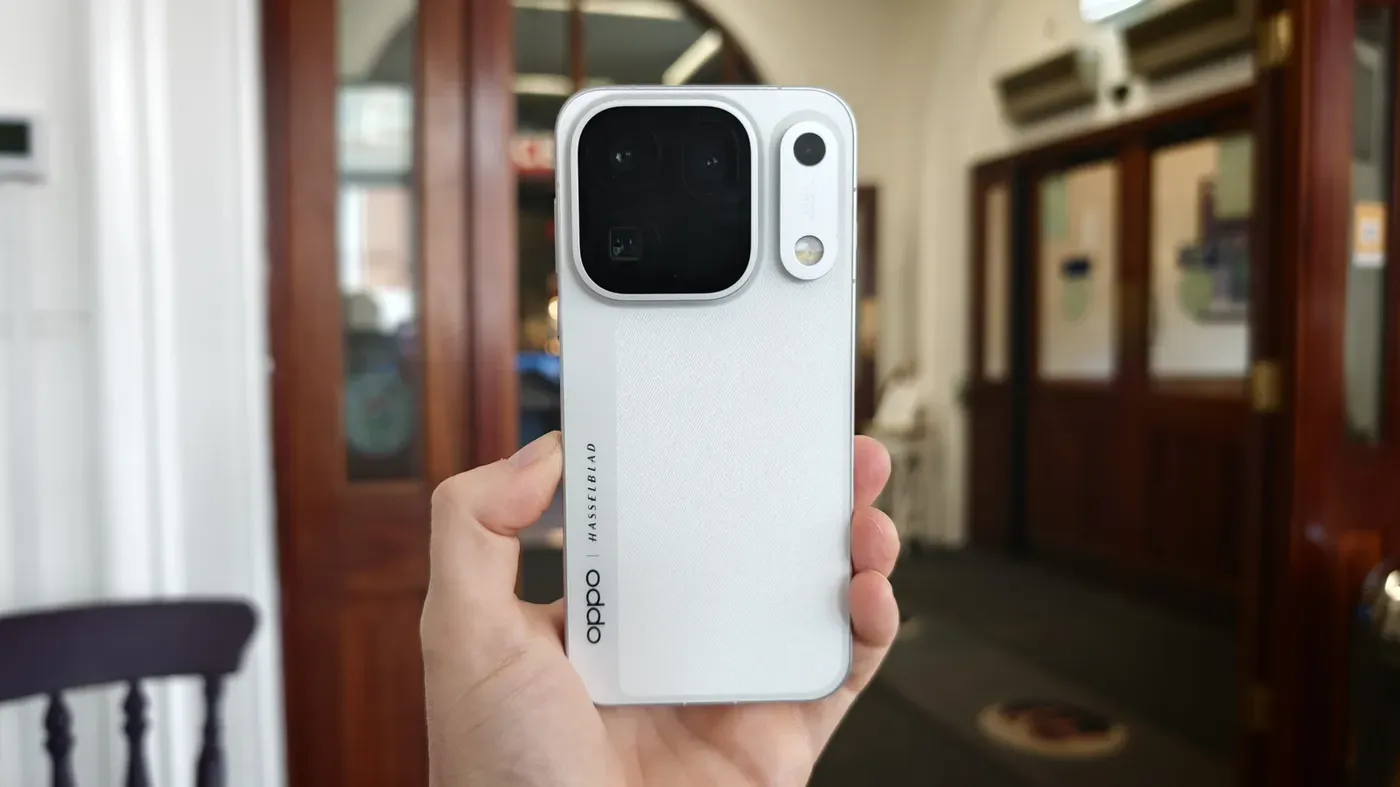
The Find X10 series does not bring significant innovations to the table this year. Instead, Oppo has opted for minor design tweaks to its upper-midrange flagship phone. The device boasts a camera unit with a standalone color sensor and flash positioned next to it, giving it a distinct look. However, the overall design appears to be largely reminiscent of previous Find X series 'pro' phones.
One notable aspect of the Find X10 Pro Max's design is its collaboration with Hasselblad. This partnership is reflected in the phone's camera array, which features a slender orange accent outlining the lenses. The device also showcases Oppo's refined materials and finish, including a matte-finish aluminum frame and a textured back panel.
The phone comes in two colors: Luna White and Titanium Grey. The latter has a smooth back cover that lacks the textured panel found on the Luna White model. It is worth noting that the textured back panel on the Luna White model may not be as grippy as expected.
Key features of the Find X10 Pro Max include its 6.78-inch display, which boasts peak brightness levels of 3,600 nits. This makes it noticeably brighter than last year's Find X9 Pro. Additionally, the device supports adaptive refresh rates from 1 to 144Hz and offers 10-bit color depth and Dolby Vision.
While Oppo's latest flagship phone may not be breaking new ground in terms of design or innovation, it still presents a compelling package for those looking for a high-end smartphone experience.
Oppo's display refinements aim to provide a more immersive experience, particularly in changing light conditions. The company has introduced faster color temperature adjustments, which it claims will better match the surrounding environment. This is achieved through a new "adaptive tone option that utilizes a five-channel sensor.
While I couldn't discern significant differences in color changes during my testing, auto-brightness seemed snappier when transitioning between dark and light environments. This was particularly evident when capturing quick shots of a drone outdoors, where accurate brightness adjustments are crucial.
The camera setup on the Oppo Find X10 Pro Max features three 200-megapixel sensors across its main, telephoto, and ultrawide lenses. However, this configuration may not be as potent as that found in the company's previous flagship, the Find X9 Ultra, which boasts a larger 1/1.12-inch Sony sensor.
In comparison to the X9 Ultra, the Find X10 Pro Max employs a 1/1.3-inch Samsung HPC sensor for its main camera. This shift results in a roughly 25 percent smaller sensor size on the new device. When examining images captured by both phones, the X9 Ultra performed better in low-light conditions, particularly when using Hasselblad Master mode.
The Oppo Find X10 Pro Max also features a Lumo True image engine, which aims to produce natural colors and textures with minimal AI processing. In practice, this results in fewer aggressive corrections on text detail and patterning compared to the company's previous flagships.
The trade-off between sensor size and overall camera performance is an interesting one, particularly given the X9 Ultra's superior low-light capabilities. It remains to be seen how these differences will impact user experience and image quality in real-world scenarios.
The Find X10 Pro Max's telephoto camera has a unique zooming capability, allowing for 3x optical zoom and then cropping into its massive 200MP sensor to extend that range to 6x lossless zoom. This is a notable feature, but it falls short of the 10x zoom offered by the Find X9 Ultra.
In terms of macro photography, the Find X10 Pro Max excels with its capability of achieving a 10cm focal distance on its 3x periscope telephoto lens. This allows for incredibly detailed shots of small objects up close.
When compared to last year's model, the Find X10 Pro Max shows significant improvements in low-light autofocus and image detail capture. Regardless of the shooting mode used, this year's model consistently outperforms its predecessor.
The default camera setup on the Find X10 series is a convenient feature that processes full-resolution 200MP images into 26MP images across its entire zoom range. This reduces the need for extensive settings adjustments and makes photography more streamlined.
Oppo has also introduced DeepPix technology, which is integrated into Samsung's ISOCELL HPC sensor, to enhance video capabilities. This technology claims to deliver up to 17 stops of dynamic range, allowing for better capture in both bright and dimly lit environments.
Early testing suggests that the Find X10 Pro Max shows a slight improvement in preventing blown-out footage in bright light conditions, but this upgrade is more incremental than revolutionary. For serious vloggers or smartphone videographers, however, even small improvements can make a significant difference.
The X10 Pro Max's camera capabilities extend beyond its impressive triple 200-megapixel sensor setup. Video professionals can take advantage of the Pro Video mode, which allows for open-gate capture using each sensor's full imaging area. This results in wider coverage and greater flexibility when editing footage, making it easier to crop and reframe scenes.
Pro Video mode also supports Oppo's O-Log2 format, enabling creators to work with high-quality video files. Additionally, the feature includes LUT previewing and compatibility with Blackmagic's camera app. These advanced features cater specifically to professional videographers who demand more from their smartphone cameras.
The X10 Pro Max has partnered with Tilta for a KHRONOS creator kit, designed to enhance the phone's capabilities as a filmmaking tool. The kit includes a phone cage, grip, cooling fan, and flash, providing a comprehensive setup for content creators. This collaboration aims to further solidify the Find X10 Pro Max's position in the professional videography market.
The teleconvertor system returns with an improved design, feeling less flimsy than its predecessor. Comprising a specialized case, teleconvertor lens, and lens plate, it offers an optional extension for the camera's capabilities. The teleconvertor lens itself is identical to the one used in the Find X9 Pro.
However, users will need to acquire new adapter plates and cases specifically designed for the Find X10 Pro Max. This is because the existing components from the previous model do not fit seamlessly with the new device. Unfortunately, this means that the teleconvertor lens plate still covers other camera sensors when in use, forcing users to remove it to access the remaining 200MP cameras.
The design of the teleconvertor mounting plate has raised concerns regarding its functionality and usability. Similar issues plagued the Find X9 Pro's teleconvertor plate, which obscured other camera sensors during use. The new plate also lacks features seen in rival Vivo smartphones, such as holes for the other cameras, making it less convenient to switch between modes.
The Oppo Find X10 Pro Max boasts a substantial 7,150mAh silicon carbon battery, a significant upgrade in terms of capacity and efficiency. According to Oppo, this powerful battery can deliver extended usage times, including nearly 25 hours of YouTube streaming and approximately six hours of recording 4K video.
In addition to its impressive battery life, the Find X10 Pro Max also supports fast charging at up to 80W, allowing users to quickly top up their device. However, it's worth noting that wireless charging is only available at 50W, but this can only be achieved with Oppo's proprietary AirVOOC wireless charger.
The phone's performance is driven by MediaTek's 2nm Dimensity 9600 Pro chip, which reportedly offers a significant boost in multi-core power efficiency of up to 61 percent. This upgrade is particularly notable given MediaTek's reputation for producing chips that are often considered sluggish and mediocre.
Fortunately, the Dimensity series appears to have turned things around for the company, with recent releases showing improved performance and efficiency. In everyday use, the Find X10 Pro Max feels responsive, with apps and games loading quickly without any noticeable hiccups or crashes.
The phone's pricing is certainly a point of contention, with an MSRP of £1,499 in the UK, equivalent to around $2,000. This puts it at a higher price point than the Find X9 Ultra at launch, and even £400 more expensive than the Find X9 Pro.
To make up for this premium pricing, Oppo is offering early shoppers a choice of free accessories, including the teleconverter kit, Watch X3 smartwatch, or Pad 5 tablet. Additionally, those who purchase the phone before October 28 will receive an extra £100 discount, while trade-in promotions can offer discounts of up to £250 for Oppo or OnePlus devices.
The Oppo Find X10 Pro Max boasts an impressive triple-camera setup, featuring three 200-megapixel sensors that are likely to capture exceptional images and videos. However, the phone faces stiff competition from its predecessor, the Find X9 Ultra, which in some aspects, has a more capable camera system.
Despite this challenge, the Find X10 Pro Max still offers improved dynamic range capabilities, making it an attractive option for serious smartphone photographers who require advanced features and tools. For those interested in purchasing the device, Oppo is currently offering promotions that can make it more affordable, but it may be wise to wait for the company's ultra" version of the Find X10, which could potentially offer even more impressive capabilities.
Facts based on reporting originally published by Engadget.
You may republish this story, in full or in part, if you credit News Central Site and link to it (licence CC BY 4.0). Photos are not included.