Nvidia's Expansion into Artificial Intelligence Industry Continues Globally
Nvidia's innovative approach to developing computer chips for AI models has driven its global expansion and success.
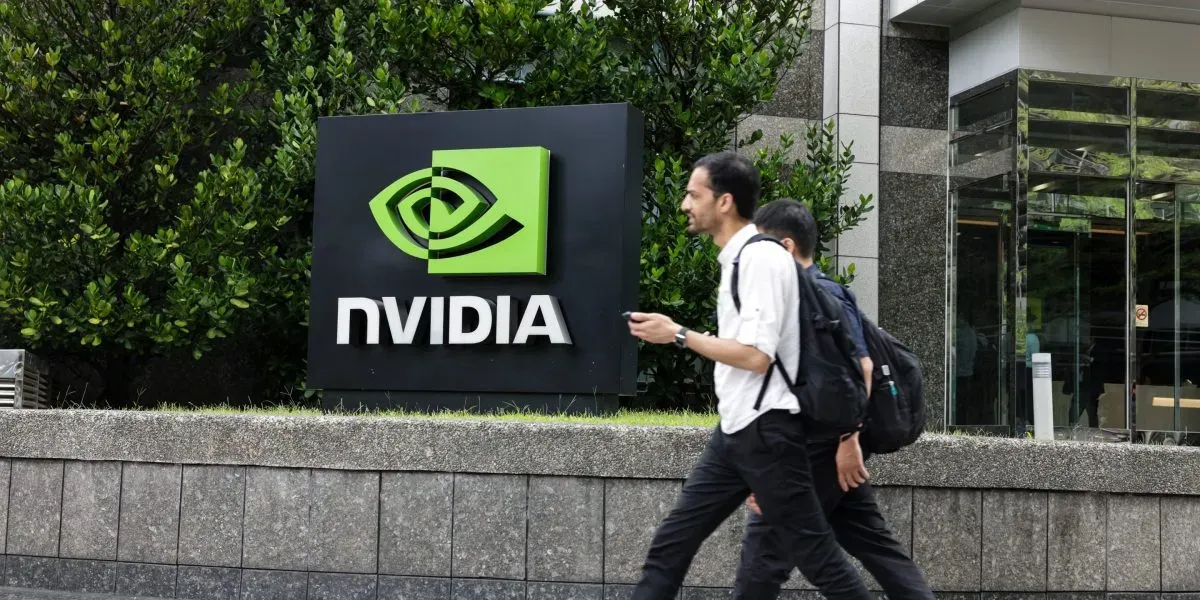
Nvidia's transformation from a graphics processing unit (GPU) manufacturer to a key player in the global artificial intelligence (AI) industry has been nothing short of remarkable over the past two decades. The company, headquartered in Santa Clara, California, has undergone significant changes during this period.
At the heart of Nvidia's success lies its innovative approach to developing computer chips that provide the processing power required for training powerful AI models. This shift towards AI has seen the company expand its operations globally, with a particular focus on Europe where it is rapidly growing.
Nvidia's growth in Europe is evident from its ranking on Fortune's 100 Best Companies to Work For, Europe list, where it placed 14th. The company's architecture powers approximately 90% of the continent's AI factories, highlighting its significant presence in the region.
The largest GPU cluster in Europe is set to be launched in the UK, further solidifying Nvidia's position as a leader in the European market. This move underscores the company's commitment to expanding its operations across all regions and functions, with offices now established in 15 European countries.
Nvidia's focus on AI development has also led to increased investment in robotics and automotive research, which are crucial areas of growth for the company. As it continues to navigate this rapidly evolving landscape, Nvidia is placing a strong emphasis on adapting its perks and benefits to meet local customs and needs, with the recent appointment of a head of wellbeing for EMEA being a notable example.
Nvidia's emphasis on a flat organizational structure is guided by a core principle: "the mission is always the boss." This mantra encourages employees to prioritize tasks based on their understanding of the company's objectives rather than following top-down directives.
The absence of org charts at Nvidia allows for a more direct and efficient communication flow. People leading key projects often report directly to the CEO, minimizing layers within the organization. Huang has stated that he strives to maintain a low number of organizational levels, currently having 36 direct reports.
This structure is conducive to open communication, where employees feel empowered to share their ideas and concerns. Nvidia maintains that it does not prioritize traditional hierarchies or chains of command, fostering an environment where everyone's voice can be heard.
The company also offers its employees a unique benefit: the ability to purchase shares at a 15% market discount using their salary. This perk has led to some employees becoming multimillionaires, although some have reported feeling pressure to work extended hours and maintain a high level of productivity.
Some employees have expressed concerns about the potential for burnout due to the "pressure cooker environment that can accompany this benefit. Despite these challenges, Nvidia continues to prioritize its flat structure and employee empowerment as key factors in its success.
Nvidia's flat organizational structure is designed to encourage collaboration and idea-sharing among employees of all levels.
Employees are encouraged to share suggestions with leadership without fear of judgment or retribution, regardless of their seniority or tenure with the company.
A suggestion box allows anyone from interns to seasoned engineers to bring up ideas, which are then reviewed by program managers and discussed in one-on-one dialogues.
The approach is based on the idea that every employee's input is valuable and worth considering, rather than relying on a hierarchical system where only senior staff have a say.
This open-door policy has led to some innovative solutions, including the company's free days initiative, which allows employees to take two extra days off each quarter without having to worry about work piling up in their absence.
The entire company shuts down during these free days, giving employees a genuine break and allowing them to recharge before returning to work.
Nvidia's approach to employee benefits has been a subject of debate in recent times, with some critics labeling its policies as frugal" compared to those of its competitors. One area where Nvidia has chosen not to invest is in providing free meals and snacks for staff. However, the company's leadership maintains that this decision reflects a deliberate focus on other aspects of employee well-being.
Instead of prioritizing campus perks like gym access or free food, Nvidia has concentrated on creating a work environment that supports employees' work-life balance. The company has implemented a hybrid work program, allowing staff to choose when and where they want to work, without imposing strict return-to-office mandates. This approach is designed to give employees greater flexibility and autonomy.
Nvidia's support for its employees extends beyond the workplace. The company offers various benefits to help employees navigate life's challenges, including assistance with paying off student loans, supporting aging parents, and covering IVF and surrogacy expenses. Additionally, Nvidia provides specialized programs for neurodiverse employees and their families, recognizing that these individuals often require tailored support.
The company's goal is to create a work environment where employees feel valued and supported throughout different stages of their lives. According to Punsalan, this requires active listening and a willingness to adapt policies in response to employee needs. By prioritizing employee well-being and providing targeted benefits, Nvidia aims to foster an environment where staff can excel professionally.
Nvidia's approach reflects its commitment to creating a work environment that supports employees' diverse needs and circumstances. By investing in programs that promote work-life balance and provide specialized support, the company seeks to create a workplace culture that values and empowers its staff.
Nvidia's approach to staff retention has been a subject of interest for many companies in recent times. The tech giant has adopted an unconventional structure that eschews traditional org charts and instead operates on a flat hierarchy. This allows employees to have more direct access to leadership and decision-making processes.
The company also provides its staff with two extra days off every quarter, which is part of its efforts to promote work-life balance. By investing in programs that support employee well-being, Nvidia aims to create a workplace culture that values and empowers its staff, ultimately leading to higher job satisfaction and retention rates. As a result, the company has been able to hold onto talent effectively.
Facts based on reporting originally published by Fortune.
You may republish this story, in full or in part, if you credit News Central Site and link to it (licence CC BY 4.0). Photos are not included.