Northern Leaf Establishes Medical Cannabis Facility on Jersey Island
The company, Northern Leaf, has converted a 100,000-square-foot greenhouse on Jersey into a state-of-the-art operation for cultivating medical cannabis.
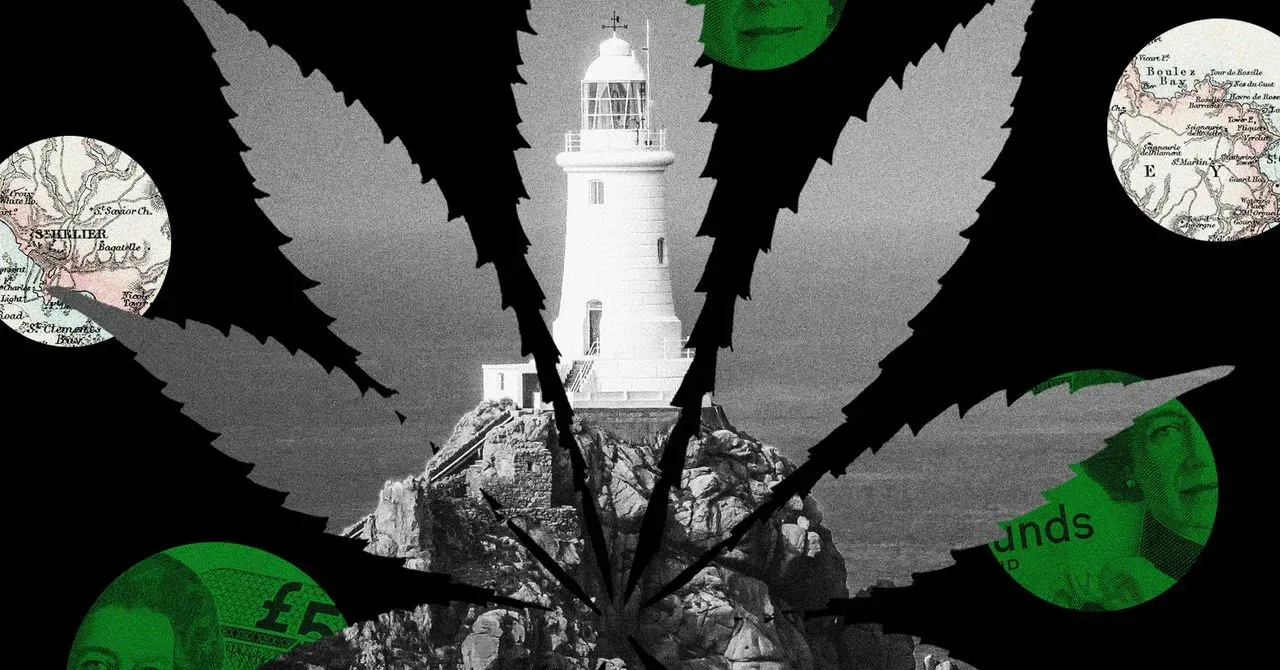
A small island off the coast of England has emerged as an unlikely player in the global medical cannabis market. Northern Leaf, one of Europe's largest licensed medical marijuana producers, is based on Jersey, a British Crown Dependency.
The company's 100,000-square-foot growing facility was previously used to cultivate tomatoes, which were once a prized crop on the island but are now struggling due to high production costs and cheaper imports from overseas. The greenhouse has been revamped with cutting-edge technology for cultivating cannabis that meets strict regulations for medical use.
Automated irrigation systems, environmental monitoring equipment, and air purification units have transformed the facility into a state-of-the-art operation. Northern Leaf's CEO, Tan, is proud of what his company has achieved on this tiny island, which measures just 45 square miles in size with a population of around 100,000 people.
Jersey lies only 14 miles off the coast of France but remains a British territory. Despite its small size and remote location, Jersey has become an important player in the medical cannabis industry, thanks largely to Northern Leaf's success. The company exports over 9,200 kilograms of cannabis annually, with the majority being shipped to the UK and Germany.
The island's chief minister, Lyndon Farnham, has expressed his desire for Jersey to become a "centre of excellence for medical cannabis production. He wants cannabis to be a mainstay of the island's economy, and Northern Leaf is playing a key role in achieving this goal. The company currently accounts for 90 percent of Jersey's cannabis production.
Northern Leaf's CEO, Tan, has ambitious plans to expand his operation further. He points out that the island's potato industry generates around £40 million annually, but he believes that cannabis production can match or even surpass this figure on a smaller scale.
The island's unique geography and favorable business environment have created an ideal setting for Northern Leaf to thrive. Tan is confident that his company will continue to drive growth in Jersey's medical cannabis sector and establish the island as a leading player in the global industry.
Jersey's unique regulatory environment has made it an attractive destination for businesses looking to capitalize on the growing demand for medical cannabis. As a Crown Dependency, Jersey has close ties to Britain but is not part of the UK, giving it the ability to make its own laws. This self-governing status has allowed the island to establish itself as a tax haven, attracting wealthy individuals and companies with its lack of capital gains tax and 0 percent corporation tax for most companies.
The island's reputation as a hub for finance and wealth management is evident in its coastline, where offices of international banks and wealth management firms cater to the super rich. Alongside these high-end businesses are trendy beachside cafes and remnants of World War II history, including Nazi bunkers that occupied the Channel Islands during the war.
Jersey's shift towards a more liberal approach to cannabis began with the legalization of medical marijuana in 2019. This move has paved the way for five private clinics to operate on the island, making it one of the leading destinations for medical cannabis treatment in Europe. The island's chief minister, Lyndon Farnham, had ambitious plans to establish Jersey as a hub of the medical cannabis trade.
Farnham's vision involves repurposing the island's horticultural facilities and expertise from its previous tomato-growing industry to focus on medical cannabis production. This move has sparked interest among entrepreneurs looking to capitalize on the growing demand for cannabis-based products. The island's unique combination of regulatory environment and existing infrastructure makes it an attractive location for businesses in this sector.
Jersey's decision to legalize medical marijuana has also attracted attention from companies looking to expand their operations into Europe. With its favorable tax regime and established financial services industry, the island provides a compelling proposition for businesses seeking to establish a presence on the continent.
The growth of Jersey's medical cannabis sector is expected to continue, with several companies already investing in the island. Tan's company is one of the key players in this emerging industry, working closely with local authorities to drive growth and innovation.
As the demand for medical cannabis continues to rise, Jersey is poised to become a leading player in the global industry. With its unique regulatory environment and established infrastructure, the island provides an attractive location for businesses looking to capitalize on this growing market.
Northern Leaf's operations have been significantly boosted since Tan took over as CEO in 2024. Despite facing financial difficulties after a failed IPO, Tan has managed to increase production capacity from 25 percent to 75 percent over the last two years.
The company's growth has been impressive, with Northern Leaf now capable of producing millions of units of cannabis. This surge in productivity is expected to continue, with the company aiming to export even more product in the future.
One reason for Jersey's appeal lies in its unique regulatory environment. Growers on the island are subject to rigorous inspections by the UK Medicines and Healthcare products Regulatory Agency (MHRA), which ensures that the highest standards of quality are maintained.
This reputation for excellence is a major selling point for businesses looking to export cannabis products from Jersey. As barrister Sarah Clover notes, the MHRA's stamp of approval gives buyers confidence in the quality of the product coming out of the island.
Clover, who works on cannabis licensing in Jersey, believes that the island has tremendous potential as a hub for medicinal cannabis production and packaging. With its existing facilities and infrastructure, Northern Leaf is well-positioned to take advantage of this opportunity.
However, there are also challenges associated with running a cannabis business on a small island like Jersey. Local residents have expressed concerns about the smell of cannabis wafting from the facility and the potential impact on mental health.
The issue of misuse has been highlighted by Jersey's health minister, who has noted that cannabis is a contributing factor in 22 percent of admissions to the island's acute mental health ward. While all of Northern Leaf's product is exported, some locals remain skeptical about the expansion plans.
Medical cannabis has become increasingly popular on Jersey as a treatment for various ailments, including insomnia and anxiety. Patients like Michael have found relief from their symptoms after being prescribed medical cannabis by a specialist doctor. The process of obtaining a prescription is relatively straightforward, with patients meeting with a cannabis doctor who assesses their medical history.
The initial assessment typically involves checking the patient's medical records with their general practitioner, and within 10 days, they are usually good to go. Michael was prescribed 30 grams of high-quality cannabis per month and was told that he could easily obtain more if needed. However, his experience ultimately ended in a negative outcome, as he found the medication affected his mental health.
The availability of medical cannabis has led to an increase in user-dealers on Jersey, who sell their excess marijuana to others. This illicit resale has become a concern for those involved in the industry. Despite these challenges, the number of cannabis-related offenses on the island has dropped significantly since its legalization in 2019.
According to statistics, there were 216 such offenses in 2016 but only 12 as of July this year. The overall decrease is seen as a positive outcome of the medical cannabis program. Tan, an industry expert, acknowledges that operating on Jersey can be difficult due to the local culture's resistance to cannabis.
However, he attributes any pushback to his own experience and believes that people understand once they meet him. Tan has been in the industry for 25 years and is accustomed to facing challenges. His confidence in the medical benefits of cannabis remains unwavering.
Some island residents are pushing for further decriminalization of cannabis use. In 2024, a vote to legalize recreational cannabis was narrowly defeated by a single vote in the parliament. The proposal was brought back up for debate but was eventually withdrawn before it could be discussed.
The issue is expected to resurface in the coming months, with some individuals deciding not to wait for official approval. By exploiting a loophole in current laws, these residents have managed to purchase and consume THC products legally on Jersey. This development has made the island one of the few places outside of Amsterdam where such activities are tolerated.
The situation on Jersey highlights the complexities surrounding cannabis legislation and its varying interpretations across different regions. As the debate continues, it remains to be seen how this issue will be resolved in the future.
A Jersey weed shop owner has described the moment when a dozen customs officers raided his store in February 2024, seizing all his products.
Gary Tucker's shop, Bailiwick Botanicals, is located in St Helier and sells cannabis-infused items such as hash cakes and gummies.
The raid was not an isolated incident for Tucker, who has experienced similar situations before.
He was taken aback by the scale of the operation, with officers emptying shelves and boxes into bin bags at a rapid pace.
Tucker's products contain tetrahydrocannabinol (THC), the psychoactive ingredient in cannabis that is heavily regulated.
The shop owner operates outside Jersey's medical cannabis industry, which limits the sale of high-THC products to 3 percent of their weight in relation to CBD.
To circumvent this restriction, Tucker boosts the CBD content in his products, essentially solving the problem with a math equation".
Tucker admits that his solution is not ideal, as studies have linked excessive CBD consumption to liver damage.
However, he maintains that he is simply catering to consumer demand and complying with Jersey's regulations.
Tucker's cannabis products are currently manufactured in the US before being shipped to Sark, a Channel Island known for its car-free roads and autonomous government, and then on to Jersey.
New regulations in the US may force Tucker to alter his production strategy, potentially disrupting his business model.
Jersey is seen as a potential hub for exporting THC products to Europe, with Tucker believing that the island's fledgling cannabis industry should expand beyond medical use into the recreational market.
Tucker claims that the cannabis industry has far-reaching economic benefits, creating jobs not just in cultivation and retail but also in related industries such as cosmetics and food production.
Facts based on reporting originally published by Wired.
You may republish this story, in full or in part, if you credit News Central Site and link to it (licence CC BY 4.0). Photos are not included.