New film adaptation of Kazuo Ishiguro's novel Klara and the Sun released
The book, a blend of science fiction and emotional depth, has become a must-read since its release.
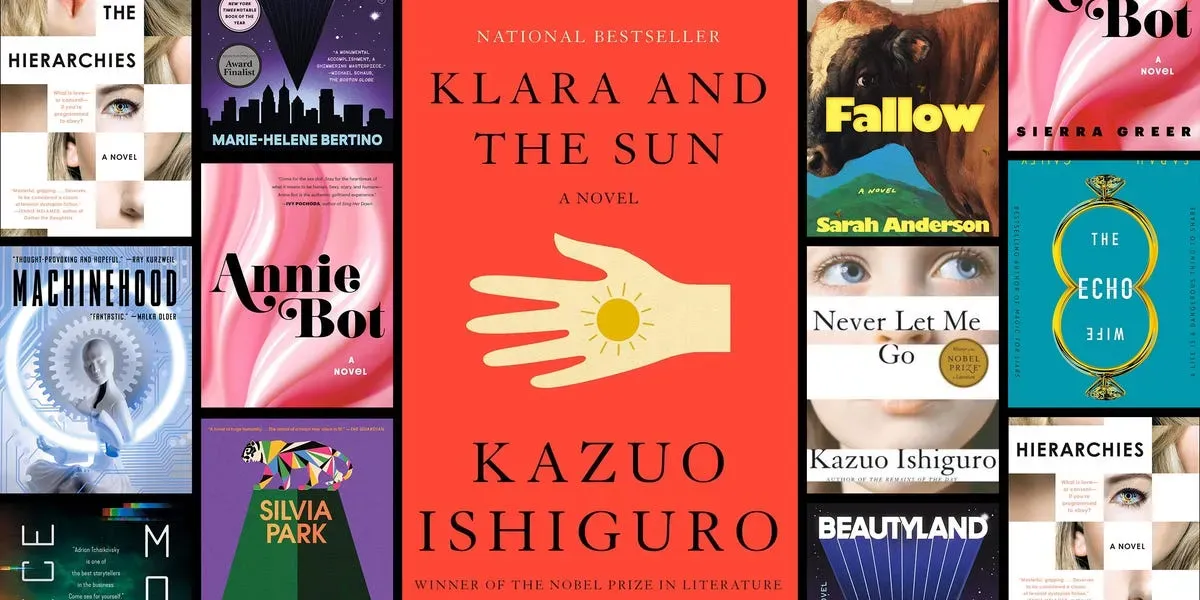
A new film adaptation of Kazuo Ishiguro's novel Klara and the Sun has just been released, directed by Taika Waititi. Regardless of whether viewers have seen the movie or not, the book is a must-read for its unique blend of science fiction and emotional depth.
The story revolves around Klara, an artificial friend with solar powers, and her relationship with Josie, a young girl who suffers from illness and lives in an alternative universe with her family. As the narrative unfolds, dark truths about Josie's condition, the world she inhabits, and her mother's intentions begin to surface.
Re-reading Klara and the Sun has become a regular experience for many readers, who have found themselves emotionally invested in the characters' stories. The novel's exploration of complex themes and moral dilemmas continues to captivate audiences long after finishing the book.
For fans of Ishiguro's work, another highly recommended read is Never Let Me Go, published in 2005. This novel follows a group of boarding-school students as they navigate friendships, bullies, and romantic relationships. At first glance, the story appears to be set in a familiar world, but it gradually reveals a more sinister reality.
Ishiguro's exploration of complex themes and moral dilemmas has become a hallmark of his writing style, leaving readers with lasting impressions and thoughts long after finishing the book. Never Let Me Go is just one example of this, and its impact on readers can be attributed to its thought-provoking narrative and well-developed characters.
In the realm of dystopian fiction, robots and artificial intelligence often serve as cautionary tales about humanity's relationship with technology. The Echo Wife by Sarah Gailey explores this theme through an award-winning scientist who discovers that her husband stole her research on human cloning.
The twist is that he used it to create a genetically-engineered clone of her, designed to be more obedient and subservient than the original. This plot development raises questions about the ethics of creating beings for the sole purpose of serving humanity's desires.
A similar theme of exploitation is present in Fallow by Sarah Anderson, which delves into the darker side of technological advancements. The story follows Natalie, a young woman who takes on a job as an in-house surrogate for a company, delivering seven babies over ten years to its executives.
This setup allows them to experience motherhood without the burden of maternity leave or the responsibilities that come with it. However, Natalie soon finds herself caught up in a different kind of social experiment as her contract comes to an end.
As she navigates this complex web of relationships and power dynamics, readers are forced to confront the implications of technological advancements on human society and the ethics of creating beings for our convenience.
In speculative fiction, robot relationships are a common theme, but one sub-genre that is less explored is robot siblings.
A recent book that delves into this area is Silvia Park's Luminous, set in a near-future reunified Korea where three estranged siblings, two human and one robot, reconnect.
The story raises questions about what it means to be human, making it a thought-provoking read for fans of novels like Klara and the Sun.
Another satirical sci-fi novel that explores the relationship between humans and robots is Adrian Tchaikovsky's Service Model, which follows a high-end robot valet who inadvertently kills his human master.
This sets off a chain of events as the robot embarks on a journey to explore the post-apocalyptic world he has been programmed to serve.
The robot's journey takes an unexpected turn as it begins to observe the human survivors in a post-apocalyptic world. It becomes fascinated by their attachment to objects they've collected from abandoned buildings and streets. This peculiar behavior is reminiscent of the crew on the Six-Thousand Ship, who have developed strong bonds with objects they picked up during a recent visit to New Dimensions.
The similarities between the two scenarios are striking, and the robot starts to question its own purpose in this new world. It wonders if it too will develop an attachment to something, or someone, as it continues on its journey. The ambiguity of who wrote each statement in The Employees is mirrored by the robot's own uncertainty about its existence.
As the robot navigates this strange and unfamiliar landscape, it begins to understand that even in a world devoid of life, human connection can still thrive. This realization brings a sense of hope to the desolate scene, and the robot's journey comes full circle as it finds meaning in the attachments it has formed.
Facts based on reporting originally published by Harper's Bazaar.
You may republish this story, in full or in part, if you credit News Central Site and link to it (licence CC BY 4.0). Photos are not included.