Miu Miu presents first-ever show at Lapérouse in Paris
Miu Miu marked an important milestone in its history with a runway presentation featuring youthful and eccentric designs, including the debut of the Coffer leather handbag.
International fashion brand Miu Miu marked an important milestone in its history when it presented its first-ever show at the iconic 18th-century Left Bank restaurant Lapérouse in Paris on March 4, 2006.
The event signaled a significant departure from its sister brand Prada, which was based in Milan. The intimate runway presentation featured a collection of youthful and eccentric designs, including paper-thin knits, ultra-mini dresses, peplum jackets, and chunky platform wedges.
At the same time, Miu Miu's designers introduced a more understated element to their show - a leather handbag called the Coffer. This slouchy shoulder tote in chocolate brown featured a twisted handle and a bold metal clasp. The bag was a subtle counterpoint to the vibrant clothes showcased on the runway.
The quilting technique used in the Coffer's design has its roots in 18th-century Marseille, where it was traditionally employed in bedding or upholstery.
The matelassé technique, first introduced by Miu Miu 20 years ago, has evolved significantly since its inception. The initial collection's success can be attributed to its early adoption by celebrities such as Anne Hathaway, Lindsay Lohan, and Isla Fisher.
Today, the handbags are crafted in a variety of colors and styles at Miu Miu's leather goods workshop in Tuscany, known as The Garden Factory. This architecturally acclaimed headquarters was designed by Guido Canali in the mid-1990s and is situated in the Valvigna region near Patrizio Bertelli's hometown.
The property's unique design features a one-to-one ratio of building to greenery, blending cool steel with native vines through extensive use of glass windows. This harmonious balance creates a tranquil atmosphere within The Garden Factory.
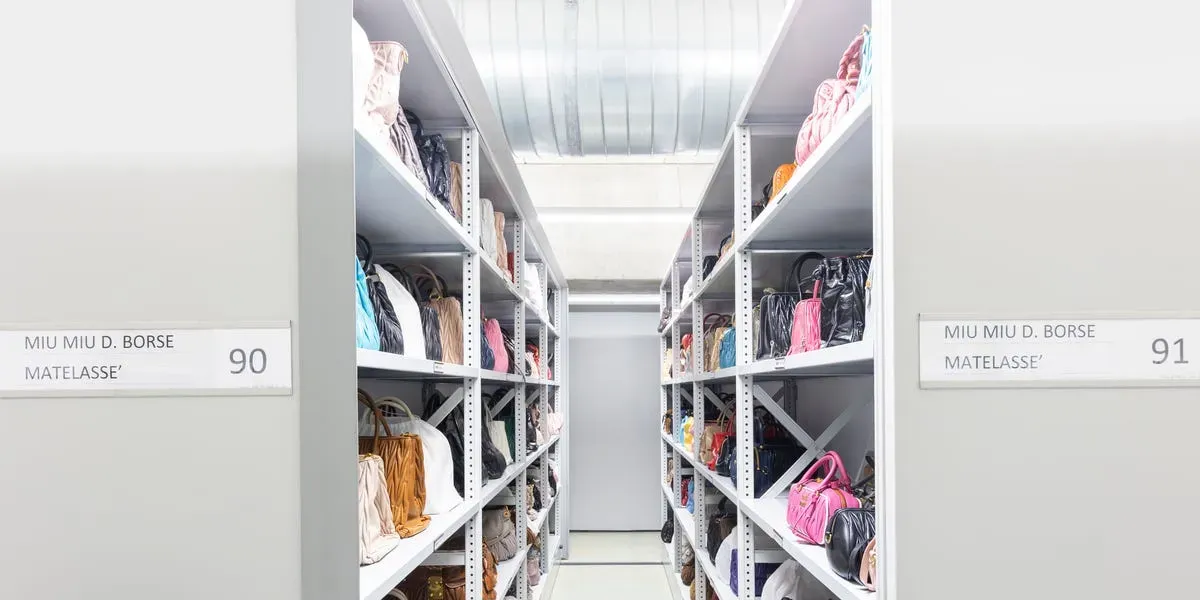
Inside the workshop, rows upon rows of accessories are meticulously stored, comprising 66,000 leather goods and 77,000 pairs of shoes from past collections. These items serve as both a record of Miu Miu's history and a source of inspiration for future designs.
In today's digital age, luxury brands are under pressure to showcase their craftsmanship in innovative ways that transcend traditional marketing strategies. To stand out on social media platforms like Instagram, where visuals reign supreme, brands must create hyper-visual signifiers of quality and attention to detail.
The tactile experience has become a vital component of brand storytelling, allowing consumers to connect with products on an emotional level even when they're not physically present. For example, the sight of sequins or fluffy feathers can evoke a sense of luxury and exclusivity, while smooth leather textures can convey high-end quality.
Miu Miu's signature matelassé handbags are a prime example of this trend. The quilted technique used to create these bags is both intricate and deliberate, resulting in a pillowy, spring-like effect that invites the senses to explore its texture.
Crafting a matelassé bag requires precision and patience, particularly for smaller items like card holders where even slight miscalculations can compromise the overall design.
To become an expert in crafting Miu Miu bags, artisans undergo rigorous training at the Prada Group's leather goods academy, where they spend six months learning about the brand's luxury standards and practices.
The atelier itself is designed with functionality and aesthetics in mind, featuring 45-degree-angled ceilings that allow natural light to flood the space without generating excessive heat. This deliberate design choice creates a perfect environment for artisans to focus on their craft.
The result of this combination of training and environment is evident in the exquisite attention to detail and precision that goes into each Miu Miu handbag, from the intricately stitched valleys of a matelassé bag to the seamless fusion of traditional craftsmanship with modern luxury.
Facts based on reporting originally published by Elle.
You may republish this story, in full or in part, if you credit News Central Site and link to it (licence CC BY 4.0). Photos are not included.