Karin Slaughter's The Good Daughter Premieres on Peacock
A six-part drama series based on Karin Slaughter's novel brings to life the complex story of two sisters from Pikeville, Georgia.
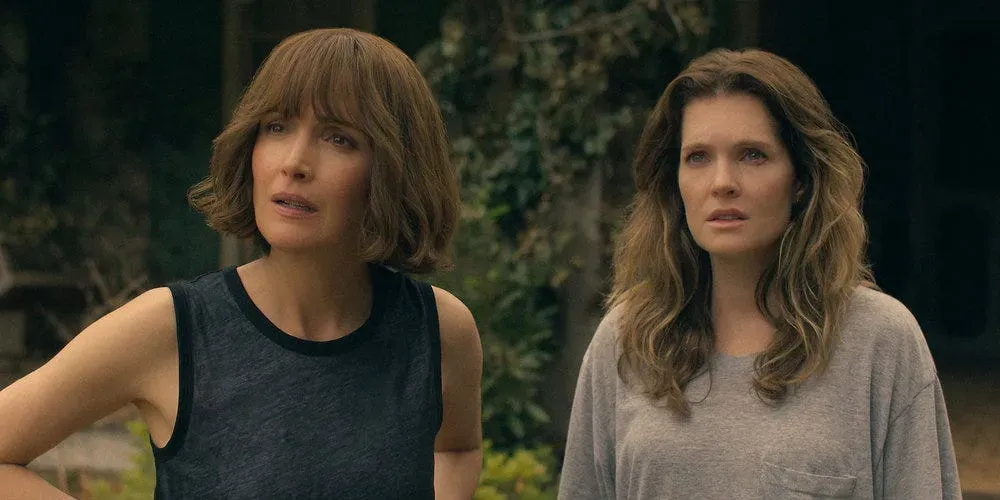
A six-part drama series based on Karin Slaughter's bestselling novel The Good Daughter has premiered on Peacock, bringing to life the complex story of two sisters from Pikeville, Georgia. The show centers around Sam and Charlie, daughters of a local defense attorney who is both admired and reviled by his community.
The family's lives are shattered when they become embroiled in a horrific act of violence one fateful night. The traumatic event sets off a chain reaction that leads to the pursuit of truth and justice, with the sisters at its core. Their father, played by Brendan Gleeson, is a key figure in their quest for answers.
The roles of Sam and Charlie are portrayed by Rose Byrne and Meghann Fahy, respectively. Despite initial reservations about their father's involvement, both women choose to follow in his footsteps as lawyers. While Sam moves away from Pikeville to New York, Charlie stays in the small town where her family has a complicated history.
Rose Byrne credits one of the producers, Bruna Papandrea, with bringing her on board for this project. The two have a long-standing friendship that dates back to their time in Australia.
The emotional core of The Good Daughter lies in the complex bond between two sisters, a dynamic that is expertly captured on screen by Rose Byrne and Meghann Fahy.
Meghann Fahy had already delved into the novel before filming began, finding it to be a rich source of information that added depth to her understanding of the characters and their story. This research gave her an edge in bringing Charlie's free-spirited nature to life on camera.
Fahy's portrayal of Charlie is notable for its authenticity, as she drew from the character's inner contradictions, a sense of independence that belied a deeper concern for others' opinions. Byrne's take on the other lead character was similarly nuanced, with both actresses bringing their own unique energy to the roles.
The novel's author, Karin Slaughter, is praised by the actresses for her skill in crafting complex female characters that leap from the page. In developing their performances, they drew heavily on Slaughter's insights into the sisters' family history and cultural context, seeking to capture the distinct rhythms of each character.
As they immersed themselves in the world of The Good Daughter, Byrne and Fahy found themselves drawn to different aspects of the characters, a testament to the richness of Slaughter's writing.
The show's creators aimed to transport viewers to a specific time and place, one that is intricately woven throughout the story.
To achieve this, they drew heavily from author Slaughter's writing, striving to stay true to her vision of the characters' world and culture.
Meghann Fahy noted that Slaughter's dialogue is remarkably detailed, with a distinct rhythm and cadence that adds to the show's authenticity.
The cast spent considerable time rehearsing lines, including lengthy scenes that are typical for television but rare in live performances.
The cast had to master a specific dialect for their roles, which proved to be a challenging task. Rose Byrne, who plays a character from a different part of the world, found it difficult to adjust to the accent and language patterns. Her character's speech is also affected by dysarthria, a condition that causes stuttering.
Meghann Fahy's character has a unique background that adds to the complexity of the story. The term "lawyer was unfamiliar to her, and she had to learn how to pronounce it correctly. She credits her dialect coach with helping her understand the nuances of language and the reasons behind derogatory terms.
The show's focus on justice is not about being cruel or vindictive, but rather about uncovering the truth and seeking fairness. Rose Byrne acknowledges that the story has a universal appeal, despite its hyperlocal setting. The complexities of family relationships and the flaws in the justice system are themes that resonate with audiences worldwide.
The show's creator presents a nuanced picture of the justice system, highlighting both its corruption and occasional acts of integrity. This portrayal adds depth to the narrative, making it more relatable and thought-provoking for viewers.
The long scenes in The Good Daughter were a unique challenge for its cast, particularly when it came to flashbacks. These extended takes allowed for more immersive storytelling but also required a significant amount of physical stamina from the actors.
Rose Byrne and Meghann Fahy recall the lengthy shooting days, with some scenes clocking in at 10 pages long - an unusually high number for television production. This was not only physically demanding but also mentally taxing as the actresses had to navigate complex emotional storylines while staying focused on their characters' motivations.
The cast's experience working on these extended scenes has taught them valuable lessons about trust and collaboration. It's a real leap of faith," Byrne admits, acknowledging the uncertainty that comes with attempting something new in television production. Fahy echoes this sentiment, highlighting the importance of communication and teamwork to make such ambitious storytelling work.
As the story unfolds, forgiveness becomes a pivotal theme, particularly when it comes to the characters' relationships with their father. Sam's anger issues are a central aspect of her character development, and Byrne notes that forgiving her father is a significant part of the narrative.
The show's narrative is built on complex relationships and unexpected twists, allowing viewers to see how characters grow and change as they confront their emotions and biases.
Through the characters' experiences, the series highlights the difficulty of forgiving those who have wronged us, particularly when we feel that justice has not been served. This theme is echoed in the portrayal of Sam's struggles with her father's actions, underscoring the challenge of reconciling past hurts with present-day realities.
Ultimately, the show offers a hopeful message, suggesting that even in the face of adversity and uncertainty, relationships can be transformed when individuals confront their truth and engage with others' perspectives. This nuanced exploration of human emotions is likely to resonate with audiences as they navigate their own complexities and surprises.
Facts based on reporting originally published by Harper's Bazaar.
You may republish this story, in full or in part, if you credit News Central Site and link to it (licence CC BY 4.0). Photos are not included.