Justice Department Investigates Press Pool System for Antitrust Law Violations
The investigation is related to a temporary ban imposed by the White House on CNN, MSNBC, and Politico from the press pool.
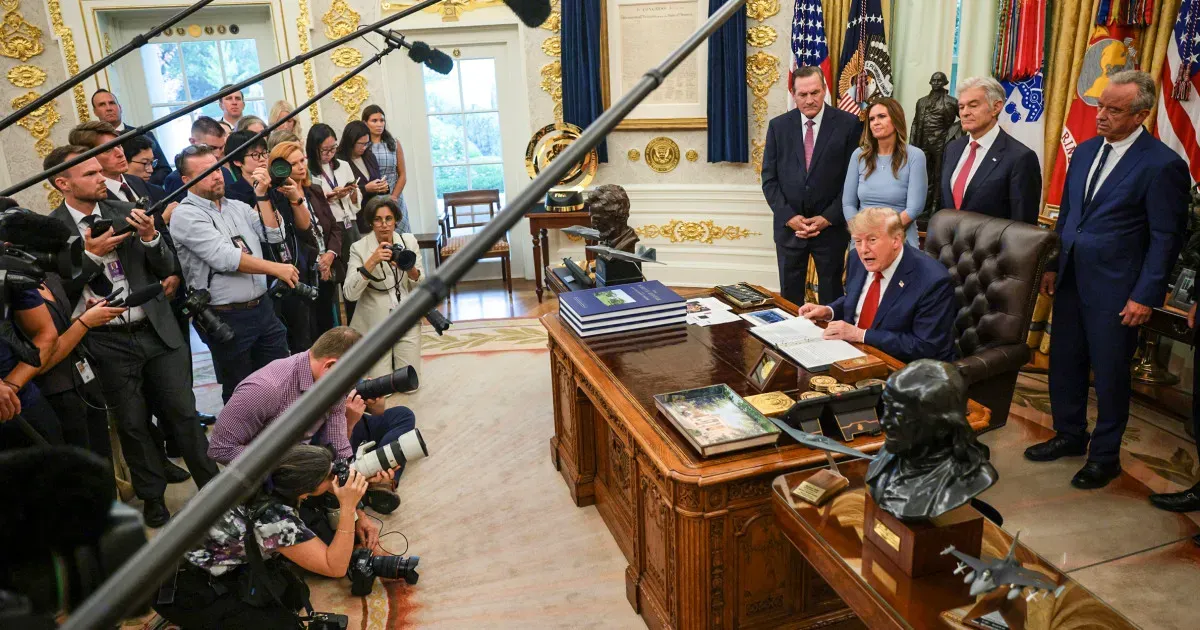
The White House has found itself at the center of a controversy over the press pool system after the Justice Department launched an investigation into potential antitrust law violations by the five TV networks that comprise the pool.
This move follows President Trump's decision last month to bar CNN, MSNBC and Politico from the White House grounds. In response, the remaining pool members declined coverage for four days, and later on two more occasions when CNN was blocked from performing its duties as a pool representative.
The absence of these outlets resulted in limited video coverage of key events, including President Trump's summit with Chinese President Xi Jinping and his trip to New York for the United Nations General Assembly. This had significant implications for journalists and news organizations around the world that rely on this shared coverage to report on presidential activities.
The press pool system itself has come under scrutiny, with questions being raised about its purpose and how it operates in practice. The five TV networks at the center of the investigation are part of a larger group that shares resources and costs for high-profile coverage involving the president.
The White House press pool system allows for efficient distribution of video and information to its members in situations where space is limited, such as events held in the Oval Office or Cabinet meetings.
To cater to different types of media, the White House has separate pools for print, radio, still photography, and TV. These pools cover high-profile administration officials, government departments, and events, providing a comprehensive view of the administration's activities.
In recent instances, the TV press pool declined to provide video and editorial coverage of specific individuals or events when certain news outlets were barred from participation. This decision was made in response to temporary bans imposed by the White House on specific networks, which are currently being challenged in court.
Despite these exceptions, the TV pool has continued to cover other administration officials, such as Vice President JD Vance and Secretary of State Marco Rubio, who have not been involved in the same level of controversy surrounding specific news outlets.
The White House press pool has a long history of providing critical coverage to the American public during times of crisis. In the past, the president's proximity to the press pool was one of the primary ways for him to communicate directly with citizens in real-time.
Poolers have been present at pivotal moments in history, including major events that have shaped the course of the nation. The press pool has reported on both scheduled and spontaneous stories, often breaking news to the public before it reaches other media outlets.
The network television pool consists of five major networks: NBC, ABC, CBS, CNN, and Fox. These networks take turns sending a journalist and camera crew to cover administration events, providing a shared resource for all participants in the pool.
In addition to domestic media outlets, international news organizations can also subscribe to the White House press pool. This allows them to use pre-shot video footage and editorial guidance in their coverage of events around the world. The pool's global reach is particularly evident when visiting heads of state are covered by a foreign slot within the pool.
When major events occur, such as this week's visit from Chinese President Xi Jinping, the pool system ensures that all participating outlets have access to high-quality content. This helps maintain consistency and balance in coverage across different networks and media types.
The White House press pool has its roots in decades of precedent, with a long history dating back to World War II. Reporters used a pool system as early as the presidency of Franklin D. Roosevelt, when pool members traveled with him during his time in office, according to the White House Correspondents' Association.
In terms of content control, the journalists who comprise the TV pool are responsible for making daily coverage decisions about which network is covering an event and how it is being covered. This independent approach provides a distinct perspective on events, one that is separate from official White House media releases.
The White House press pool has a complex structure that involves coordination between networks and the administration itself.
In addition to the main TV pool position, the Trump administration created a "secondary TV pool" role, allowing an invited outlet to participate in coverage when space is limited at events like presidential speeches or announcements.
However, this secondary pooler only reports for their own organization, without distributing video or editorial content to the broader pool of journalists who follow the event.
This setup has raised questions about the White House's relationship with specific media outlets and its willingness to restrict access in certain situations.
The White House's handling of media access has been scrutinized in recent times, particularly when it comes to specific outlets and events. One notable instance was the removal of The Wall Street Journal from the press pool traveling to Scotland with President Trump in 2025. This decision followed a report by the newspaper about an alleged birthday card sent by the president to Jeffrey Epstein in 2003.
In another situation, during his first term, President Trump temporarily revoked CNN reporter Jim Acosta's credentials after a heated exchange at a press conference in 2018. However, the administration did not restrict CNN's overall access as a news outlet. A court order later restored Acosta's pass on a temporary basis, and it was eventually made permanent.
This setup has raised questions about the White House's relationship with specific media outlets and its willingness to restrict access in certain situations. Furthermore, President Trump also demonstrated his ability to bypass the press pool when he took a secret flight out of Turkey this summer, slipping onto another plane via a catering truck due to security concerns related to the war in Iran.
Facts based on reporting originally published by NBC News Politics.
You may republish this story, in full or in part, if you credit News Central Site and link to it (licence CC BY 4.0). Photos are not included.