iPhone Lockdown Mode Safeguards Against Malicious Spyware
Apple's iPhone Lockdown Mode is a security feature designed to protect against commercial spyware by limiting device functionality and connectivity.
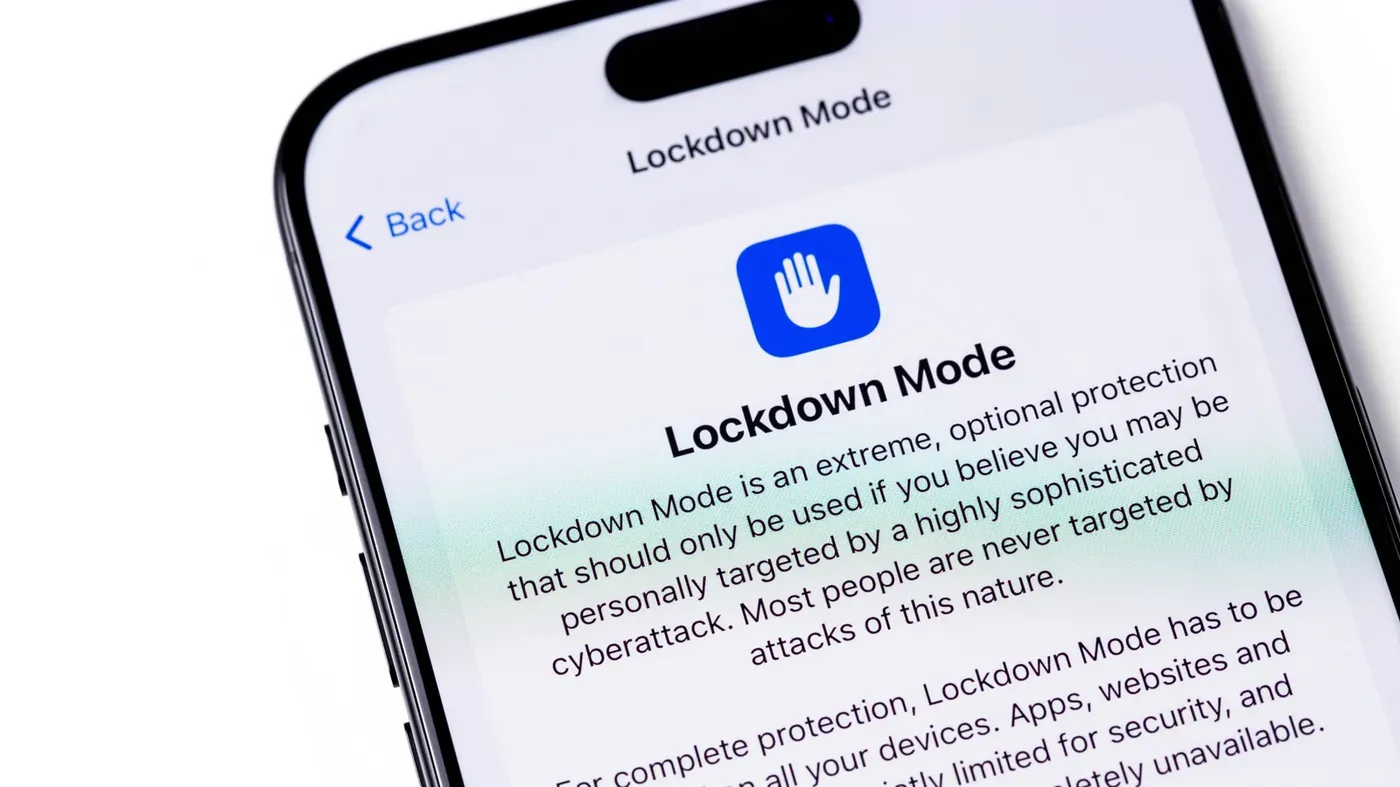
A lesser-known security feature on Apple devices is gaining attention for its ability to safeguard against malicious spyware. iPhone Lockdown Mode has been available since 2022 but remains largely unexplored by users. Apple designed this tool as an "extreme" layer of protection for individuals who may be targeted by commercial spyware, such as NSO's Pegasus.
Those at high risk include journalists, activists, and politicians, who are often the subjects of sophisticated cyber attacks. To enable Lockdown Mode on iPhone or iPad, users must navigate to Settings > Privacy & Security. From there, they can scroll down to find the feature and tap Turn On & Restart, confirming with their passcode.
The availability of Lockdown Mode is not limited to iPhones; it's also accessible on iPadOS 16 and later, watchOS 10 and newer, and macOS 13 Ventura and later operating systems. This means that users across various Apple devices can take advantage of this added layer of security.
When Lockdown Mode is enabled, many everyday features of an iPhone are blocked to prevent potential security threats. This includes attachments in Messages, which can be a conduit for malicious software if not properly vetted. Furthermore, link previews in the messaging app are also disabled as they can potentially serve as backdoors for spyware.
The restrictive mode also limits JavaScript functionality in browsers, leading to slower loading times or even website incompatibility on some sites. Additionally, FaceTime calls are restricted, allowing only recent contacts to reach the user.
Connectivity options are also severely limited when Lockdown Mode is activated. For instance, wired connections are disabled when the device is locked, preventing it from communicating with a computer or accessory without the passcode.
The iPhone's wireless connectivity is also affected, as it no longer automatically connects to unsecured networks. Moreover, support for 2G and 3G networks has been completely disabled, although these networks have already been discontinued in the US.
Enabling Lockdown Mode also comes with some practical drawbacks. For example, users cannot install configuration profiles, which can be a problem if required by schools or employers. Other Apple services are also affected, including Home invitations, Game Center, and photo sharing.
Lockdown Mode is designed to provide maximum security by restricting iPhone functionality and limiting potential attack vectors. This feature was developed in response to exploits like Blastpass, which used iMessage to install Pegasus spyware on Apple devices.
The effectiveness of Lockdown Mode has been demonstrated through its immunity to the Blastpass exploit, with researchers finding that devices in this mode are completely protected against the spyware. Apple's confidence in the feature is evident in its Security Bounty program, which offers a 100 percent bonus on top of regular rewards for anyone who can find a way to bypass Lockdown Mode.
To balance security and convenience, users have some flexibility within Lockdown Mode. They can exclude certain contacts from messaging restrictions, allowing family members to send videos or documents without compromising the device's security. Additionally, users can choose to exempt specific websites and apps from the feature's restrictions.
However, loosening these restrictions will inevitably make the device more vulnerable to attacks. For individuals who believe they are targets, it is recommended that all default protections within Lockdown Mode remain in place for maximum security.
For individuals who don't fall into high-risk categories, such as public figures or activists, Lockdown Mode may be overly restrictive and inconvenient to use on a daily basis. Apple devices already come equipped with numerous security features that provide robust protection against most threats.
Lockdown Mode is intended for those who believe they are specifically targeted by sophisticated spyware like Pegasus, often deployed by governments seeking to monitor opponents or protesters. In such cases, turning on Lockdown Mode can be an essential measure to enhance security.
Facts based on reporting originally published by Engadget.
You may republish this story, in full or in part, if you credit News Central Site and link to it (licence CC BY 4.0). Photos are not included.