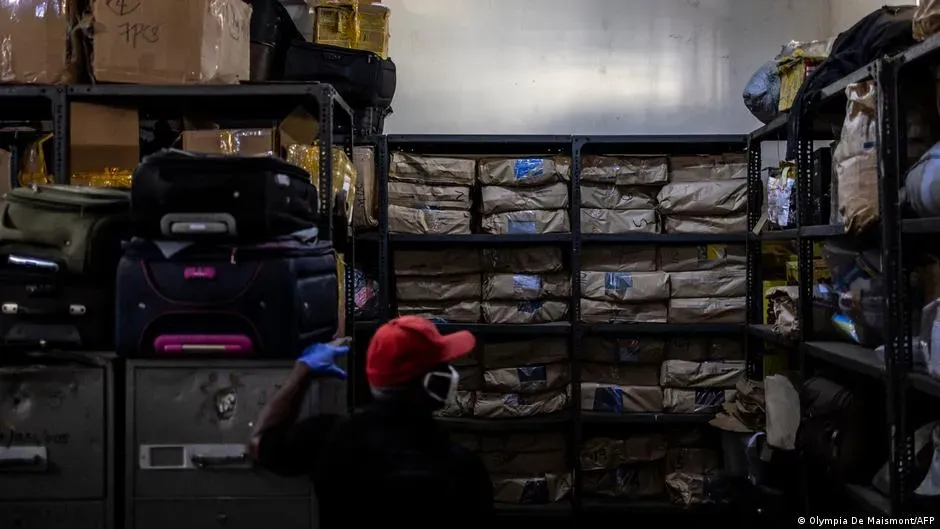
Hungary's Prime Minister Orders Release of Secret Police Agent Files
Hungary's Prime Minister Peter Magyar has announced the release of secret police agent files containing names of Hungarian state security informants.
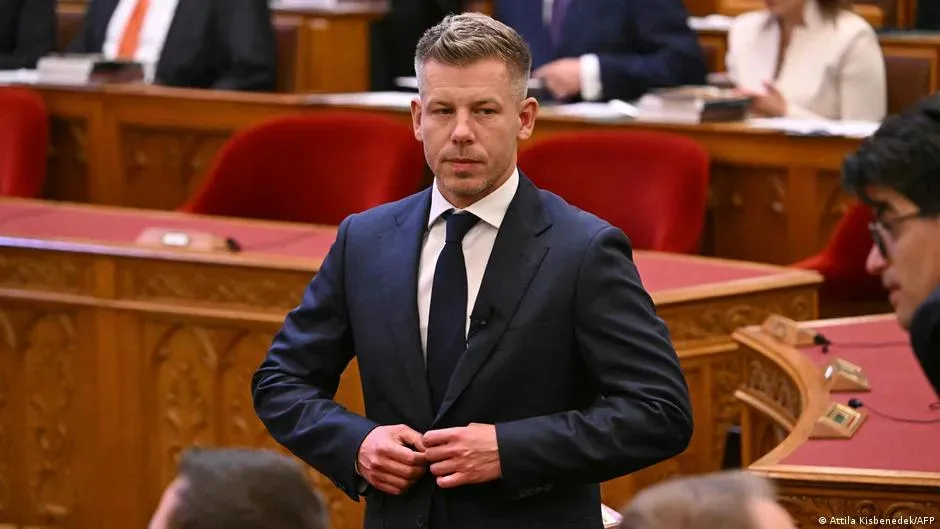
Hungary's Prime Minister Peter Magyar has announced a major step towards transparency by ordering the release of secret police "agent files that contain the names of Hungarian state security informants.
The decision to make public these sensitive documents comes after decades of debate over how to handle them. The files are expected to reveal information about individuals who collaborated with or unwittingly provided intelligence to Hungary's Communist-era secret service.
Tens of thousands of Soviet soldiers and tanks swept into Hungary on November 4, 1956, brutally suppressing the country's anti-Communist uprising and marking the beginning of a long period of dictatorship that relied heavily on state security informants.
Hungarians have been calling for the release of these files for years, with civil rights activists and smaller political parties expressing their demands repeatedly since the fall of the Berlin Wall in 1989. The move is seen as an attempt to reckon with Hungary's dark past.
Magyar's government had previously pledged to make the agent files public if elected, and the release of this information is expected to spark further debate on Communist-era guilt and responsibility among Hungarians.
The idea of opening Hungary's Communist-era secret service files has been met with resistance from various governments and parties over the years. Following its initial pledge to make these agent files public, Magyar's government is now taking steps towards transparency.
A significant hurdle was overcome in 1994 when the Hungarian parliament passed the agents law, which required certain individuals, including government members and public servants, to undergo background checks to determine their involvement with former state security services. This partial release of information allowed some insight into the past but left many questions unanswered.
However, not all files have been made available for public scrutiny. Since 1997, Hungarian citizens have been able to view their own files, while in 2003, permissions were expanded to allow more access. Yet, despite these measures, individuals seeking to uncover information about informants have been met with obstacles.
The handling of sensitive information has also raised concerns. A provision in the relevant law allowed government agencies to prevent the transfer of files from the secret police to the Historical Archives if they deemed it would compromise national security, leaving room for interpretation and potential abuse of power.
The Hungarian government's decision to release secret service files from the Communist era has opened up a Pandora's box of information that could have far-reaching consequences for politicians and citizens alike.
One notable example of how these files were previously used is the case of former Prime Minister Peter Medgyessy, who was outed as a secret agent in 2002 by a Fidesz-affiliated newspaper. This kind of selective release of information not only denied Hungarian society the truth about its state security service but also created opportunities for politicians to use compromising information to gain an advantage.
The government's move to make databases containing informant names and key information available online is a significant step towards transparency. Starting from November 4, these databases will be accessible to the public, providing a wealth of information that was previously off-limits.
In addition to the informant databases, other files are set to be released in the coming months. These include one of the most comprehensive collections of individuals who worked for the Hungarian state security agency. The old agent law which imposed confidentiality provisions has also been revised, allowing access to a much larger number of files than before.
The release of information on up to 60,000 secret police informants out of an estimated 150,000 could have significant political implications. However, experts warn that the reliability of these documents should be viewed with caution, as many were incomplete or destroyed over time.
The release of secret service files from Hungary's Communist era has been met with a mix of reactions from experts and historians.
Historian Janos M. Rainer argues that the publication would have made more sense immediately after the fall of the regime, rather than 36 years later, when it is now seen as a symbolic gesture. This delay may undermine the significance of the release, at least in his opinion.
For Krisztian Ungvary, however, the upcoming publication of these files is a welcome development that will allow historians to conduct new research and engage society in fresh debates about Hungary's past. He believes that this reflection will benefit Hungarian society as a whole.
The decision by parliament to make these secret service records public may also shed light on the Orban regime, according to historian Magyar. The release of this information carries significant weight for him, particularly when considering Hungary's recent history under Fidesz rule.
The revelation that Hungary is finally opening secret service files from its Communist era has significant implications for Prime Minister Viktor Orban's government. A number of high-ranking officials within Fidesz and Orban's inner circle have ties to the Hungarian Communist party or its security apparatus.
These connections are particularly noteworthy given the roles that some individuals have held in more recent years. For instance, Jozsef Horvath, a former state security employee responsible for suppressing domestic opposition, has worked as an intelligence officer and security advisor under Orban's leadership. He was also appointed research director of the Sovereignty Protection Office in 2024, an agency that targets individuals deemed to be enemies of the regime by branding them foreign agents".
Facts based on reporting originally published by DW English.
You may republish this story, in full or in part, if you credit News Central Site and link to it (licence CC BY 4.0). Photos are not included.